The Sindhu-Sarasvati cities · 1921–2022
Dug by Indians, filed under Pakistan
The world knows India's first cities by the names of two sites that went to Pakistan in 1947. Indian archaeologists dug both of them first, most of the civilisation's known sites are in India, and since Partition Indian teams have dug almost all of the rest.
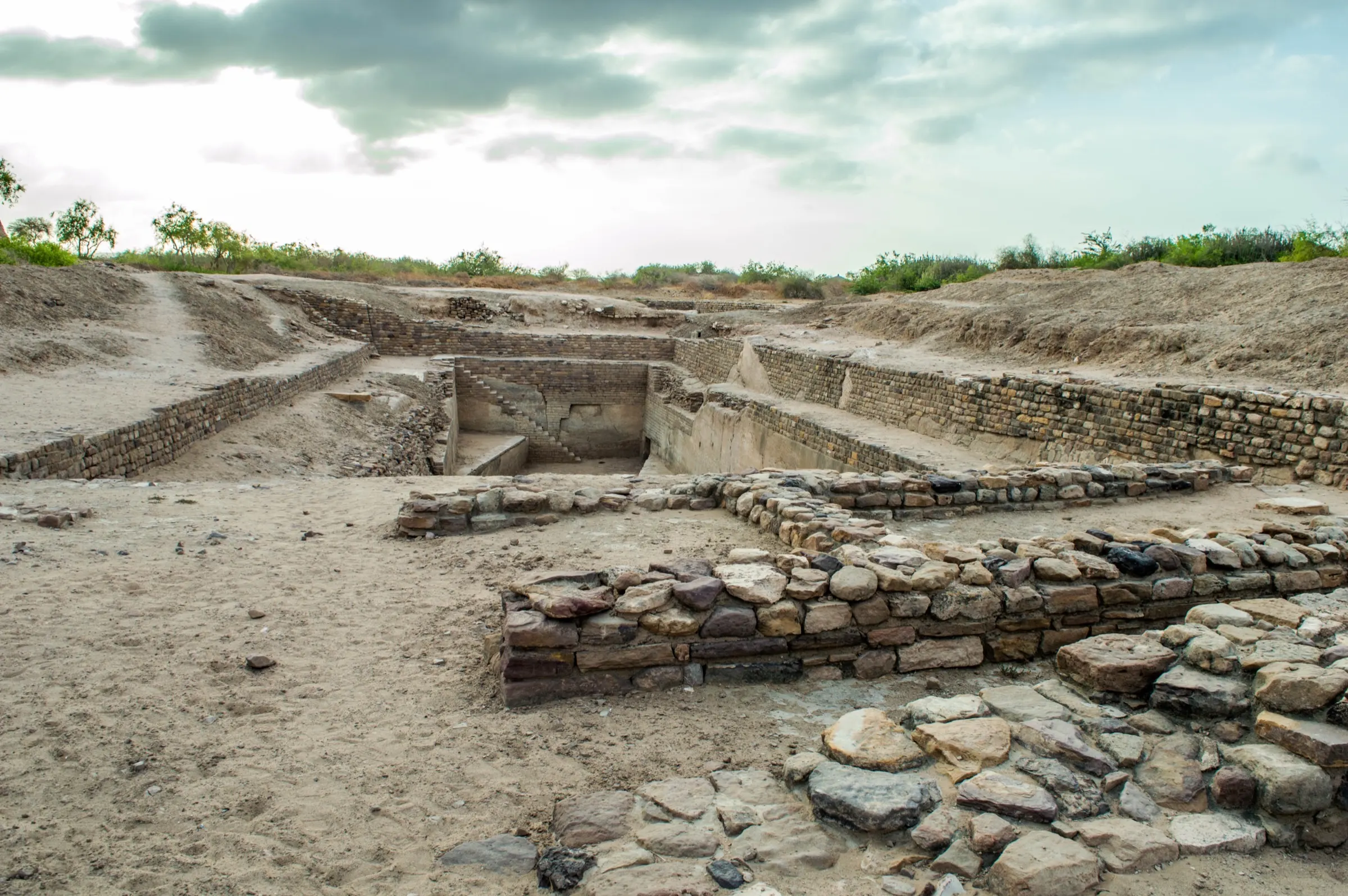
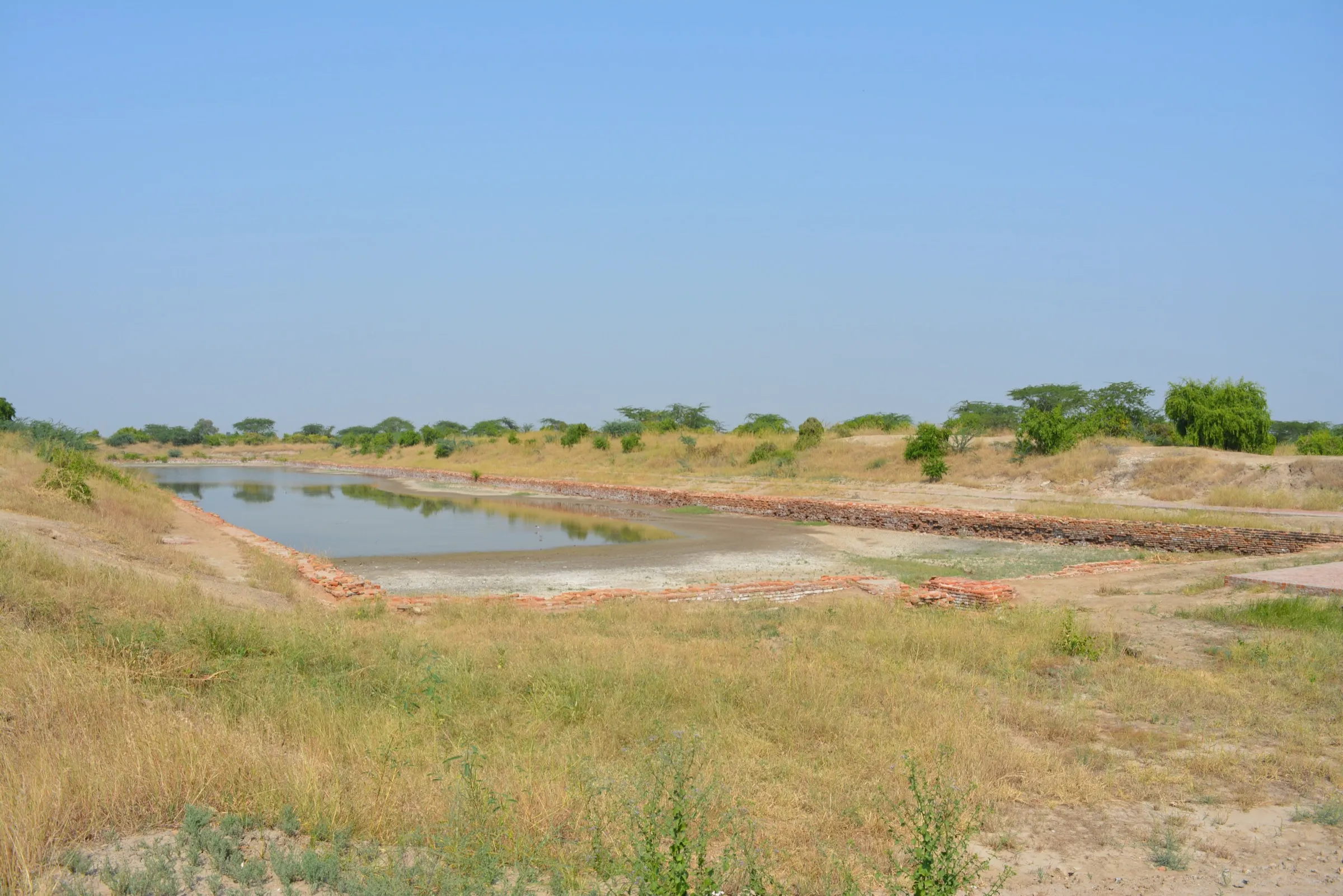
The reservoirs and channels of Dholavira in Kutch, found by J.P. Joshi in 1967-68 and dug by R.S. Bisht of the ASI from 1990.
अम्बितमे नदीतमे देवितमे सरस्वति । अप्रशस्ता इव स्मसि प्रशस्तिमम्ब नस्कृधि ॥
ambitame nadītame devitame sarasvati | apraśastā iva smasi praśastim amba nas kṛdhi ||
“Sarasvatī, best of mothers, best of rivers, best of goddesses, we are, as it were, of no repute; grant us, mother, distinction.”1
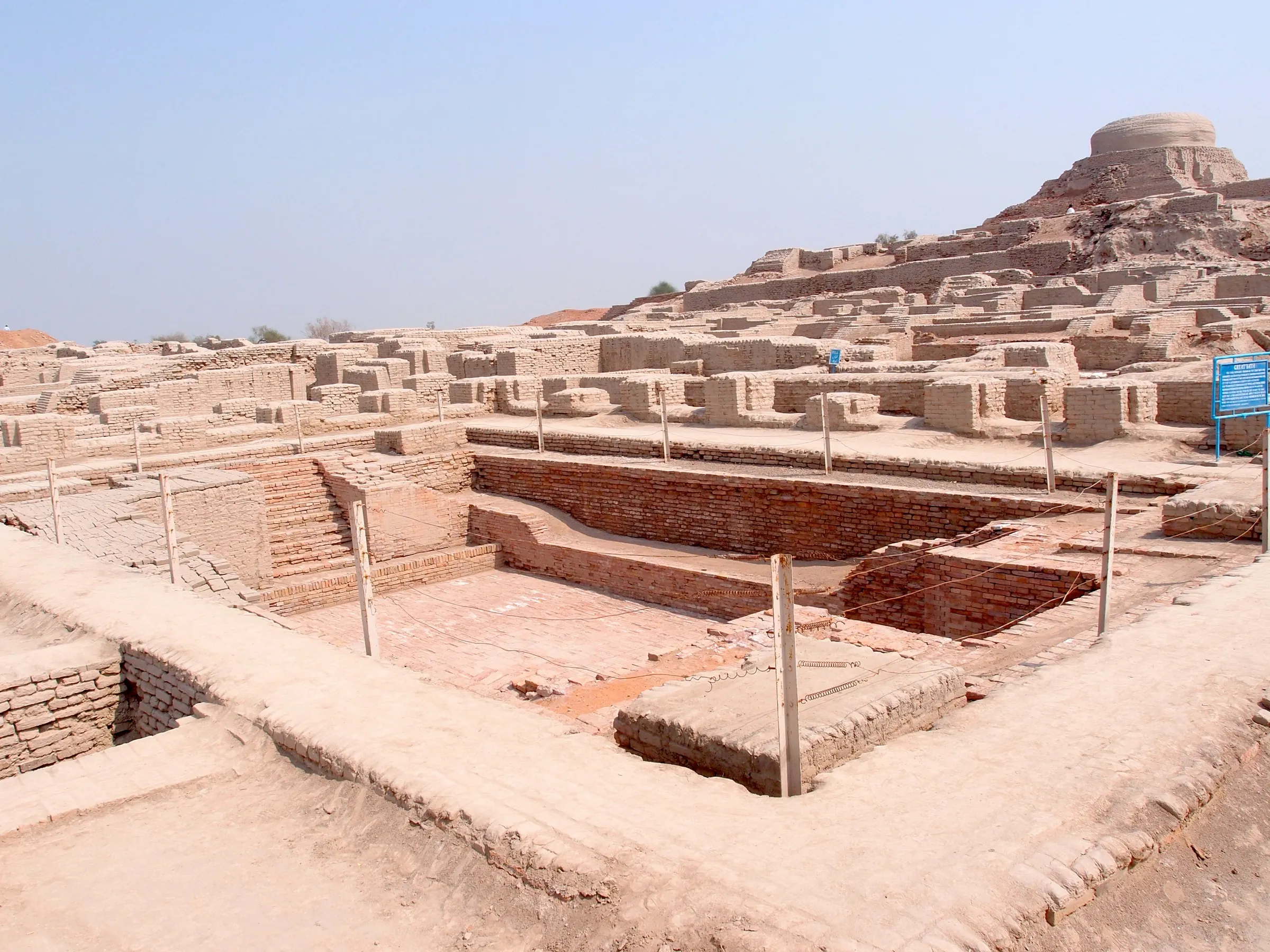
On 20 September 1924 the Illustrated London News carried an announcement by Sir John Marshall, the British director-general of the Archaeological Survey of India: a forgotten civilisation had been found on the plains of the Indus.2 The world has called it by the names of two of its sites ever since. The Indus Valley civilisation. The Harappan civilisation. Mohenjo-daro.
In 1947 both of those sites went to Pakistan. The people who first dug them were Indian, and so are most of the places where the civilisation has turned up since.
The two Indians who dug first
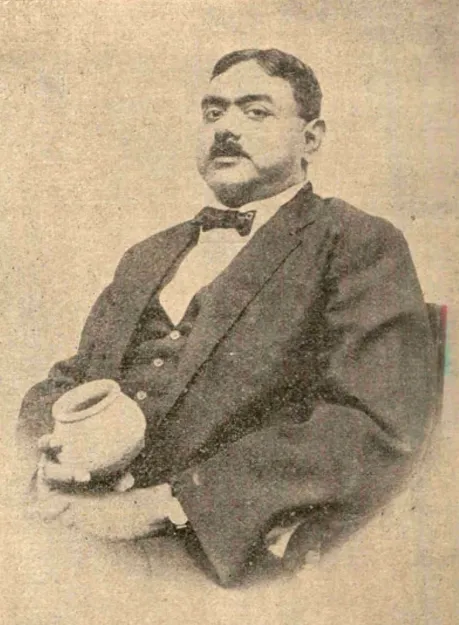
Harappa, in Punjab, was excavated in 1920-21 by Daya Ram Sahni of the ASI, working on Marshall’s instructions. Sahni had been exploring near the site since 1917.3 Ten years later, in 1931, he became the first Indian to run the ASI.3
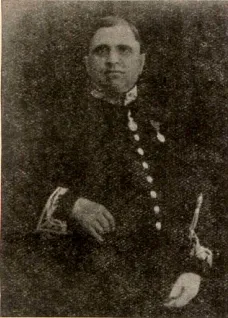
Mohenjo-daro, in Sindh, was the work of Rakhal Das Banerji. He visited the mound in 1919 and dug it in 1921-22 and 1922-23. In 1923 he wrote to Marshall proposing that the site was of remote antiquity, older than anyone had supposed.4 Marshall, writing in 1931, granted that Banerji deserved “the credit of having discovered, if not Mohenjo-daro itself, at any rate its high antiquity”.4 The 1924 announcement went out under Marshall’s name.2
Count the sites
About 40 sites of the civilisation were known before Partition.5 Seven decades of survey later, the historian Upinder Singh counted 1,022: 616 in India and 406 in Pakistan.6 Gregory Possehl’s gazetteer, counting every phase from early to late, lists about 2,600.7 Most of the finds since 1947 have come from Haryana, Rajasthan, Punjab and Gujarat, from surveys along the dry bed of the Ghaggar by Suraj Bhan of Kurukshetra University, Haryana’s archaeology department and the ASI, and in Kutch and Saurashtra by S.R. Rao and J.P. Joshi.5
Of the five largest cities usually listed, three are in Pakistan (Mohenjo-daro, Harappa and Ganweriwala) and two in India: Rakhigarhi in Haryana and Dholavira in Gujarat.5
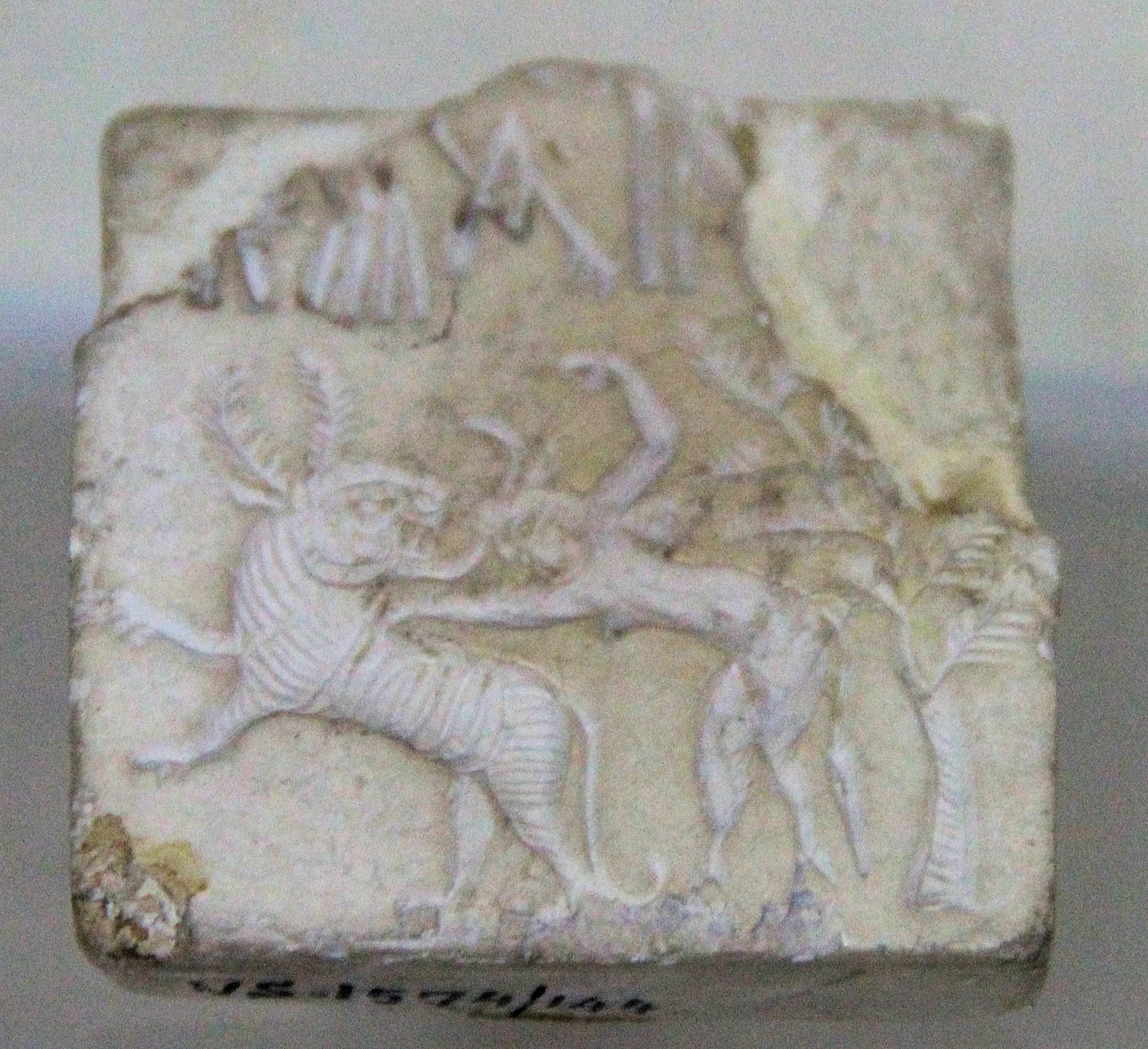
What Indian teams dug after 1947
The first Harappan site excavated in independent India was Ropar in Punjab, dug by Y.D. Sharma of the ASI in 1953-55.8 The list since then reads like a roll of honour for the ASI and Indian universities:
- Lothal, Gujarat: S.R. Rao, ASI, from 13 February 1955 to 19 May 1960. Its main town dates from about 2450 to 1900 BCE, and Rao read its great brick basin as a dockyard.9
- Kalibangan, Rajasthan: B.B. Lal and B.K. Thapar, ASI, nine seasons from 1960 to 1969. They found a ploughed field of about 2800 BCE and traces of an earthquake of about 2600 BCE.10
- Alamgirpur, Uttar Pradesh: Y.D. Sharma, 1958-59, the easternmost Harappan site.8
- Surkotada, Gujarat: J.P. Joshi, ASI, 1971-72.11
- Banawali, Haryana: R.S. Bisht, ASI, from 1974.11
- Rojdi, Gujarat: the Gujarat State Department of Archaeology with the University of Pennsylvania, 1982-95.11
- Dholavira, Gujarat: found by J.P. Joshi in 1967-68 and excavated by R.S. Bisht over 13 seasons from 1990 to 2005. Bisht put its seven stages between 2650 and 1450 BCE. UNESCO made it a World Heritage Site on 27 July 2021.12
- Rakhigarhi, Haryana: Amarendra Nath of the ASI, 1997-2000; Vasant Shinde of Deccan College, 2013-16; and Sanjay Manjul of the ASI from 2022.13
- Bhirrana, Haryana: L.S. Rao, ASI, 2003-06.14
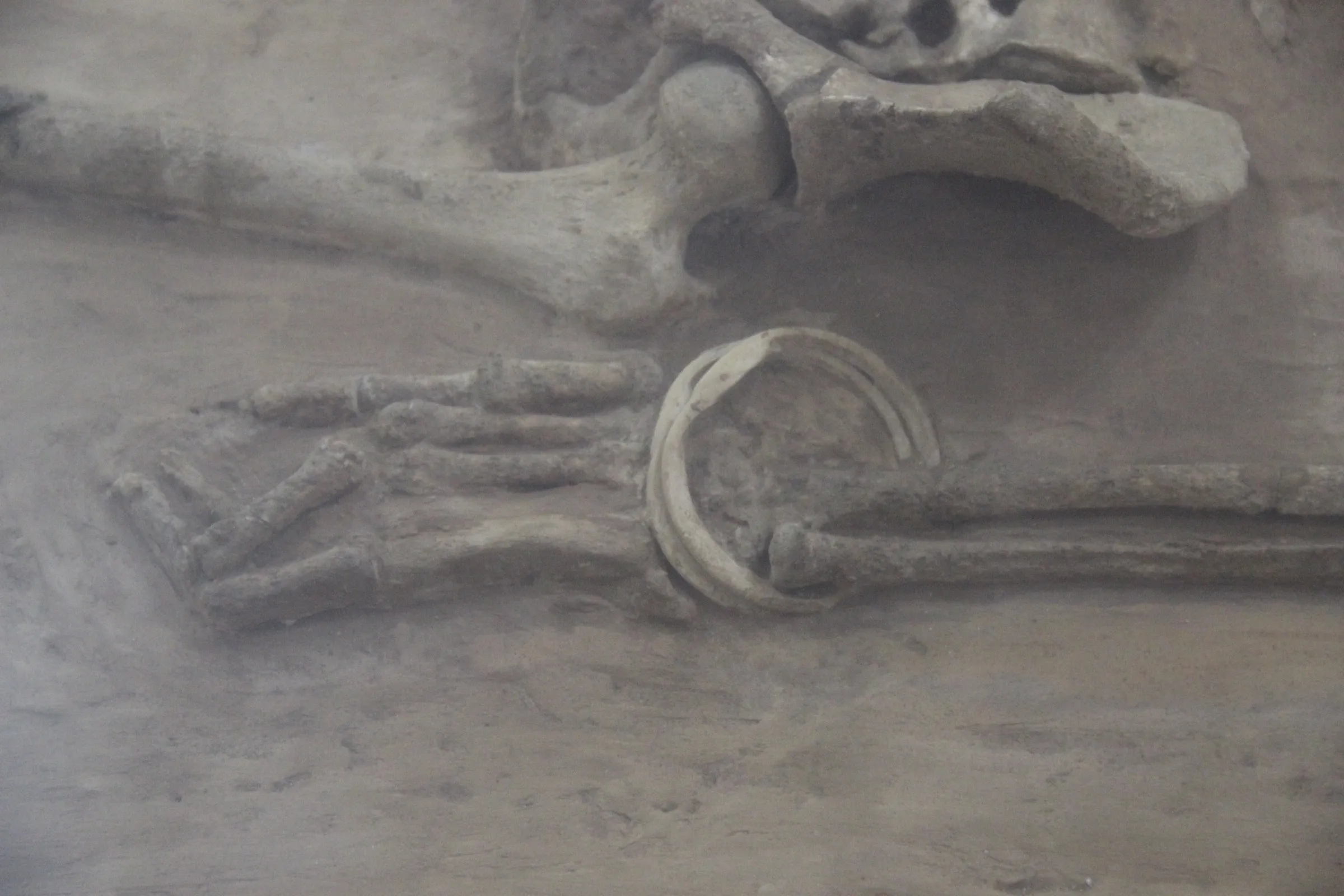
- Sinauli, Uttar Pradesh: D.V. Sharma of the ASI in 2005-06, then S.K. Manjul in 2018, who found burials with carts of about 2000-1800 BCE.15
Some of these finds pushed the start of the story back. At Bhirrana, a 2016 paper by scientists from IIT Kharagpur, Deccan College, the Physical Research Laboratory, the Birbal Sahni Institute and the ASI put the earliest phase at “older than 8 ka BP”, more than 8,000 years ago.14 Haryana’s archaeology department gives radiocarbon dates of 5700-6000 BCE for the pit dwellings at Kunal.16 Both early dates are disputed by other archaeologists, who point to younger dates from the same levels.14
The river’s name
The largest cluster of sites does not sit on the Indus at all. It lies along the Ghaggar, a seasonal river in Haryana and Rajasthan that becomes the Hakra in Pakistan. In 1893 C.F. Oldham, a surgeon in the Bengal Medical Service, argued in the Journal of the Royal Asiatic Society that the Ghaggar was the lost Sarasvati, the river the Rigveda praises above all others.17 The Chautang, which runs beside it, is usually identified with the Drishadvati; the Rigveda and Manu put the sacred land of Brahmavarta between the two.17
In 2016 a government committee of experts under the geologist K.S. Valdiya reported that the Sarasvati had existed, rising in the Himalaya and running about 4,000 km to the sea through the Rann of Kutch.18 A 2019 study by scientists from the Physical Research Laboratory and IIT Bombay found that the Ghaggar “was perennial”, fed from Himalayan sources, between about 9,000 and 4,500 years ago, which “likely facilitated development of the early Harappan settlements”.19 Other studies, including one led from IIT Kanpur in 2017, argue the Himalayan water had gone by about 8,000 years ago.19
On that basis S.P. Gupta, the former director of the Allahabad Museum, titled his 1996 book The Indus-Saraswati Civilization, and B.B. Lal and V.N. Misra used the same name.20 Indian school textbooks now use it alongside “Harappan”.20 This paper calls it the Sindhu-Sarasvati civilisation, after its two rivers.
Sanjay Manjul’s ASI team went back to Rakhigarhi, the largest of the cities on the Indian side, in 2022, and found clay soakage jars set at its street corners, which the excavators read as “an attempt by the Harappans to keep their city clean”.13
Sources and notes20
Footnotes
-
Rigveda 2.41.16, trans. H.H. Wilson. https://www.wisdomlib.org/hinduism/book/rig-veda-english-translation/d/doc831521.html. Confidence: verified. ↩
-
John Marshall, “First light on a long-forgotten civilisation”, Illustrated London News, 20 September 1924, as given in secondary accounts. Confidence: reported. ↩ ↩2
-
Daya Ram Sahni: ASI Annual Reports and secondary accounts (Live History India; Wikipedia). Marshall’s first report on Harappa appeared in 1921, so 1921 is the date usually given. Confidence: reported. ↩ ↩2
-
R.D. Banerji at Mohenjo-daro, and Marshall’s acknowledgement in Mohenjo-daro and the Indus Civilization (1931), as quoted in secondary accounts. Confidence: reported. ↩ ↩2
-
“List of Indus Valley Civilisation sites” and related reference accounts, for the pre-1947 count and the largest sites; survey history from the project notes. Confidence: reported. ↩ ↩2 ↩3
-
Upinder Singh, A History of Ancient and Early Medieval India (Pearson, 2008), as cited in reference accounts. Counts vary with how small sites are recorded. Confidence: reported. ↩
-
Gregory L. Possehl, Indus Age: The Beginnings (Oxford & IBH, 1999), site gazetteer. Confidence: reported. ↩
-
Y.D. Sharma’s excavations at Ropar (1953-55) and Alamgirpur (1958-59), ASI. Confidence: reported. ↩ ↩2
-
S.R. Rao, Lothal: A Harappan Port Town, Memoirs of the ASI 78 (1979), as summarised in secondary accounts. Confidence: reported. ↩
-
B.B. Lal, B.K. Thapar et al., Excavations at Kalibangan, ASI. Confidence: reported. ↩
-
Excavation records for Surkotada, Banawali and Rojdi as summarised in secondary accounts; Possehl’s Rojdi project page, https://www.sas.upenn.edu/~gpossehl/rojdi.html. Confidence: reported. ↩ ↩2 ↩3
-
R.S. Bisht, ASI excavations at Dholavira, 1990-2005; UNESCO World Heritage Committee, 27 July 2021. Confidence: reported. ↩
-
ASI and Deccan College excavations at Rakhigarhi; Sanjay Manjul’s 2022 season as reported by Live History India. Confidence: reported. ↩ ↩2
-
A. Sarkar et al., Scientific Reports 6: 26555 (2016). https://pmc.ncbi.nlm.nih.gov/articles/PMC4879637/. Other charcoal samples from Bhirrana’s early levels gave dates of 3200-2600 BCE. Confidence: verified (paper); the early dates are disputed. ↩ ↩2 ↩3
-
ASI excavations at Sinauli, 2005-06 and 2018, as reported in secondary accounts. Confidence: reported. ↩
-
Haryana Department of Archaeology and Museums, statement on Kunal. Confidence: verified (statement); the dates are disputed. ↩
-
C.F. Oldham, “The Saraswati and the lost river of the Indian desert”, Journal of the Royal Asiatic Society 25 (1893), pp. 49-76; Rigveda 3.23.4. Confidence: reported. ↩ ↩2
-
Report of the expert committee on the palaeochannels of north-west India, released 15 October 2016 (Business Standard/PTI). Confidence: reported. ↩
-
A. Chatterjee, J.S. Ray, A.D. Shukla and K. Pande, “On the existence of a perennial river in the Harappan heartland”, Scientific Reports 9 (2019); A. Singh et al., Nature Communications 8 (2017); L. Giosan et al., PNAS 109 (2012). Confidence: verified (abstracts). ↩ ↩2
-
S.P. Gupta, The Indus-Saraswati Civilization: Origins, Problems and Issues (Pratibha Prakashan, 1996). Confidence: reported. ↩ ↩2
Letters
No letters on this report yet.
Letter received
Thank you. It is with the editors now and will appear here if we publish it.