The slur ledger · Part 2 · 1965–2010
Dot heads
In 1965 America opened its door to Indians, and by the summer of 1987 a gang in Jersey City had named itself after the dot worn on Indian foreheads. The slurs of the next 45 years, from the Dotbusters to Apu to a Senate campaign stop in Virginia, with the names of who said them and what they said afterwards.
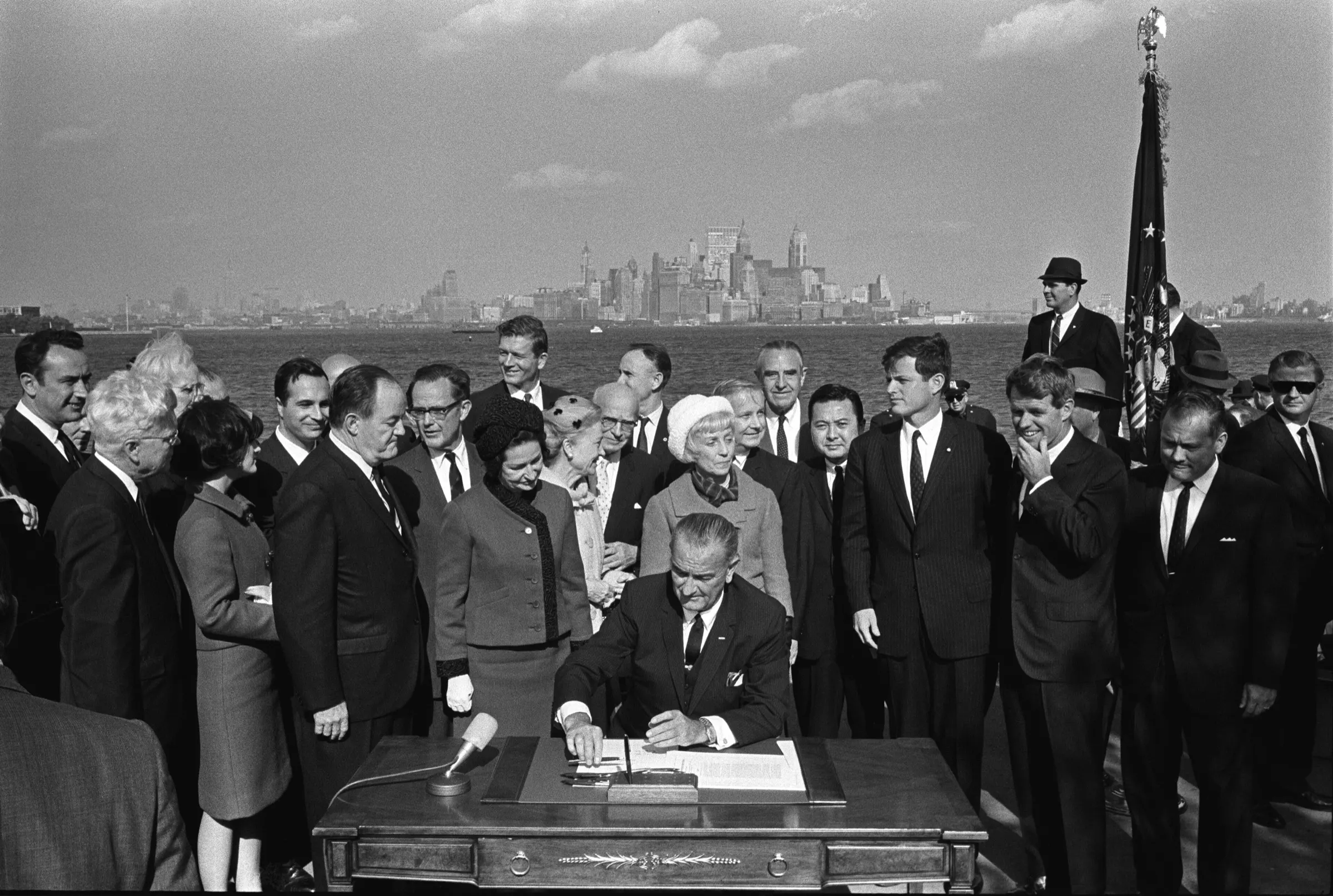
Lyndon B. Johnson signs the Immigration Act on Liberty Island, 3 October 1965, with Hubert Humphrey, Lady Bird Johnson, Muriel Humphrey and Senators Edward and Robert Kennedy among those looking on. "It does not affect the lives of millions," he said.Yoichi Okamoto, White House photographer / LBJ Presidential Library. Public domain, via Wikimedia Commons
In the summer of 1987 The Jersey Journal printed a letter signed “Dotbusters”. As later accounts quote it, it read: “We will go to any extreme to get Indians to move out of Jersey City. If I’m walking down the street and I see a Hindu and the setting is right, I will hit him or her. They are a weak race physically and mentally… We will never be stopped.”1
On 12 October the New York Times reported from Jersey City. “A group of teenagers giggled and joked about the beatings of ‘dotheads’,” the paper reported. One told it: “It’s the white people against the Hindus.” Another said: “I can’t stand them.”2 That article is the earliest citation for “dothead” in Green’s Dictionary of Slang, which defines it as “a derog. term for an Indian”, from the bindi worn on the forehead.3
Part 1 of the slur ledger ran to 1965. This part runs from the year America opened its door to the summer of 2010.
The bill that would not change much
Lyndon B. Johnson signed the Immigration and Nationality Act, known as Hart-Celler, on Liberty Island on 3 October 1965. He called the old national-origins quotas “un-American in the highest sense”, and he played the bill down: “This bill that we will sign today is not a revolutionary bill. It does not affect the lives of millions.”4
In 1960 about 12,000 Indian immigrants lived in the United States, under 0.5 per cent of the 9.7 million foreign-born. With the quotas gone and new visas for skilled workers, the Migration Policy Institute says, migration from India “swelled between 1965 and 1990”.5 In Joel Stein’s account of his home town, Edison, New Jersey, the first to come were “engineers and doctors”, who later brought “merchant cousins”.6 By 1987 Jersey City had about 223,000 people, 9,000 to 10,000 of them Indian, settled around Journal Square and Central Avenue.7
Jersey City, 1987
Elizabeth Gutierrez of Temple University, in a 1996 study, counted more than 15 Indians “brutally attacked in or around Jersey City” in the nine months from June 1987 to February 1988.7 Ramesh Patel of the Gujarati Samaj dated the trouble earlier. “It began at this time last year, during Navaratri,” he told Hinduism Today for its November 1987 issue. “Incidents were egg-throwing, verbal harassing…”8
The Dotbusters’ letter, Gutierrez wrote, described “the groups’ technique of searching the local telephone directory for common Indian surnames” and “claimed that three ‘Patel attacks’ would take place that evening.” In September 1987 Bhered Patel was beaten “with a metal pipe while he slept in his Jersey City home”. A 21-year-old who said he had written the letter was arrested over that beating a few days later. The Dotbusters “only took responsibility for one of the attacks, that on Mr. Patel,” she wrote; none of the other people arrested claimed any link to the group.7
On 27 September 1987 Navroze Mody, a 30-year-old Citicorp manager who lived in Jersey City, was set on outside the Gold Coast Cafe in Hoboken by a group of about ten to twelve youths. The federal appeals court that later heard his family’s case recorded that they “taunted him for his baldness as either ‘Kojak’ or ‘Baldie’” and beat him “with fists and feet and with an unknown object that was described as either a baseball bat or a brick”. His white companion was not hurt. Mody died on 1 October.9
Luis Acevedo, Ralph Gonzalez and Luis Padilla were convicted of aggravated assault, and William Acevedo of simple assault.9 Nobody was convicted of murder, manslaughter or a bias crime. Gonzalez, Padilla and the younger Acevedo each got the maximum ten years, Hinduism Today reported. Jack Hill, a staff attorney for Jersey City, told the trial: “we believe [the boys] did not know [Mody] was an ethnic Indian.” Mody’s father sought a mistrial over jury selection.10 His parents and the community pointed out that Mody was not robbed, his white friend was left alone, and two of the suspects admitted earlier attacks on Indians.7 The Third Circuit, ruling in 1992 on the family’s civil suit against Hoboken and its police, found “no direct evidence” in its record of racial epithets during the attack and upheld the directed verdict for the city and its police.9
Days apart from the Mody attack, Kaushal Saran (also spelled Sharan), a doctor licensed in India and waiting for his American licence, was found unconscious at Central and Ferry Avenues in Jersey City Heights. He was in a partial coma for more than a week, with severe damage to his skull and brain.11 Thomas Kozak, Martin Ricciardi and Mark Evangelista were tried on federal civil-rights charges from September 1992 and acquitted in two trials in 1993. Saran testified that he could not remember the attack.11 A Jersey City memorial project, the only source found for it, quotes him: “Kozak admitted to kicking me and left me there to die. In his own words, Kozak said, ‘Asian Indians are not Americans.’”12
Gutierrez records Jakariya Kirit, followed and beaten in Jersey City Heights by teenagers “after calling him a ‘dirty Hindu’”, and two more Indians beaten soon after “with similar ethnic slurs”. She also lists the shooting of Malkiat Singh, a New York taxi driver, in Jersey City; her dates for this run of attacks contradict each other, so neither is dated here.13 Eggs and metal were thrown at an Indian home, women were spat on, a windscreen was smashed. A resident’s wife asked the Times: “Why they kill us? We are Americans, too.” A gynaecologist who had lived in the city for 21 years said, “We are paralyzed and petrified with fear”, and stopped wearing her sari and bindi.7
Mayor Anthony Cucci said resentment might lie behind the violence, “an animalistic approach to territorial domain. Maybe it’s a form of jealousy.” The Hudson County prosecutor, whom Gutierrez does not name, said the suspects probably “didn’t like Asian Indians” but denied any ethnic motive, and said the Dotbusters had probably “started as a joke” among people who barely knew each other. Assemblyman Robert Charles disagreed: “I’d have to conclude that there is ethnic motivation… they are motivated by antipathy and hostility toward the Indian community.”7
More than 500 people marched through Journal Square around 11 and 12 October 1987, and the Justice Department was called in.14 New Jersey stiffened its penalties for bias crimes in 1990. In 1991, 58 hate-crime cases against Indians were reported in the state.15
Brownface and the Indian voice
In The Party (1968), directed by Blake Edwards, Peter Sellers, a white British actor, played the Indian actor Hrundi V. Bakshi in dark make-up and an accent.16
Eighteen years later it happened again. In TriStar’s Short Circuit (1986), directed by John Badham, Fisher Stevens, a white American, played the Indian scientist Ben Jabituya in darkened make-up and an accent; in Short Circuit 2 (1988), directed by Kenneth Johnson, the character, now Ben Jahveri, was the lead. The part had been rewritten from white to Indian during development, and Stevens kept it.17
Aziz Ansari wrote in the New York Times in 2015 that Short Circuit 2 was the first American film he saw with an Indian lead, before he learned the actor was white and had to “sit every morning in a makeup chair and get painted an ‘Indian color’ before going on set and doing his ‘Indian voice.’”18 In 2021 Stevens told Yahoo Entertainment: “It definitely haunts me. I still think it’s a really good movie, but I would never do that part again.”19
Kali in the cinema
Indiana Jones and the Temple of Doom opened on 23 May 1984. Paramount and Lucasfilm made it; Steven Spielberg directed; the story was George Lucas’s and the screenplay Willard Huyck and Gloria Katz’s. Robert Watts produced, with Lucas and Frank Marshall as executive producers, and Kathleen Kennedy.20
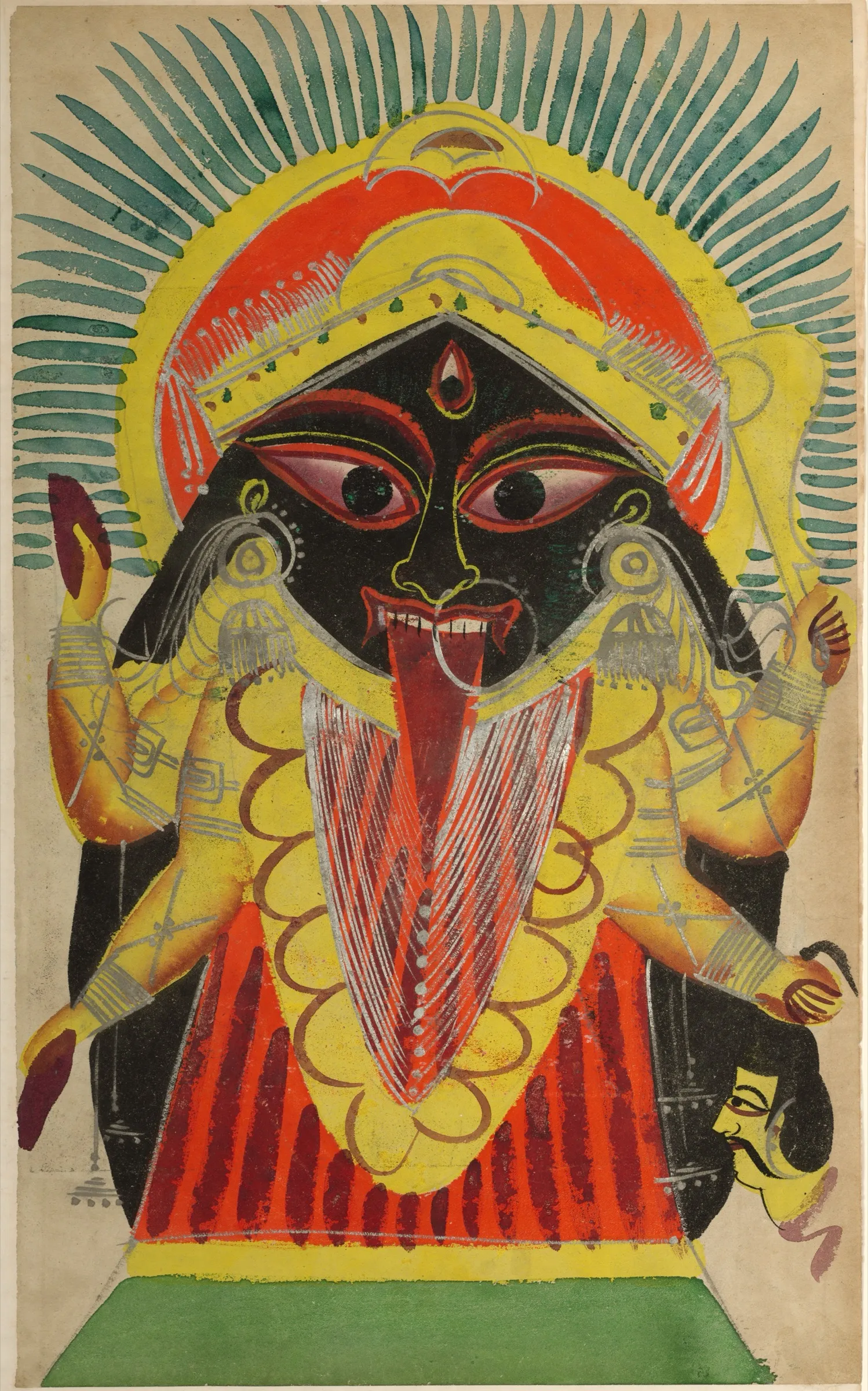
Its India has a Thuggee cult that worships Kali and practises human sacrifice; the priest Mola Ram, played by Amrish Puri, pulls the heart out of a living man. Village children are enslaved to dig in mines. The banquet at Pankot Palace serves baby snakes, beetles, eyeball soup and chilled monkey brains.20
India would not let them film there. The government found “the script offensive” and asked for script approval and, in Frank Marshall’s account, “final cut privilege”. The production offered to drop the word “maharajah” and move the story to a fictional border principality, then took the shoot to Kandy, in Sri Lanka.21
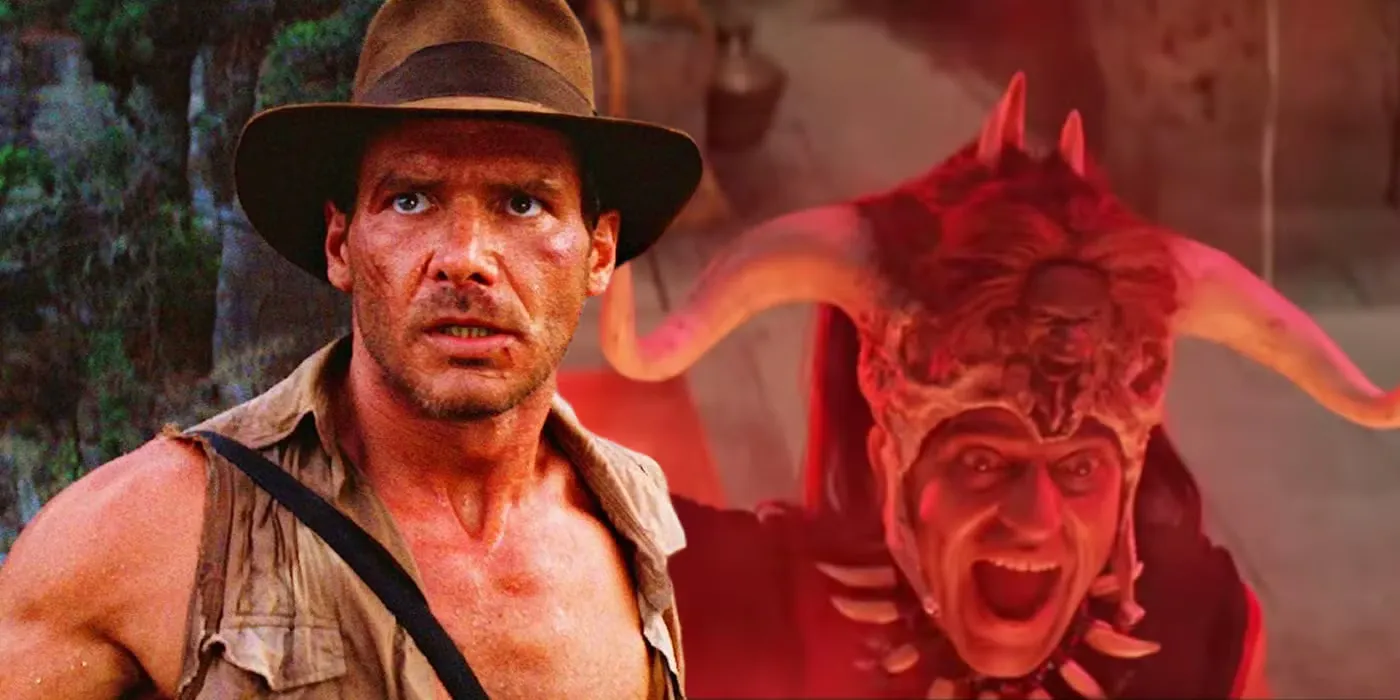
Roshan Seth, who played the prime minister Chattar Lal, later said the banquet was “a joke that went wrong” and its humour “too subtle”.20 Spielberg, promoting the next film in 1989, said: “I wasn’t happy with Temple of Doom at all. It was too dark, too subterranean, and much too horrific.” Lucas said: “The story ended up being a lot darker than we intended it to be. Part of it is that I was going through a divorce at the time and I wasn’t in a good mood.”22 Their regrets are about darkness and violence. No statement by either man about the film’s picture of Indians was found. Its violence led Spielberg to propose the PG-13 rating, which arrived in July 1984.20
Thank you, come again
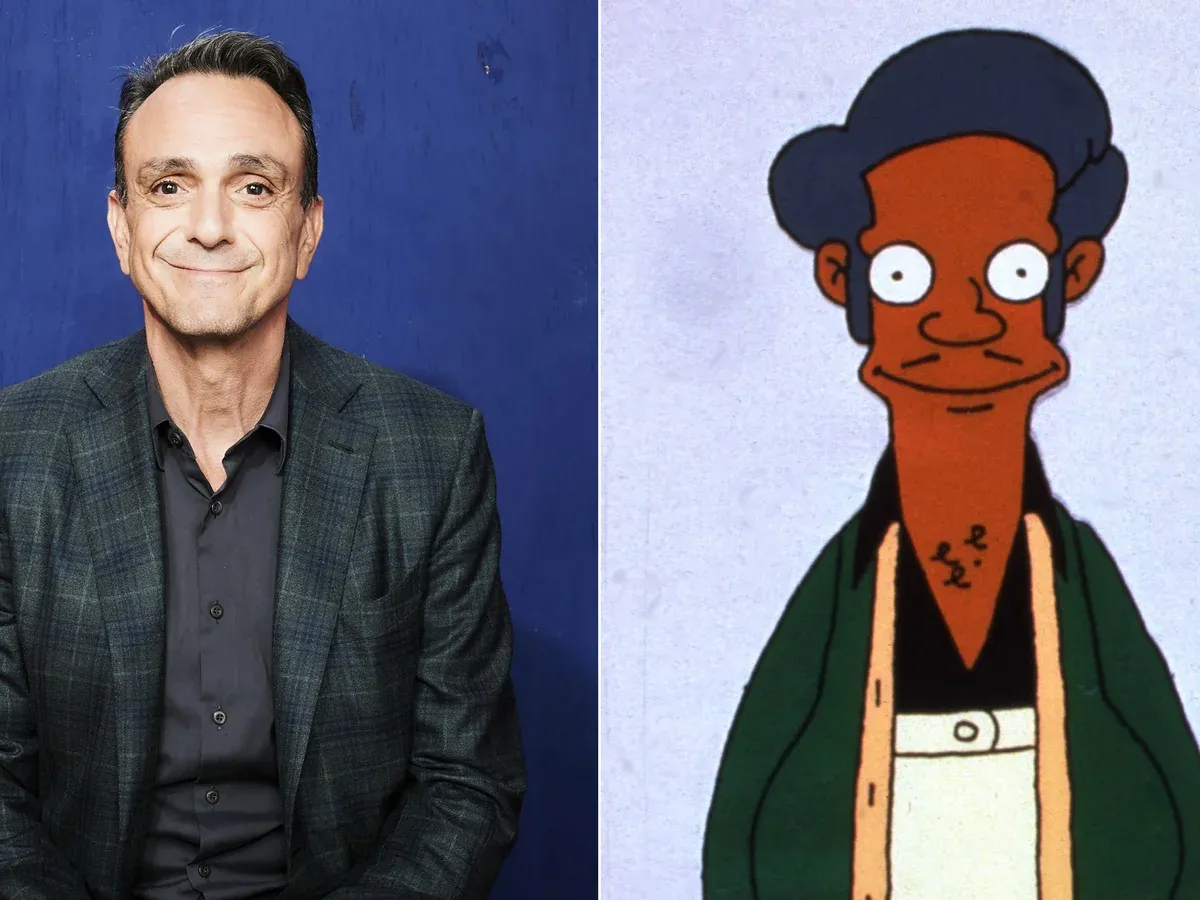
From 1990 The Simpsons, on Fox, had a Kwik-E-Mart clerk called Apu Nahasapeemapetilon, with the catchphrase “Thank you, come again.” Matt Groening created the show and developed it with James L. Brooks and Sam Simon. Hank Azaria, a white American actor, voiced Apu, and according to Hari Kondabolu’s documentary he based the voice partly on Sellers in The Party.23
Kondabolu’s film, The Problem with Apu, directed by Michael Melamedoff, went out on truTV on 19 November 2017. He called Apu “a white guy doing an impression of a white guy making fun of my father.” People in the film describe being taunted at school with Apu’s voice and lines.23
The show answered on 8 April 2018, in an episode called “No Good Read Goes Unpunished”. Lisa, looking at a framed photo of Apu signed “Don’t have a cow!”, says: “Something that started decades ago and was applauded and inoffensive is now politically incorrect. What can you do?”24 Groening told USA Today that month: “I think it’s a time in our culture where people love to pretend they’re offended.” Mike Reiss, a long-serving writer on the show, called Kondabolu’s film a “nasty little documentary” in his 2018 book Springfield Confidential, and said the children doing the bullying were “being dicks”.23
Azaria went on The Late Show with Stephen Colbert on 24 April 2018. “The idea that anybody, young or old, past or present, was bullied or teased based on the character of Apu, it just really makes me sad,” he said. He was “perfectly willing to step aside”, and wanted “Indian, South Asian writers in the writers’ room”.25 In January 2020 he said he would no longer voice Apu.26 On the Armchair Expert podcast on 13 April 2021 he said: “I really do apologize… I apologize for my part in creating that and participating in that.” He also said: “Part of me feels I need to go round to every single Indian person in this country and apologize.” He called it “participating in racism, or… structural racism”.27
The Big Bang Theory (CBS, 2007 to 2019), created by Chuck Lorre and Bill Prady, cast Kunal Nayyar, who was born in London and grew up in New Delhi, as Raj Koothrappali. Critics listed the funny foreigner, the rich boy from Delhi, the effeminacy jokes and a man who cannot speak to women unless drunk. Nayyar said the show “allowed me to really be an Indian, who has Indian qualities who doesn’t always run away from them”.28
Outsourced (NBC, September 2010 to 13 May 2011) put an American manager in charge of a Mumbai call centre. The Stanford Daily wrote on 8 October 2010 of its shock at “the level of insensitivity, stereotype reinforcement and outright racism” in the pilot, with jokes about food, cows and mispronounced names. Its producers said it was a comedy of character and that a third of the writers were Indian. NBC cancelled it after one season.29
Motels and the “American owned” sign
Gujarati Patels went into motels from the 1970s. Steven Belmonte, a hotel industry executive, told the Commercial Observer that in the 1980s “some American hotel owners, Caucasians, would put big signs on the highway that said ‘American-owned or non-Indian owned’”, because “the traveling public considered Indian motels as substandard, dirty operations.”30 The Indian owners’ groups merged into the Asian American Hotel Owners Association in 1989. A history of the association published by eTurboNews says that from the mid-1970s banks and insurers turned Indian hoteliers away, and that a regional convention of fire marshals heard that Patels burned their motels for the insurance; no record of the convention has been found to back it.31
On the campaign trail
At a fundraiser in St Louis for Nancy Farmer’s Senate campaign in early January 2004, Hillary Clinton introduced a quotation from Gandhi: “He ran a gas station down in St. Louis.” When the laughter died: “No, Mahatma Gandhi was a great leader of the 20th century.” She later called it “a lame attempt at humor” and said she regretted it.32
In the summer of 2006 Joe Biden told an Indian American supporter, on C-SPAN: “You cannot go to a 7-Eleven or a Dunkin’ Donuts unless you have a slight Indian accent. I’m not joking.” His office said he meant to praise Delaware’s Indian community of “engineers, scientists and physicians”, and he told MSNBC: “It was meant as a compliment.” Dr Vijay, founder of the Indian-American Republican Council, called it “clearly over the top”. Supriya Christopher of USINPAC said it had been “taken out of context”.33
On 11 August 2006, at a stop in Breaks, Virginia, Senator George Allen picked out S.R. Sidarth, a 20-year-old Indian American volunteer filming for his opponent, Jim Webb. Sidarth was born and raised in Fairfax County. “This fellow here over here with the yellow shirt, Macaca, or whatever his name is. He’s with my opponent… Let’s give a welcome to Macaca, here. Welcome to America and the real world of Virginia,” Allen said. Sidarth said he was “humiliated and appalled”. Allen said he had made the word up and did not know it was derogatory. Two weeks later he apologised in public, and he phoned Sidarth on 24 August. He lost the seat.34
Demons and cannibals
On The 700 Club on 23 March 1995, according to Hinduism Today, the only detailed account of the broadcast found, Pat Robertson called Hinduism “demonic” and said “the Hindu faith has absolutely nothing to do with God!” He said idol worship “has put a nation in bondage to spiritual forces”, and described a Shiva image as “the God of Destruction, and his consort, the Goddess of death… that black, ugly statue there with all those fierce eyes.” His son Gordon Robertson added: “Wherever you find this type of idolatry, you’ll find grinding poverty.” Robertson did not apologise, and a letter he sent in August 1995 restated his view.35
In October 1999 the Southern Baptist Convention’s International Mission Board printed about 30,000 copies of a prayer guide for Diwali. As the Washington Post first reported on 21 October, it said: “More than 900 million people are lost in the hopeless darkness of Hinduism”, and that Hindus “seek power and blessing through the worship of gods and goddesses and the demonic powers that lay behind them”. It asked readers to pray that Hindus “would become aware of the darkness in their hearts that no lamp can dispel.”36 No response from the board was found.
The cannibal followed. On 30 September 2006 VICE ran “American Aghori”, about an American who “became lost in a lifestyle of grave robbing and cannibalizing the bodies”, and told its readers: “One Aghori in northern India ate part of the rotting penis of a bloated, vivisected corpse on the banks of the Ganges.”37
After 11 September
On 15 September 2001 Frank Silva Roque shot Balbir Singh Sodhi dead at the Chevron station Sodhi owned in Mesa, Arizona, firing from his truck. Sodhi was a Sikh. The same day Roque fired at a Lebanese American’s station and at the home of an Afghan American family. Before the shootings he had told a colleague at Boeing he wanted to shoot some “rag heads”; the court took him to mean people he perceived as Arab. At his arrest he said: “I’m a patriot and American. I’m American. I’m a damn American.” In the patrol car: “How can you arrest me and let the terrorists run wild?”38
He was convicted of first-degree murder on 30 September 2003 and sentenced to death on 9 October. On 14 August 2006 the Arizona Supreme Court cut the sentence to natural life, citing “substantial mitigating evidence” of low IQ and mental illness. “Because of the serious nature of Roque’s crimes, however, we conclude that he should be imprisoned for the rest of his natural life and never be released,” Vice Chief Justice Rebecca White Berch wrote. Sodhi’s brother Rana Singh Sodhi said: “He targeted certain people. That made it very clear he was doing a hate crime.”39
On 4 October 2001 Mark Anthony Stroman shot dead Vasudev Patel, 49, an Indian immigrant, at Patel’s gas station in Mesquite, Texas. Stroman had already killed Waqar Hasan, from Pakistan, in Dallas on 15 September, and blinded Rais Bhuiyan, from Bangladesh, in one eye on 21 September. From prison in 2002 he wrote: “Here sits the Arab Slayer.” He was tried for Patel’s murder and executed by Texas on 20 July 2011.40
On 19 May 2003 Avtar Singh, a Sikh truck driver, was shot and wounded in Phoenix; police said he appeared to have been targeted, and the shooter reportedly yelled “Go back to where you came from.”41 On 11 July 2004 in Richmond Hill, Queens, five men mocked the turbans of Rajinder Singh Khalsa and Gurcharan Singh as “dirty curtains”, demanded they take them off, and punched and kicked Khalsa unconscious. All five were convicted, two of hate-crime assault, with sentences from five days to two years.42
SAALT, then South Asian American Leaders of Tomorrow, counted 645 bias incidents reported in the press against people taken for Middle Easterners between 12 and 17 September 2001.43 The Sikh Coalition documented “over 300 cases of violence and discrimination against Sikh Americans” in the first month.44
The schoolyard
In New York City in 2008, half of all Sikh students and 60 per cent of those who wore turbans reported bullying; in Queens, 62 per cent of turbaned students had been bullied and 42 per cent “hit or involuntarily touched because of their turbans”. A Bay Area survey in 2010 found 47 per cent of Sikh young people, and 69 per cent of turbaned Sikh boys, reporting “bias-based bullying and harassment”.45 The coalition lists Harpal Singh Vacher, whose hair was cut by another student in New York City in 2007, and Jaskirat Singh, whose turban a classmate set on fire in Hightstown, New Jersey, in 2008.44
Its 2014 report, “Go Home, Terrorist”, describes what the children were called: “‘Bin Laden’ or ‘terrorist’”, or told to “Go back to their country”. “Classmates make fun of their turbans and even try to forcibly remove them.”45 No dated survey of Hindu or other Indian American pupils before 2010 was found.
“Dot heads” in TIME
On 5 July 2010 TIME printed a humour column by Joel Stein, “My Own Private India”, about the Indians who had moved to Edison. “At which point my townsfolk started calling the new Edisonians ‘dot heads,’” he wrote. “One kid I knew in high school drove down an Indian-dense street yelling for its residents to ‘go home to India.’ In retrospect, I question just how good our schools were if ‘dot heads’ was the best racist insult we could come up with for a group of people whose gods have multiple arms and an elephant nose.” He also coined “Guindians” and joked about their cologne.6
TIME appended a note: “We sincerely regret that any of our readers were upset by this humor column of Joel Stein’s. It was in no way intended to cause offense.” Stein said: “I truly feel stomach-sick that I hurt so many people.”46
The trope ledger
| Slur or trope | First on record | Where it came from | Seen again |
|---|---|---|---|
| “Dothead”, “Dotbuster” | The gang’s letter, summer 1987; New York Times, 12 October 1987 | The bindi or tilak (dictionary-verified) | Richard Price, Clockers, 1992; Joel Stein, TIME, 2010 |
| “Raghead”, of Indians | Aberdeen Herald, Washington, 1 December 1910, of “Hindu” labourers (Part 1) | The turban (dictionary-verified) | Carl Hiaasen, of Sikhs, 1986; Roque’s “rag heads”, 2001 |
| “Towelhead” | Barry Humphries, 1985; Arizona Republic, 1995, of Pakistani motel buyers | Aimed at Arabs, popular from the 1991 Gulf War (dictionary-verified); turned on Sikhs and Indians after 2001 | Schoolyards after 2001 |
| “Camel jockey” | Reno Evening Gazette, 1961, of a Pakistani | Aimed at Arabs, stretched to South Asians (dictionary-verified) | |
| “Curry-muncher” | Bulletin, Sydney, 1900, “curry-eaters”; “curry-muncher” in a New Zealand slang dictionary, 1988 | Food as a smell slur (dictionary-verified; see Curry doesn’t stink, you do) | |
| “Dirty Hindu” | Jersey City, 1987 or 1988 (reported) | Religion used as an insult | The Kirit beating |
| “Terrorist”, “Bin Laden”, “go home” | September 2001 | Misidentification after 9/11 | Sodhi, 2001; Avtar Singh, 2003; school surveys, 2008 to 2014 |
| “Dirty curtains”, of turbans | Queens, 11 July 2004 (reported) | ||
| The corner-shop clerk | Apu, The Simpsons, 1990 | A real post-1965 small-business niche, turned into a caricature (reported) | Biden’s 7-Eleven line, 2006 |
| The gas-station Indian | Clinton’s Gandhi joke, January 2004 (reported) | The same niche | Sodhi and Patel, killed at their stations in 2001 |
| “American owned” motel signs | Highways in the 1980s (one industry executive’s account) | Gujarati Patel motel ownership from the 1970s | “Patel motel cartel”, origin unknown |
| The arsonist Patel | Mid-1970s, a fire marshals’ convention, per a history of the hoteliers’ association (no primary found) | ||
| Brownface and the “Indian voice” | The Party, 1968, in this period (reported) | White actors in make-up | Short Circuit, 1986 and 1988; Apu’s voice, 1990 |
| Monkey-brain eaters | Temple of Doom, 23 May 1984 | A Hollywood dish, not an Indian one (reported) | |
| The Kali cult, human sacrifice | Temple of Doom, 1984, in this period | The British colonial Thuggee story (reported) | |
| “Demonic” Hinduism | Pat Robertson, 23 March 1995 (one source); Southern Baptist prayer guide, October 1999 (reported) | A television broadcast and a mission board’s prayer guide | |
| Cannibal Hindus | VICE, 30 September 2006 (earliest found) | A tiny sect, sensationalised (reported) | CNN, Believer, 5 March 201747 |
| The call-centre accent | Outsourced, NBC, September 2010, as a landmark | The offshoring boom of the 2000s (reported) | |
| The nerdy, sexless Indian man | Short Circuit, 1986; Raj, 2007 (reported) | ||
| “Macaca” | George Allen, 11 August 2006 | Allen said he made it up; Wikipedia records it as a slur in French colonial North Africa (questionable) |
What the FBI counted
The FBI’s count of anti-Islamic incidents went from 28 in 2000 to 481 in 2001.49 It had no category for crimes against Sikhs or Hindus. Attacks on them were filed as anti-Islamic, anti-Asian or “other”. After the shooting at the Oak Creek gurdwara in Wisconsin in August 2012 and lobbying by the Sikh Coalition, the FBI announced the change in 2013, and the categories began in 2015. For the 50 years from 1965 to 2014, there is no federal count of crimes against Hindus or Sikhs.50
Sources and notes50
Footnotes
-
Letter signed “Dotbusters”, The Jersey Journal, 1987, as quoted by The Juggernaut, “The Dotbusters Were Not ‘A Joke’” (n.d.), https://www.thejuggernaut.com/dotbusters-attacks-anti-indian-hate-crimes-history, and Wikipedia, “Dotbusters”, https://en.wikipedia.org/wiki/Dotbusters. The original newspaper page has not been seen. Wikipedia and The Juggernaut date it July 1987; Gutierrez (1996) says August 1987; the text uses “summer”. Confidence: reported. ↩
-
Michel Marriott, “In Jersey City, Indians Protest Violence”, New York Times, 12 October 1987, p. B1, as quoted in Elizabeth Gutierrez, “The ‘Dotbuster’ Attacks”, Middle States Geographer (1996), pp. 30-38, and in Green’s Dictionary of Slang. Confidence: reported. ↩
-
Jonathon Green, Green’s Dictionary of Slang, digital edition, “dot, n.2: dothead”. https://greensdictofslang.com/entry/mo2mvvy. Confidence: verified. ↩
-
Lyndon B. Johnson, Remarks at the Signing of the Immigration Bill, Liberty Island, New York, 3 October 1965, American Presidency Project. https://www.presidency.ucsb.edu/documents/remarks-the-signing-the-immigration-bill-liberty-island-new-york. Confidence: verified. ↩
-
Migration Policy Institute, “Indian Immigrants in the United States” (2022, updated 2024). https://www.migrationpolicy.org/article/indian-immigrants-united-states-2022. Confidence: reported. ↩
-
Joel Stein, “My Own Private India”, TIME, 5 July 2010. https://time.com/archive/6597230/my-own-private-india/. The account of Edison’s first arrivals is Stein’s. Confidence: verified. ↩ ↩2
-
Elizabeth Gutierrez, “The ‘Dotbuster’ Attacks: Hate Crime Against Asian Indians in Jersey City, New Jersey”, Middle States Geographer (1996), pp. 30-38, drawing on New York Times reporting of 12 October 1987 and 10 July 1988. https://www.overcominghateportal.org/uploads/5/4/1/5/5415260/dotbuster_attacks.pdf. Confidence: reported. ↩ ↩2 ↩3 ↩4 ↩5 ↩6
-
“New Jersey Man Murdered in Anti-Hindu Violence”, Hinduism Today, November 1987. https://www.hinduismtoday.com/magazine/november-1987/1987-11-new-jersey-man-murdered-in-anti-hindu-violence/. Confidence: reported. ↩
-
Mody v. City of Hoboken, 959 F.2d 461 (3rd Cir. 1992). https://law.resource.org/pub/us/case/reporter/F2/959/959.F2d.461.91-5407.html. The court records the attack on 27 September and the death on 1 October 1987, and the convictions; it says its record did not show the sentences. Confidence: verified. ↩ ↩2 ↩3
-
“‘Dotbuster’ Trial Ends in Conviction”, Hinduism Today, July 1989. https://www.hinduismtoday.com/magazine/july-1989/1989-07-dotbuster-trial-ends-in-conviction/. The court opinion names “Luis Acevedo”; Hinduism Today gives “Daniel Luis Acevedo”. William Acevedo, 18, was awaiting sentence. Confidence: reported. ↩
-
Wikipedia, “Dotbusters”; We’re Here JC, “Site #15 / Kaushal Saran”, https://www.wereherejc.info/sites/SARAN, citing the New York Times, 29 May 1993. The three defendants are not described as police officers in any source found. Hinduism Today (November 1987) gives Saran’s age as 20; We’re Here JC gives 30. Confidence: reported. ↩ ↩2
-
We’re Here JC, “Site #15 / Kaushal Saran”. Single source; not checked against the 1993 trial reporting. Confidence: reported. ↩
-
Gutierrez (1996) dates the Kirit beating “June 8, 1988”, lists attacks on 11 and 17 June in the same paragraph, and then calls them crimes of “June to December of 1987”. Confidence: reported; dates unknown. ↩
-
Gutierrez (1996); Hinduism Today, November 1987; New York Times, 12 October 1987. Confidence: reported. ↩
-
Wikipedia, “Dotbusters”, accessed 2026. https://en.wikipedia.org/wiki/Dotbusters. Confidence: reported. ↩
-
Wikipedia, “The Party (1968 film)”, https://en.wikipedia.org/wiki/The_Party_(1968_film); Screening the Past, issue 30, https://www.screeningthepast.com/issue-30-tribute-to-blake-edwards/the-party-2/. Confidence: reported. ↩
-
Wikipedia, “Short Circuit (1986 film)”, https://en.wikipedia.org/wiki/Short_Circuit_(1986_film); The A.V. Club (2021). Confidence: reported. ↩
-
Aziz Ansari, “Aziz Ansari on Acting, Race and Hollywood”, New York Times, 10 November 2015, as quoted in later coverage. Confidence: reported. ↩
-
The A.V. Club, “Fisher Stevens, a very white guy, now regrets playing an Indian character in Short Circuit” (2021), quoting his 2009 A.V. Club interview and a 2021 Yahoo Entertainment interview. https://www.avclub.com/fisher-stevens-a-very-white-guy-now-regrets-playing-a-1846868532. Confidence: reported. ↩
-
Wikipedia, “Indiana Jones and the Temple of Doom”, accessed 2026. https://en.wikipedia.org/wiki/Indiana_Jones_and_the_Temple_of_Doom. The scenes are described from this account. Confidence: reported. ↩ ↩2 ↩3 ↩4
-
Wikipedia, as above; “Indiana Jones and the Temple of Doom: An Oral History”, From Director Steven Spielberg (Medium), n.d. https://medium.com/from-director-steven-spielberg/indiana-jones-and-the-temple-of-doom-an-oral-history-ea76ab878a63. Accounts that India later banned the film for a time have no Indian order or newspaper behind them and are left out. Confidence: reported. ↩
-
Spielberg (1989) and Lucas, as quoted by Wikipedia and the Medium oral history above. Confidence: reported. ↩
-
Wikipedia, “The Problem with Apu”, https://en.wikipedia.org/wiki/The_Problem_with_Apu; BroadwayWorld, premiere announcement, 27 September 2017. Groening’s line is from USA Today, April 2018; Reiss’s from Springfield Confidential (2018); neither original was opened. Confidence: reported. ↩ ↩2 ↩3
-
The Simpsons, “No Good Read Goes Unpunished”, season 29 episode 15, Fox, 8 April 2018, as summarised by Wikipedia. https://en.wikipedia.org/wiki/No_Good_Read_Goes_Unpunished. Confidence: reported. ↩
-
CNN, “Hank Azaria willing to ‘step aside’ from playing Apu”, 25 April 2018. https://edition.cnn.com/2018/04/25/entertainment/hank-azaria-apu/index.html. Confidence: reported. ↩
-
Variety, “Hank Azaria Says He Will No Longer Voice Apu”, January 2020. https://variety.com/2020/tv/news/hank-azaria-apu-the-simpsons-1203471153. Confidence: reported. ↩
-
Deadline, “Hank Azaria Apologizes For Voicing Apu On ‘The Simpsons’”, 13 April 2021. https://deadline.com/2021/04/hank-azaria-apologizes-voicing-apu-the-simpsons-armchair-expert-podcast-1234733018/. Confidence: reported. ↩
-
Wikipedia, “Raj Koothrappali”, https://en.wikipedia.org/wiki/Raj_Koothrappali; India Currents, “The Raj Prototype”, https://indiacurrents.com/the-raj-prototype/. Nayyar’s interviews are undated in these accounts. His birth in Hounslow, London, and childhood in New Delhi: Wikipedia, “Kunal Nayyar”, https://en.wikipedia.org/wiki/Kunal_Nayyar. Confidence: reported. ↩
-
Wikipedia, “Outsourced (TV series)”; Stanford Daily, “NBC’s ‘Outsourced’ perpetuates stereotypes”, 8 October 2010, https://stanforddaily.com/2010/10/08/nbcs-outsourced-perpetuates-stereotypes/; Deadline, TCA panel, July 2010, https://deadline.com/2010/07/tca-outsourced-not-about-ethnicity-58493/. Confidence: reported. ↩
-
Commercial Observer, “Powerful Patels”, November 2016. https://commercialobserver.com/2016/11/powerful-patels-a-look-into-the-quiet-community-of-indian-u-s-hotel-owners/. Confidence: reported. ↩
-
Wikipedia, “Asian American Hotel Owners Association”; eTurboNews, “History of the Asian American Hotel Owners Association”, https://eturbonews.com/history-of-the-asian-american-hotel-owners-association/. The fire marshals’ claim rests on this one history. Confidence: reported (merger); unknown (fire marshals). ↩
-
St. Louis Public Radio, “H. Clinton: I Regret Telling Gandhi Joke in St. Louis”, 7 January 2004, https://www.stlpr.org/other/2004-01-07/h-clinton-i-regret-telling-gandhi-joke-in-st-louis; Deseret News (AP), 7 January 2004. The fundraiser was for Nancy Farmer’s Senate campaign. Confidence: reported. ↩
-
CBS News, “Biden’s comments ruffle feathers”, 7 July 2006, https://www.cbsnews.com/news/bidens-comments-ruffle-feathers; C-SPAN user clip, https://www.c-span.org/clip/campaign-2006/user-clip-biden-on-delawareans-from-india/4541843. One account dates the taping to 17 June 2006. The clip was not watched. Confidence: reported. ↩
-
Democracy Now, 22 August 2006, https://www.democracynow.org/2006/8/22/humiliated_and_appalled_virginia_student_calls; NBC News, https://www.nbcnews.com/news/amp/wbna14487925; Wikipedia, “Controversies of the 2006 United States Senate election in Virginia”. The video was not watched. Confidence: reported. ↩
-
“The Day Robertson Vilified Hinduism”, Hinduism Today, January-March 2022, looking back at the broadcast of 23 March 1995. https://www.hinduismtoday.com/magazine/jan-feb-mar-2022/the-day-robertson-vilified-hinduism/. No transcript or tape was found; this is the single main source. Confidence: reported. ↩
-
Washington Post, 21 October 1999, as quoted in later accounts; the guide itself and the Post article were not seen. Confidence: reported. ↩
-
VICE, “American Aghori”, 30 September 2006. https://www.vice.com/en/article/american-v13n10/. Confidence: reported. ↩
-
State v. Roque, 213 Ariz. 193, 141 P.3d 368 (Ariz. 2006). https://caselaw.findlaw.com/court/az-supreme-court/1429284.html. Press and advocacy accounts give his arrest words as “I am a patriot!” and “I stand for America all the way!”; the text uses the court’s wording. Confidence: verified. ↩
-
NBC News (AP), “Death sentence overturned in shooting of Sikh”, 14 August 2006, https://www.nbcnews.com/id/wbna14351732; SALDEF, https://saldef.org/balbir-singh-sodhi/. A summary of the opinion read for this piece said the court affirmed death; the AP report, with Justice Berch’s words, says it reduced the sentence, and the text follows the AP. Confidence: reported. ↩
-
Wikipedia, “Mark Anthony Stroman”; Amnesty International, Urgent Action 203/11 (2011), https://www.amnesty.org/en/wp-content/uploads/2021/07/amr510652011en.pdf. Confidence: reported. ↩
-
AP, via Buffalo News, “Sikh truck driver wounded by 2 in Arizona shooting”, 20 May 2003. https://buffalonews.com/news/sikh-truck-driver-wounded-by-2-in-arizona-shooting/article_0d24cbbe-a004-512e-8b24-f2b9a8bfcb4c.html. Confidence: reported. ↩
-
Sikh Coalition, “Justice for Rajinder Singh Khalsa”, n.d. https://www.sikhcoalition.org/our-work/legal-and-policy/rajinder-singh-khalsa/. The verdicts followed a bench trial on 5 December 2005. Confidence: reported. ↩
-
SAALT, American Backlash: Terrorists Bring Home War in More Ways Than One (2001), https://saalt.org/wp-content/uploads/2012/09/American-Backlash-report.pdf; the PDF could not be opened and the figure is from search extracts. Confidence: reported. ↩
-
Sikh Coalition, “Fact Sheet on Post-9/11 Discrimination and Violence against Sikh Americans” (2012). https://www.sikhcoalition.org/images/documents/fact%20sheet%20on%20hate%20against%20sikhs%20in%20america%20post%209-11%201.pdf. The organisation’s own figures. Confidence: verified. ↩ ↩2
-
Sikh Coalition, “Go Home, Terrorist”: A Report on the Bullying of Sikh American School Children, March 2014. https://www.sikhcoalition.org/documents/pdf/go-home-terrorist.pdf. The figures come from different surveys in different years and places. Confidence: verified (as the coalition’s figures). ↩ ↩2
-
TIME’s note appended to the column, and Stein’s statement, as quoted in July 2010 coverage, including CNN, “Column vilified, insulted Indian Americans”, 13 July 2010, https://www.cnn.com/2010/OPINION/07/13/parikh.stein.rebuttal/index.html. Confidence: reported. ↩
-
BET, https://www.bet.com/article/undh8k/cnn-s-reza-aslan-is-getting-slammed-for-eating-human-brains; USINPAC, https://www.usinpac.com/newsroom/usinpac-in-news/hindus-outraged-as-cnn-s-new-series-shows-reza-aslan-eating-human-brains-with-india-s-aghori-sect/. Episode “Aghori Sadhus in India”: the host, Reza Aslan, eats what is presented as human brain. The Hindu American Foundation said it reinforced “common stereotypical misconceptions”; Aslan’s response was not found. Confidence: reported. ↩
-
Online Etymology Dictionary, “caste”, https://www.etymonline.com/word/caste (confidence: reported); Susan Bayly, Caste, Society and Politics in India from the Eighteenth Century to the Modern Age (Cambridge University Press, 1999), pp. 3-4, and Nicholas B. Dirks, Castes of Mind (Princeton University Press, 2001), on the disagreement (confidence: verified); H. H. Risley, The People of India (1908), pp. 29 and 109-110, on the 1901 ranking and race (confidence: verified). No dated source for caste as a slur-trope in America from 1965 to 2010 was found. ↩
-
San Francisco Chronicle, “FBI sees leap in anti-Muslim hate crimes”, November 2002. https://www.sfgate.com/news/article/FBI-sees-leap-in-anti-Muslim-hate-crimes-9-11-2750152.php. The FBI’s own 2001 page could not be opened. Confidence: reported. ↩
-
Office of Rep. John Garamendi, “After 3 years and tragic massacre in Wisconsin, House members, advocates welcome federal [hate crime tracking]”, 2013. https://garamendi.house.gov/press-release/after-3-years-and-tragic-massacre-wisconsin-house-members-advocates-welcome-federal. Confidence: reported. ↩
Letters
No letters on this report yet.
Letter received
Thank you. It is with the editors now and will appear here if we publish it.