Read the world · Part 3 · 1978–2026
The soft sell
The Army's influence manual builds every campaign the same way: one plain argument, an appeal chosen for the listener, proof, repetition and a test run. The method works on a boardroom as well as a valley in Afghanistan, and it shows where persuasion turns into manipulation.
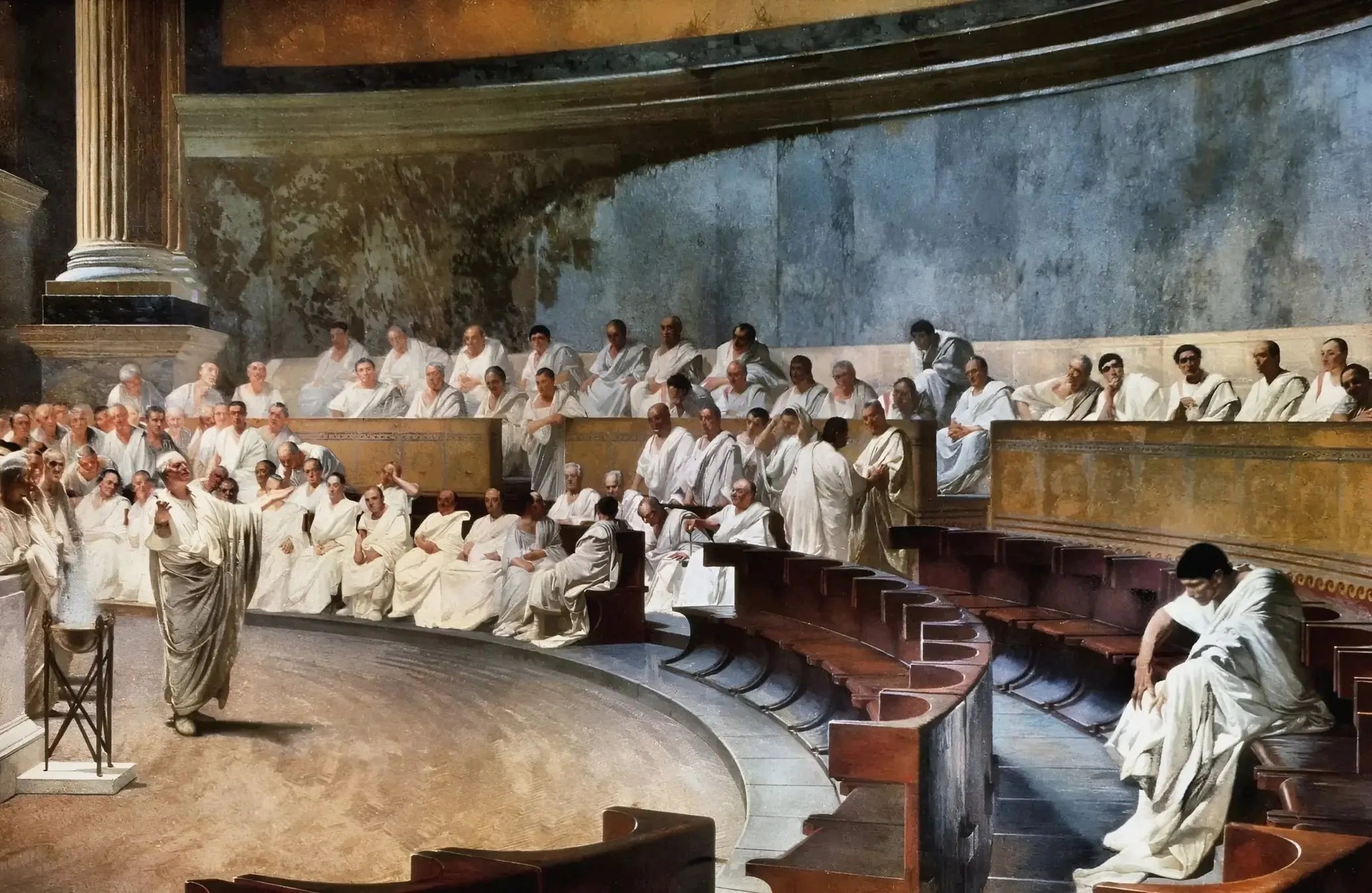
Cicero denounces Catiline in the Roman senate, 63 BCE, as Cesare Maccari painted it in 1889 for the Italian senate's palace in Rome.Palazzo Madama, Rome. Public domain, via Wikimedia Commons
In late 2001 American psychological operations teams were broadcasting into Afghanistan, and the Afghans who listened did not like what they heard. The voices, listeners said, sounded like “old men with bad Afghan accents”. The teams changed them. They added a young woman’s voice and dropped the modern music for traditional Afghan folk songs, which had been off the air under the Taliban. In the words of the Army’s own manual, “the music functioned as an emotional time machine taking Afghans back to a happier time prior to the Soviet invasion and subsequent rule of the Taliban and al-Qaeda.”1
The story sits in FM 3-05.301, Psychological Operations Process: Tactics, Techniques, and Procedures, which the US Army published in August 2007 for “U.S. Government agencies and their contractors only” and which has circulated publicly since Public Intelligence posted it in 2012.2 The first two parts of this series used it to read people and places. This part uses its chapters on building an argument. They describe, in the plain voice of a training manual, how professionals set out to change what a group of strangers does, and that is also what a manager, a founder, a doctor or a parent has to do most days.
Start with one sentence
The manual’s first instruction is to write the case in a single line. “The general format for this main argument is ‘Engaging in X (desired behavior) will result in Y (desirable outcomes for the TA).’” TA is the target audience. Its examples are blunt: “By surrendering to coalition forces, the TA will receive food and water immediately.”3
Two things in that formula do the work. X is a behaviour someone could watch you perform, so “support the project” fails and “approve the budget on Thursday” passes. Y is good for the listener, so “it will hit my targets” fails. The manual says the audience is moved “by telling them what action is desired, why it is desirable to them, and then showing how it satisfies needs or wants.”3 Many proposals that die in meetings have the order reversed: the speaker’s need first, the listener’s last, and no request at the end.
Then the manual builds a house on that sentence. “The foundation is the main argument or central idea. Supporting arguments are the interior and exterior walls… The persuasive technique or techniques used are the roof.” Supporting arguments “are more effective when using facts and specific examples”, and “not every vulnerability may be used as a supporting argument.”4 A good case has two or three walls and one roof.
Choose the appeal for the listener
The manual gives six “appeals”, which it calls “the flavor or tone of the argument”: legitimacy, inevitability, in-group and out-group, bandwagon, nostalgia and self-interest. Legitimacy splits into four: authority, reverence, tradition and loyalty.5 Its warning on choosing between them is the useful part. “A TA that does not believe the government of its country is legitimate will not be swayed by an appeal to legitimacy, whereas a military TA may be greatly affected by an appeal to authority.”5
| Appeal | The manual’s definition, shortened | Where it shows up at work |
|---|---|---|
| Legitimacy | “law, tradition, historical continuity, or support of the people” | “Legal has signed this off”; “we have always done it this way” |
| Inevitability | usually fear of harm; “requires proof that the promised outcome will actually occur” | “If we don’t ship by March, the client walks” |
| In group-out group | “creates an enemy of one group” | “Sales keeps overpromising” |
| Bandwagon | “the TA’s need to belong or conform” | “Every other team has moved to the new system” |
| Nostalgia | “how things were done in the past”, good or bad | “Remember when this place moved fast?” |
| Self-interest | “acquisition, success, or status”, framed as gain or loss | “This puts your name on the launch” |
Each works on some people and backfires on others. An engineer who distrusts management will not care that a director approved the plan, and a new hire has no good old days to remember. The manual’s whole second chapter, which this series covered in part one, exists so that the appeal is chosen after the listener has been studied.
Inevitability carries a condition that is easy to skip. Both its fear version and its logical version, the manual says, “require proof that the promised outcome will actually occur. Therefore, it is crucial that credibility be gained and maintained throughout the argument.”5 A deadline that passes without the promised disaster costs the person who invoked it.
What survives in the research
Civilian psychology has tested many of the manual’s ideas, and the results are smaller and less magical than the books that popularise them.
The manual lists Robert Cialdini’s six principles of influence, from his 1984 book Influence: scarcity, authority, social proof, liking, reciprocity and consistency. It adds its own gloss: “These six principles are relevant to virtually any culture and any TA.”6 Cialdini added a seventh, unity, in 2021.7 Some of the experiments behind them have held up and some have not.
The best known is the photocopier study of 1978. Ellen Langer and two colleagues at Harvard had a stranger ask to jump the queue at a copier. With no reason given, 60 per cent agreed; with the empty reason “because I have to make copies”, 93 per cent; with a real one, “because I’m in a rush”, 94 per cent. The figures came from groups of 15 or 16 people, and they held only for a five-page job. When the stranger wanted to copy 20 pages, the empty “because” did nothing (24 per cent agreed with it and 24 per cent without it), and only the real reason helped.8 Valerie Folkes tried to repeat the study in 1985 and reported that “neither study replicated Langer et al.’s results.”9
The hotel towel study of 2008 is the textbook case for social proof. A card telling guests that most others reused their towels raised reuse from 35.1 to 44.1 per cent.10 A German team repeated it in 2014 and found the “other guests” card did no better than a plain environmental plea, although both beat having no card at all.11 The door-in-the-face, where a large request is refused and a smaller one then accepted, held up in a direct replication in 2021, with compliance “similarly high as those Cialdini et al. (1975) found 45 years ago.”12
Underneath all of this is a finding that has lasted. In 1981 Richard Petty, John Cacioppo and Rachel Goldman told students about a plan for senior exams, attributed either to a Princeton professor or to a local high-school class. When the plan would affect the students themselves, “attitudes were influenced primarily by the quality of the arguments”; when it would not, “attitudes were influenced primarily by the expertise of the source.”13 People who care judge the argument. People who do not care judge the messenger, and change won that way “tended to be more ephemeral and less predictive of subsequent behavior.”13 To change a decision that matters, make the argument. A borrowed title or a confident delivery works best on people who are not paying attention.
Spend credibility carefully
The manual treats credibility as the stock that every later message draws on. “Credibility is critical. Carrying a story that may initially be damaging to the image of U.S. or host nation (HN) forces (for example, coverage of an accidental mistargeting of munitions) may pay off in both credibility and positive public opinion.”14
It applies the same rule to quality. “Putting a PSYOP message on a basketball with a poor-quality valve could damage the credibility of the USG as much or more than an offensive leaflet or radio message.”14 A slide deck full of typos is the office version of the bad valve.
Lies are the fastest way to lose it. The manual warns planners against a leaflet that falsely tells enemy troops their escape route is mined: the enemy can film themselves walking down the route holding the leaflet, which “would embarrass the government of the United States and damage any credibility that the United States had built up.”15 Paul Linebarger, who wrote the first American textbook on the subject in 1948, put it more generally: “A bluff normally fails, and moreover discredits later operations of the same kind, whereas a successful and fulfilled threat builds up cumulative credibility among the enemy audience.”16
One message rarely does it
“History demonstrates that it is only on rare occasions that a single product can change the behavior of a TA,” the manual says. Audiences are moved by “a consistent and coordinated series of multiple products and actions”.17 A campaign in Colombia aimed at young women carrying drugs through airports put the same message on CCTV screens, billboards and “advertising space on trash receptacles”; “all products could stand alone, but used as a series, were mutually supportive.”17
The manual sets limits on repetition too. Planners “must avoid oversaturating the TA with products at any one time”, and the second stage of an argument “should not be disseminated if the TA has rejected supporting argument 1 (stage I).”18 Applied to an office, that means sending a decision-maker a short note, then the numbers, then a conversation, and stopping to find out whether the first step landed before taking the second. Sending the same email four times is the oversaturation the manual warns against.
Deeds count as messages. The manual calls them PSYACTs and says “any planned activity or action can be a PSYACT”, from shows of force to “sewer, water, electricity, and trash.”19 One of its worked examples deals with suicide bombers who are “lauded and regarded as martyrs”: the recommended fix is to “change the social reinforcement for the behavior”, not to argue with it.19 In an office the equivalent is to change what gets praised in the all-hands meeting rather than circulate a memo about values.
Test it before you send it
Before a product goes out, the manual has it shown to members of the audience and asked two things: is it understood, and would they act on it? The best opening question is the plainest: “What does this tell you to do?”20 It suggests making “three variations of a product with different appeals” and asking which persuades most. It also warns against getting lost in the details: “change happy to glad, blue to green, and the picture of smiling kids in a city to a picture of smiling kids in a village”.20 Every series then goes before an internal review board that checks it for “effectiveness, legality, and appropriateness”, which the glossary says is “also called murder board.”21
A pitch can go through the same steps. Show it to one person from the audience who owes you nothing, ask what it tells them to do, and listen to the answer without arguing.
Where persuasion becomes manipulation
The manual is open about the line it walks. It lists ten “primary influence tactics”, and some are ones any decent person uses: rewards, expertise, moral appeal. Others belong to a hostage-taker. “Aversive stimulation: Continuous punishment, and the cessation of punishment, is contingent on compliance.” Its example: “We will continue to bomb your position unless you surrender immediately.”22 “Positive and negative altercasting: ‘Good people do X / Bad people do Y.’”22 Altercasting is the move behind every “a real team player would stay late”.
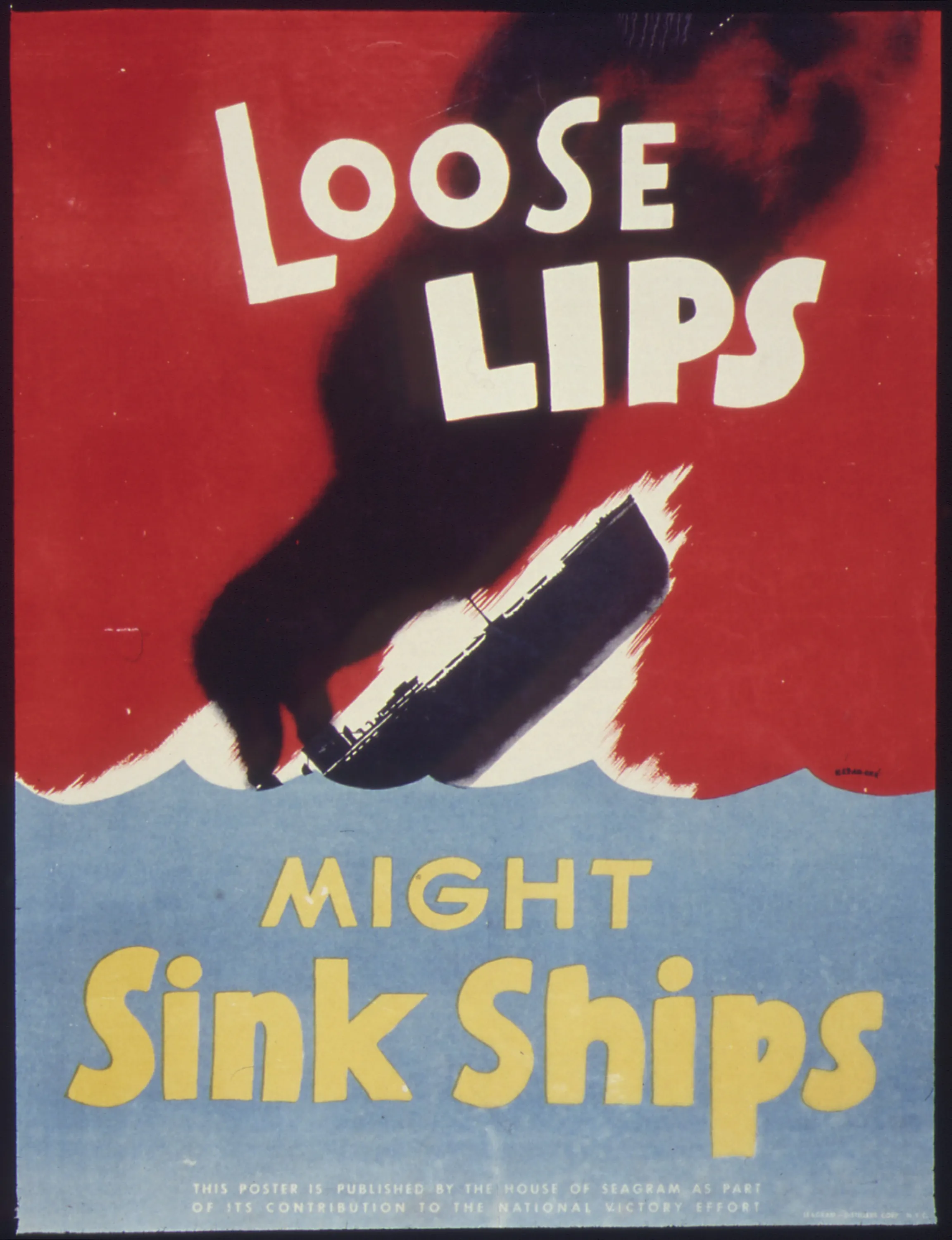
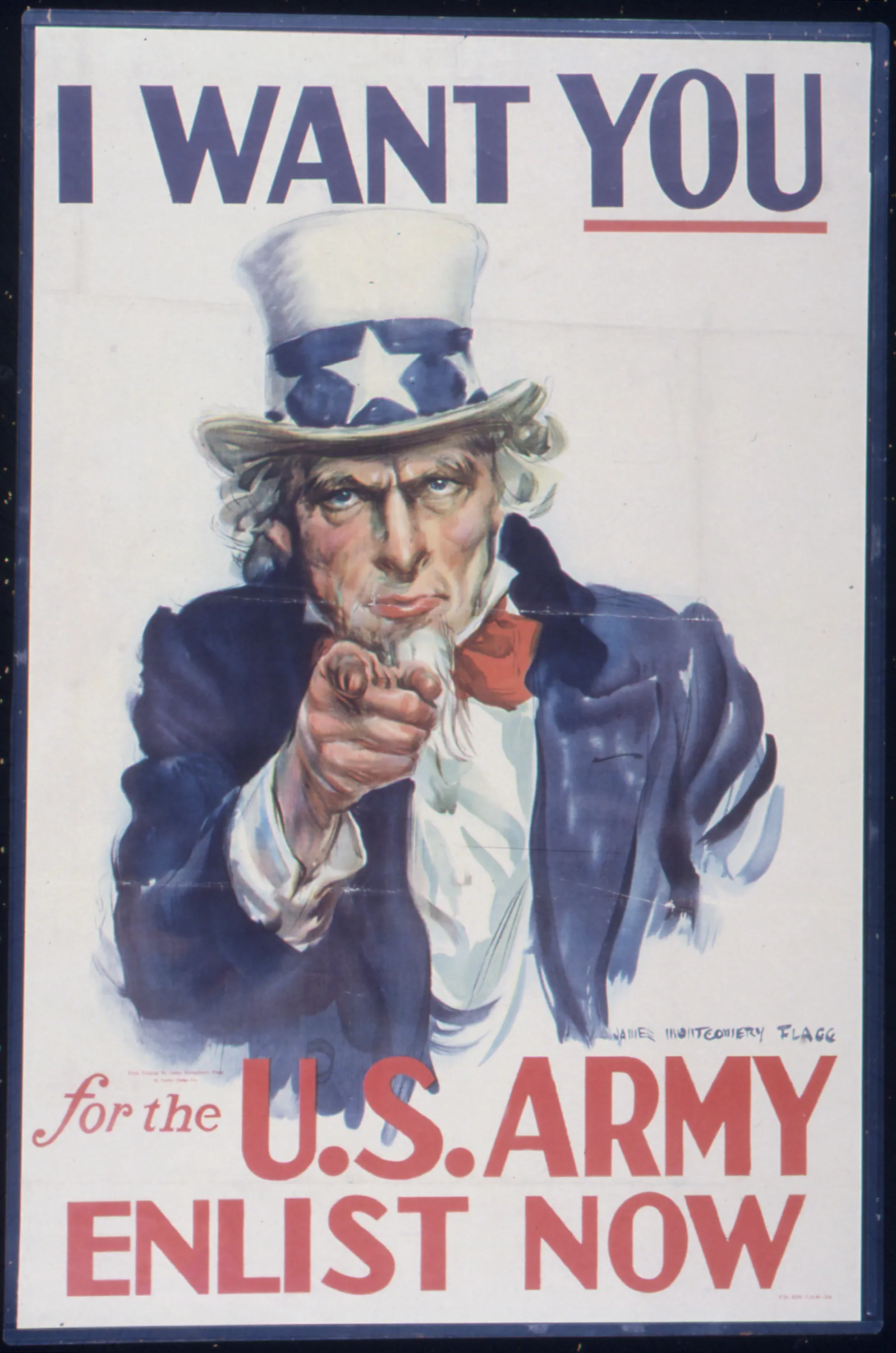
Its design chapter shows where the line is. On guiding a reader’s eye around a poster, it rates the subtle method above the obvious one, because “when properly executed, the reader is not aware that his attention is being manipulated.” The obvious method has a cost: “the reader may realize it and resent being manipulated.”23 That gives a usable test for any technique: would it still work if the listener could see exactly what you were doing? A clear request with a real reason passes. A fake deadline, a gift given so that a favour can be called in, and a colleague told who they are so that they will do as they are told all fail, and all of them, the manual’s own “debt” tactic included (“Calling in past favors”), are on its list.22
The FBI’s crisis negotiators, whose work is to talk armed people out of buildings, teach a sequence that starts at the other end. Their Behavioral Change Stairway runs from active listening to empathy, rapport and influence, and only then to a change in behaviour; each step is meant to be reached before the next.24 It is practitioner doctrine built from cases rather than a tested finding, but it matches the manual’s own advice for face-to-face work: “uncover real similarities and offer genuine praise.”6
Linebarger, who later wrote science fiction under the name Cordwainer Smith, ended his preface with the advice that “there is no better way to learn the propaganda job than to be whipped thoroughly by someone else’s propaganda.”16 The next part of this series lays out the manual’s techniques the way someone on the receiving end needs to see them.

Sources and notes24
Footnotes
-
Headquarters, Department of the Army, FM 3-05.301: Psychological Operations Process Tactics, Techniques, and Procedures (30 August 2007), pp. 3-2 to 3-3. The account is the Army’s own and is not independently sourced. Confidence: verified (as the manual’s account). ↩
-
FM 3-05.301, cover and title page. Public Intelligence, “Restricted U.S. Army Psychological Operations Process Tactics, Techniques, and Procedures Manual”, 8 June 2012. https://publicintelligence.net/restricted-u-s-army-psyops-manual/. The manual carries a distribution restriction and a destruction notice but no security classification. Confidence: verified. ↩
-
FM 3-05.301, paras 2-91 to 2-93, p. 2-24. Confidence: verified. ↩ ↩2
-
FM 3-05.301, para 3-8, p. 3-6; para 2-94, p. 2-25. Confidence: verified. ↩
-
FM 3-05.301, paras 2-95 to 2-101, pp. 2-25 to 2-26. Confidence: verified. ↩ ↩2 ↩3
-
FM 3-05.301, para 2-105, pp. 2-28 to 2-29. The manual names Cialdini but cites no book or page. Confidence: verified. ↩ ↩2
-
Robert B. Cialdini, Influence (William Morrow, 1984); Influence, New and Expanded (Harper Business, 2021). Influence at Work, “7 Principles of Persuasion”. https://www.influenceatwork.com/7-principles-of-persuasion/. Confidence: verified. ↩
-
Ellen Langer, Arthur Blank and Benzion Chanowitz, “The Mindlessness of Ostensibly Thoughtful Action”, Journal of Personality and Social Psychology 36:6 (1978), 635-642, table 1. https://doi.org/10.1037/0022-3514.36.6.635. Confidence: verified. ↩
-
Valerie S. Folkes, “Mindlessness or Mindfulness: A Partial Replication and Extension of Langer, Blank, and Chanowitz”, JPSP 48:3 (1985), 600-604. https://doi.org/10.1037/0022-3514.48.3.600. Confidence: verified. ↩
-
Noah J. Goldstein, Robert B. Cialdini and Vladas Griskevicius, “A Room with a Viewpoint”, Journal of Consumer Research 35:3 (2008), 472-482. https://doi.org/10.1086/586910. Experiment 1, N = 433. Confidence: verified. ↩
-
Gerd Bohner and Lena E. Schlüter, “A Room with a Viewpoint Revisited”, PLOS ONE 9:8 (2014), e104086. https://doi.org/10.1371/journal.pone.0104086. A 2016 Bayesian synthesis by Scheibehenne, Jamil and Wagenmakers argues the pooled studies still support a small effect. Confidence: verified (abstract). ↩
-
Oliver Genschow et al., “Does social psychology persist over half a century? A direct replication of Cialdini et al.’s (1975) classic door-in-the-face technique”, JPSP 120:2 (2021), e1-e7. https://doi.org/10.1037/pspa0000261. Confidence: verified (abstract). ↩
-
Richard E. Petty, John T. Cacioppo and Rachel Goldman, “Personal Involvement as a Determinant of Argument-Based Persuasion”, JPSP 41:5 (1981), 847-855. https://doi.org/10.1037/0022-3514.41.5.847. The theory is set out in Petty and Cacioppo, “The Elaboration Likelihood Model of Persuasion”, Advances in Experimental Social Psychology 19 (1986). Confidence: verified. ↩ ↩2
-
FM 3-05.301, para 4-16, p. 4-6; para 4-31, p. 4-15. Confidence: verified. ↩ ↩2
-
FM 3-05.301, para 1-42, p. 1-26. Confidence: verified. ↩
-
Paul M.A. Linebarger, Psychological Warfare (Infantry Journal Press, 1948; 2nd ed. 1954), preface and ch. 1. https://www.gutenberg.org/ebooks/48612. Confidence: verified. ↩ ↩2
-
FM 3-05.301, ch. 3 opening, p. 3-1; para 3-9 and the Colombia example, pp. 3-6 to 3-7. The manual offers no figures for the Colombia campaign’s results. Confidence: verified. ↩ ↩2
-
FM 3-05.301, para 3-13, p. 3-9; para 3-11, p. 3-8. Confidence: verified. ↩
-
FM 3-05.301, paras 2-107 to 2-109, pp. 2-29 to 2-30. Confidence: verified. ↩ ↩2
-
FM 3-05.301, paras 4-57 to 4-62, pp. 4-23 to 4-26. Confidence: verified. ↩ ↩2
-
FM 3-05.301, para 3-20, p. 3-18; glossary, “internal review board”. Confidence: verified. ↩
-
FM 3-05.301, para 2-104, p. 2-28. Confidence: verified. ↩ ↩2 ↩3
-
FM 3-05.301, para 4-23, pp. 4-11 to 4-13. Confidence: verified. ↩
-
Gregory M. Vecchi, Vincent B. Van Hasselt and Stephen J. Romano, “Crisis (hostage) negotiation: current strategies and issues in high-risk conflict resolution”, Aggression and Violent Behavior 10:5 (2005), 533-551. https://doi.org/10.1016/j.avb.2004.10.001. The step names are as given in secondary accounts of the paper. Confidence: reported. ↩
Letters
No letters on this report yet.
Letter received
Thank you. It is with the editors now and will appear here if we publish it.