The slur ledger · Part 1 · 1321–1965
The Hindoo invasion
In 1907 white mobs drove Indian mill hands out of Bellingham and Everett, and the papers called it a Hindoo invasion. The words behind it had been a century in the making, starting with missionary reports on the Juggernaut, and they ran on to a Supreme Court ruling in 1923 that Indians were not white. This is the ledger of who said what, and when.
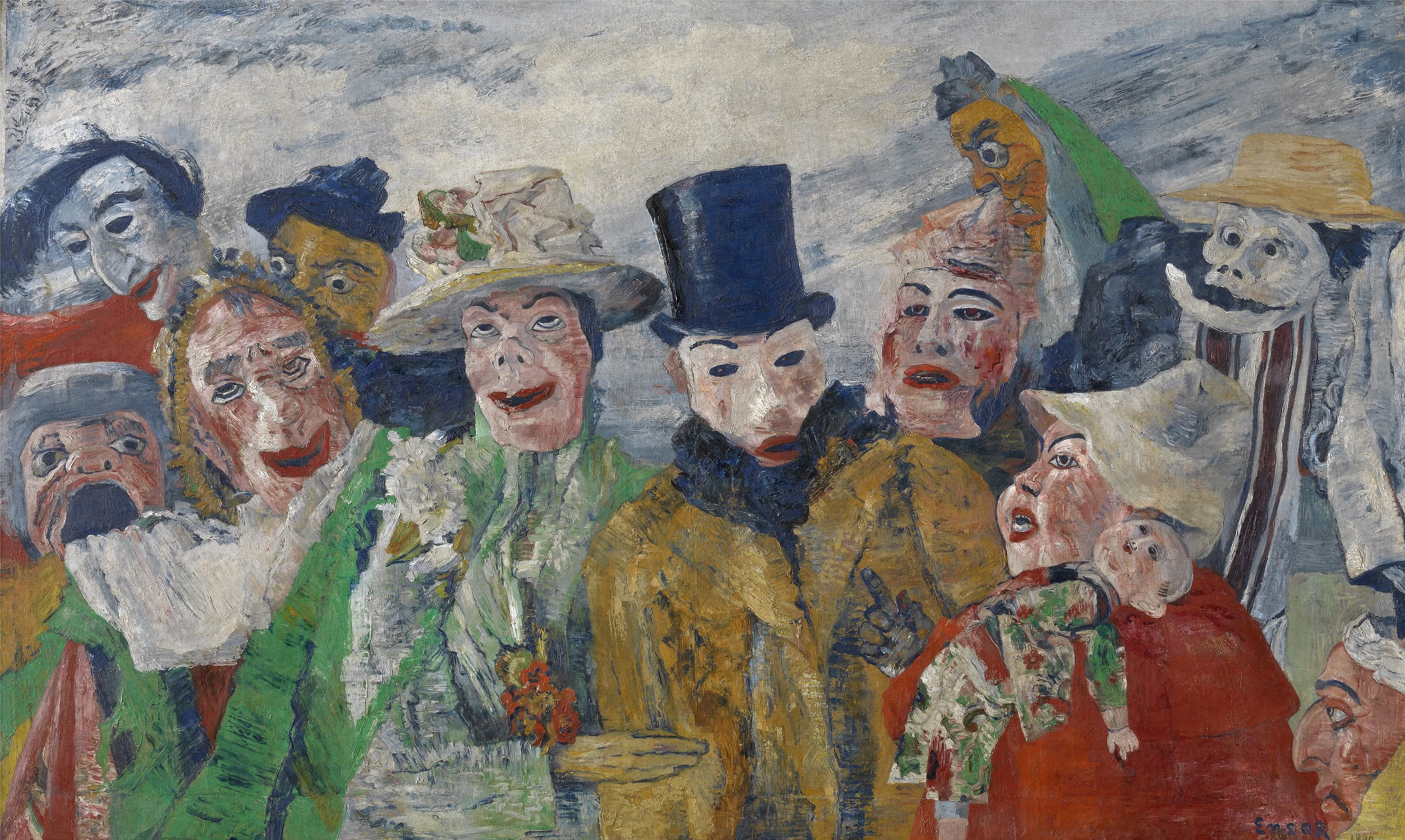
James Ensor, The Intrigue (1890): a crowd of masked figures pressed together. A mood picture for the mobs of 1907, not a record of them.Koninklijk Museum voor Schone Kunsten Antwerpen (KMSKA). CC0
On 4 September 1907 a crowd of about 500 white workingmen set on the East Indian mill hands of Bellingham, Washington, about 250 men. By the next day nearly all of the Indians had left town by boat or train. The Bellingham Reveille ran the story under the headline “Mob raids Hindus and drives them from city”, and explained the aim: to “move [the Indian workers] on, to get them out of town, and scare them so badly that they will not crowd white labor out of the mills.”1
Most of them were probably not Hindus. The early Indian arrivals on the Pacific coast were mostly Punjabi Sikhs, and the press called every Indian a “Hindu” or a “Hindoo”.2 Two months later, on 2 November, it happened again in Everett. The Everett Daily Herald reported that “a mob of several hundred white laboring men and boys gathered by pre-arrangement”. The cry was “Down with the Hindus”. The police held 34 Indians in the city jail for their own protection, and all of them left town on the Monday. One worker told the paper: “They see our turbans and throw stones at us … We cut off hair and get hats.” The Herald put the matter to the mill owners: “the employer is the man who must solve the Hindu problem.”3
This series is a ledger of what Americans and Britons have called Indians, who said it first and who repeated it. Part 1 runs from a friar’s travel tale of 1321 to 1965, when the United States dropped its national-origins quotas. Part 2, “Dot heads”, covers 1965 to 2010, and Part 3, “The Indian question”, 2010 to now.
Juggernaut and the missionaries
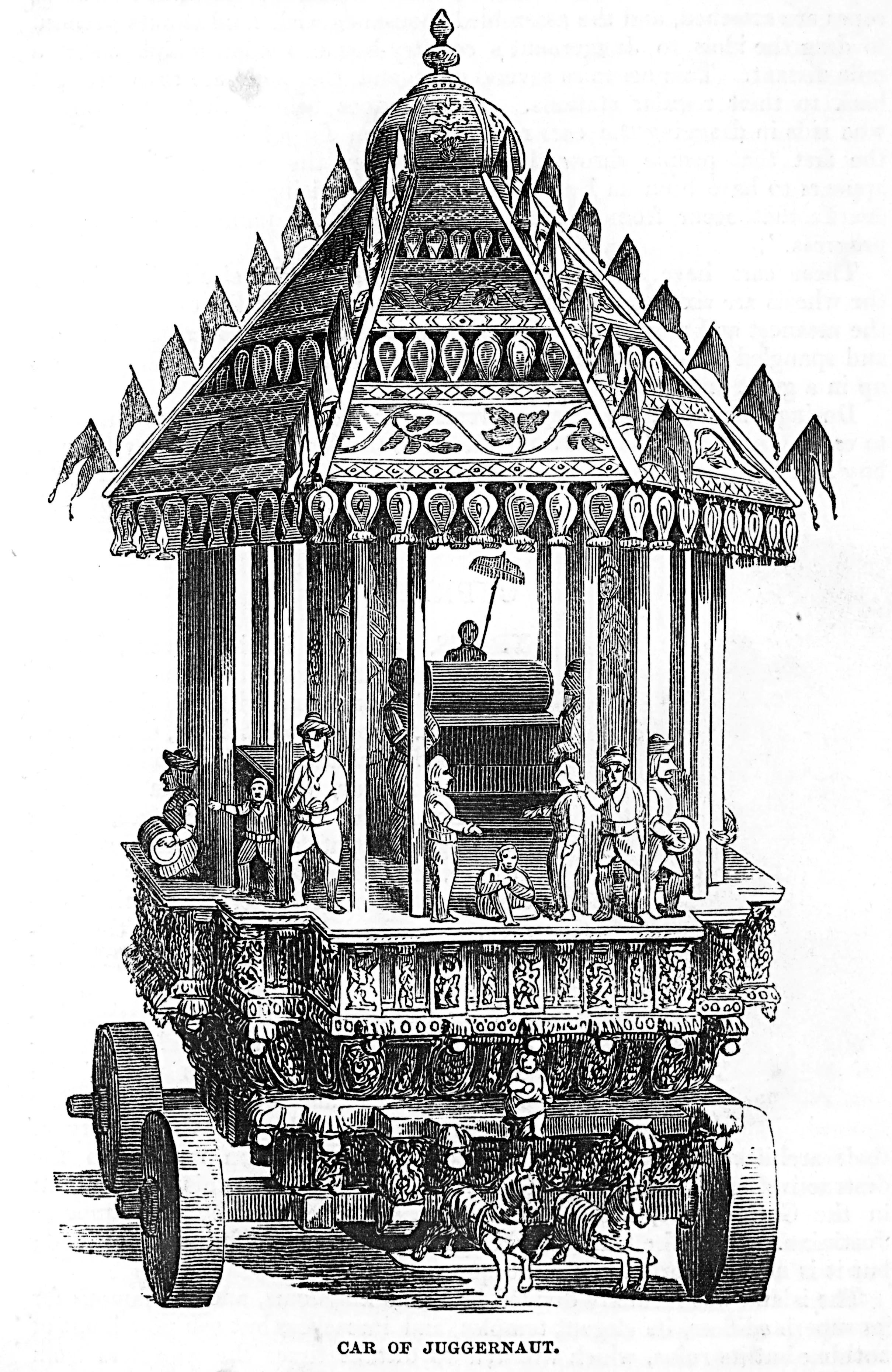
The oldest picture in the ledger comes from a Franciscan friar. Odoric of Pordenone travelled in India around 1316 to 1318, and in his account of 1321 wrote that at the car festival at Puri some people “cast themselves under the char[iot], so that its wheels may go over them, saying that they desire to die for their god.” The story passed into Mandeville’s Travels, and the god’s name, Jagannath, passed into English as “juggernaut”.4
Five centuries later British writers in India took it up. Claudius Buchanan, Vice-Provost of the College of Fort William in Bengal, dated a diary entry “Juggernaut, 14th June, 1806” and wrote: “The idol called Juggernaut, has been considered as the Moloch of the present age; and he is justly so named, for the sacrifices offered up to him by self-devotement, are not less criminal, perhaps not less numerous, than those recorded of the Moloch of Canaan.” The temple walls, he said, “are covered with indecent emblems”, and the sand by the sea was “in some places whitened with the bones of the pilgrims”.5
He saw one man die. “The characteristics of Moloch’s worship are obscenity and blood. We have seen the former. Now comes the blood.” The pilgrim “laid himself down in the road before the tower … and he was crushed to death by the wheels of the tower.” Buchanan also blamed the Company. He was staying with the East India Company’s collector of the tax on pilgrims, and he wrote: “How much I wished that the Proprietors of India Stock could have attended the wheels of Juggernaut, and seen this peculiar source of their revenue.”5 His book, Christian Researches in Asia, came out in London and in a Boston edition in 1811.6 The Juggernaut of Western print was built on rare incidents like the one he saw. “Perhaps not less numerous” was rhetoric; Buchanan gave no count.
William Ward, a Baptist missionary at Serampore, went further in 1818. He called the worship of the lingam “the abominable lingu worship too (the last state of degradation to which human nature can be driven)”. He wrote of “the broad obscenity of the songs” at festivals and of rites “too abominable to be recorded”. And he drew a conclusion about women: “nor can it be ground of wonder, that a chaste woman, faithful to her husband, is scarcely to be found among all the millions of Hindoos, when their very temples are polluted with filthy images”.7
Stranglers and a rope trick
“Thug” was in English by 1810. It comes from the Hindustani thag, a cheat.8 In 1836 the British officer W. H. Sleeman published Ramaseeana in Calcutta. It described a hereditary sect, spread across India, that strangled travellers as sacrifices to Kali.8 The historian Kim Wagner went back to the records in 2007. He found that organised banditry was real but far smaller than the “widespread, caste-based, religiously motivated, sacrificial cult” the officers alleged, and that Kali came up largely in answer to Sleeman’s leading questions.9 The robbers existed. The cult was mostly a British construction.
The fakir arrived in 1890, by way of Chicago. On 8 August the Chicago Tribune printed the first account of what became the “Indian rope trick”. The writer, “Fred S. Ellmore”, was the journalist John Elbert Wilkie; the pen name reads “sell more”. Four months later the Tribune printed a retraction, saying the story was “written for the purpose of presenting a theory in an entertaining form.” Wilkie wrote: “I am sorry that anyone should have been deluded.” He went on to run the US Secret Service from 1898 to 1911. The Indian rope trick went round the world anyway.10
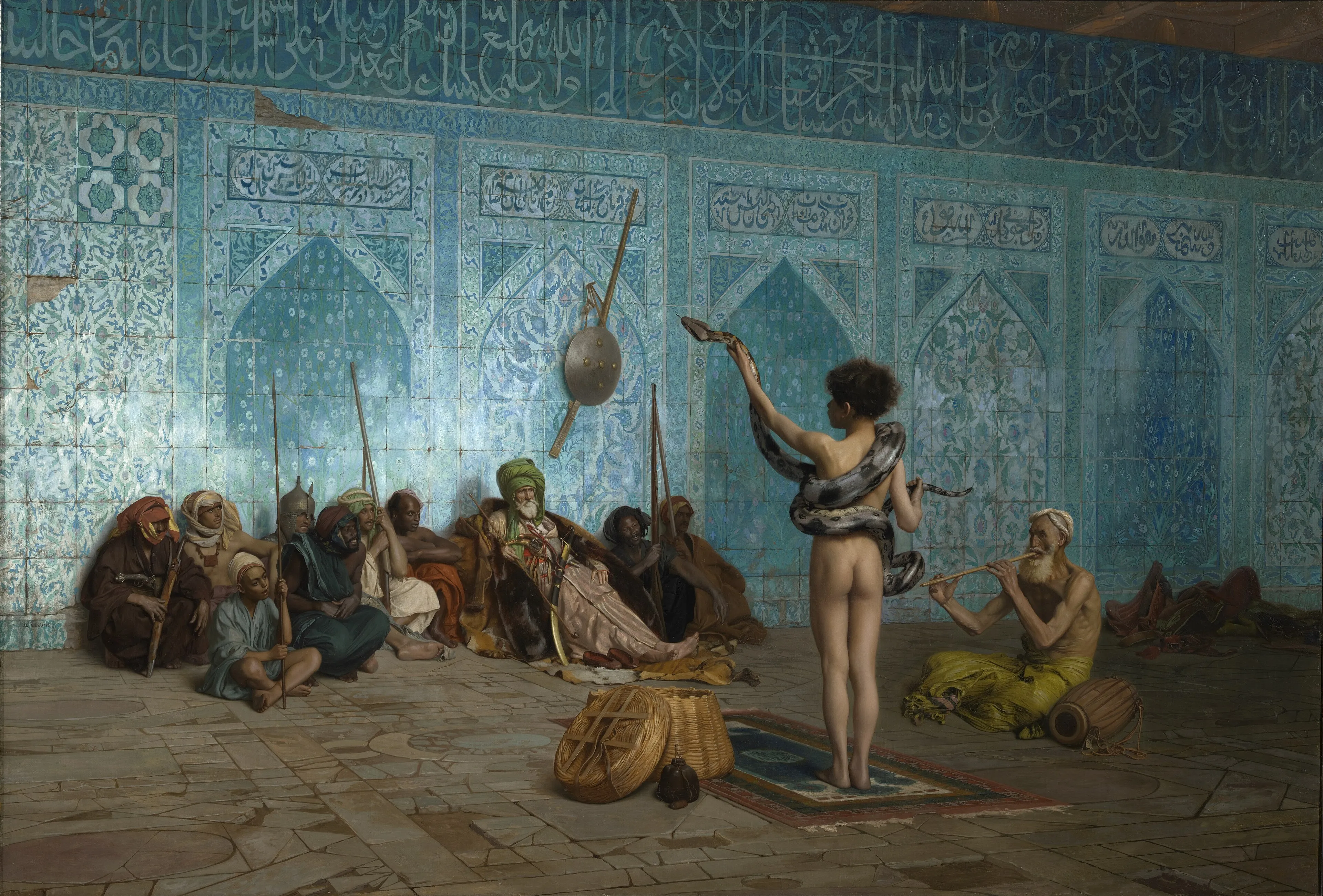
The “Hindoo invasion” on the Pacific coast
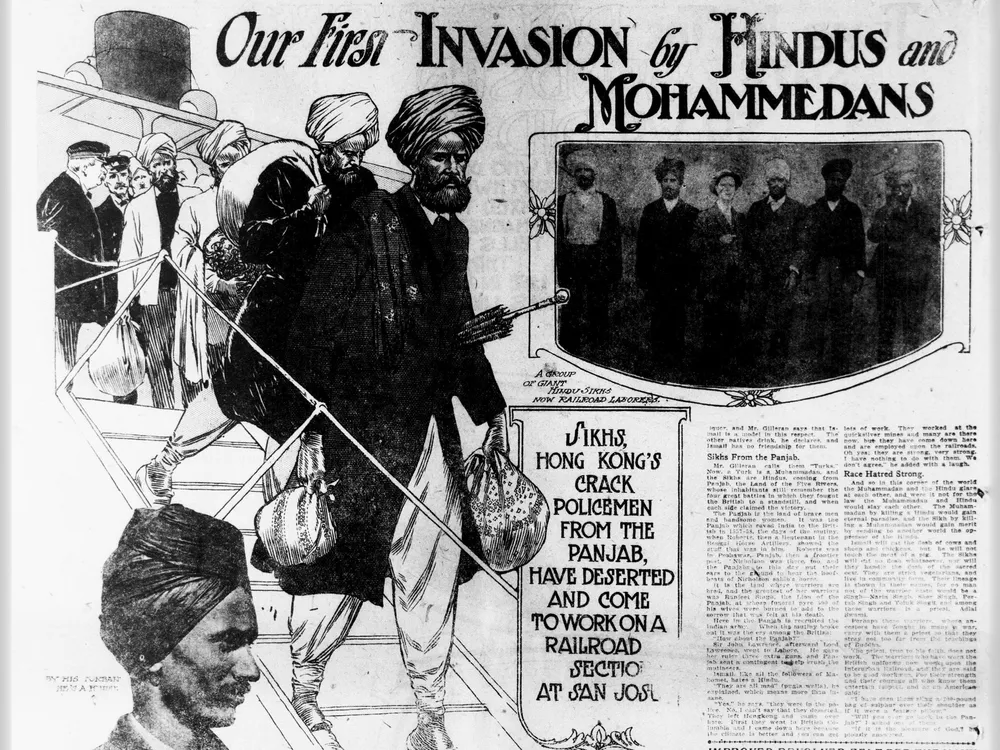
By the time of the riots the frame was in print. On 18 November 1906 the San Francisco Sunday Call ran a page headed “Our First Invasion by Hindus and Mohammedans”, about Sikh immigration.11
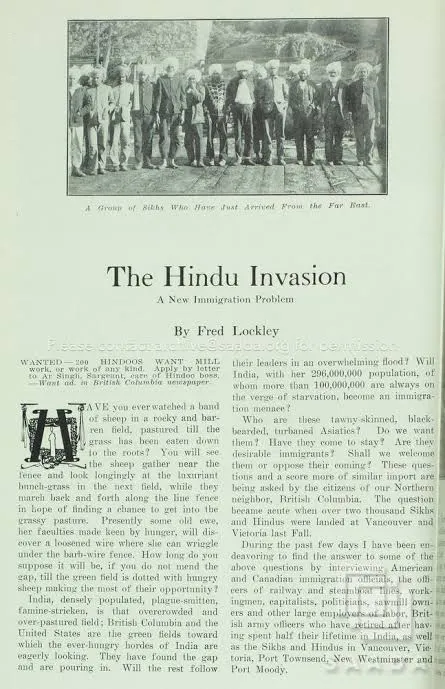
In May 1907, four months before Bellingham, Fred Lockley wrote “The Hindu Invasion: A New Immigration Problem” for The Pacific Monthly of Portland, Oregon. It opens with a want ad from a British Columbia paper: “200 HINDOOS WANT MILL work, or work of any kind. Apply by letter to Ar Singh, Sargeant, care of Hindoo boss.” Lockley likened India to an over-grazed field and its people to sheep at the fence: the “hordes of India are eagerly looking. They have found the gap and are pouring in.” Then came the questions: “Will India, with her 296,000,000 population, of whom more than 100,000,000 are always on the verge of starvation, become an immigration menace? Who are these tawny-skinned, black-bearded, turbaned Asiatics? Do we want them? Have they come to stay?”12 Further in, he warned that “these Sikhs and Hindus, being British subjects, may enter freely into the United States. Not only may but will”.12
The organisers had a name too. The Asiatic Exclusion League, founded in San Francisco in 1905, gave its aim as “The preservation of the Caucasian race upon American soil.”13 Its Bellingham branch had more than 800 members, was tied to the American Federation of Labor’s unions, and vowed to “guard the gateway of Occidental Civilization against Oriental invasion.”14 The street cry in Bellingham was “help drive out the cheap labor”.15 The Los Angeles Herald reported on 6 September that “[r]acial feeling has played but a small part in the affair.”16
The violence ran up and down the coast. In Vancouver, on 7 to 9 September 1907, a league parade of some 10,000 people turned into a riot, mainly against the Chinese and Japanese districts, though Punjabis were attacked too.17 Manish Chalana’s 2021 study of the region records fighting at Aberdeen, Washington, that month, and an attack at Boring, Oregon, six weeks after Bellingham that “left one Sikh man dead”. The desk found no second source for the death.18 In January 1908 a white mob at Live Oak, California, attacked two houses where about 70 Indian workers lived and drove them out.19 In March 1910 at St Johns, near Portland, a fight between “[t]hree hundred Hindus and 200 whites” ended when the Indians agreed to leave.20
The Indian writer Sant N. Singh described the mood in The Pacific Monthly in 1908: “as the tide of immigration from India gained in strength, visions of a ‘Hindoo invasion of America’ began to torment the minds of excitable Americans.”21 In June 1910 Herman Scheffauer gave it another label, with an essay in The Forum titled “The Tide of Turbans”.22
The government takes over
The officials followed the mobs. In 1908 immigration officers turned back 438 Indians, 118 of them as “likely to become a public charge”.23 The US Immigration Commission, known as the Dillingham Commission, reported in 1911 that Indians threatened the “wages of the members of other races in those industries in which men of low efficiency can be employed”. Employers it surveyed called them “strong” and “industrious” but “unadaptable” and “unprogressive”, and one ranked them with Montenegrins as the “least desirable of the many races”.24 A harsher line, that the commission called Indians “the least desirable race of immigrants thus far admitted”, circulates widely; the desk could not find it in the commission’s reports.
From February to April 1914 the House Committee on Immigration and Naturalization held hearings on bills to bar “Hindu laborers”. Anthony Caminetti, the Commissioner General of Immigration, pressed for exclusion, and officials spoke of an “emergency” of “Asiatic invasion”.25 The Immigration Act of 1917 did it without naming anyone. Congress passed it over President Woodrow Wilson’s veto on 5 February 1917; Wilson’s main objection was the literacy test. Its section 3 barred the natives of a zone drawn by latitude and longitude, covering India, Siam, Indo-China, Afghanistan, Arabia, parts of Siberia and islands including Ceylon and Java. One estimate at the time put the population of the “Asiatic Barred Zone” at 500 million.26
Canada closes the door
Canada had found its own wording. Its Continuous Journey Regulation of 1908 required migrants to arrive by an uninterrupted passage from their country of birth, and no shipping line offered one from India.27 On 23 May 1914 the Komagata Maru sailed into Vancouver with 376 passengers. Only 22 to 24 were admitted. The ship was forced out on 23 July. When it reached Budge Budge, near Calcutta, British police and troops fired on the returning passengers and killed about 20.27
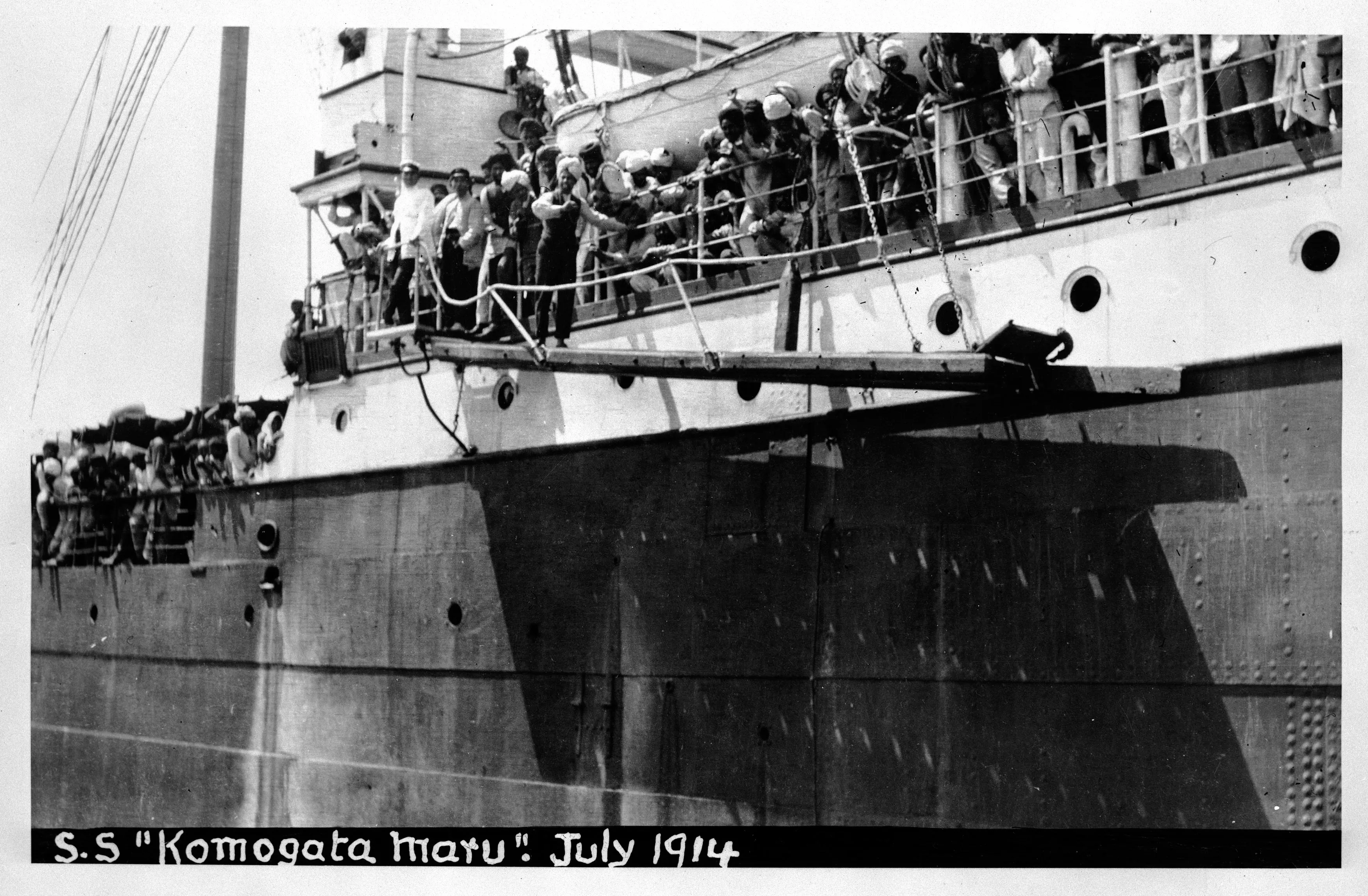
On 18 May 2016 the prime minister, Justin Trudeau, told the House of Commons: “I offer a sincere apology on behalf of the government for the laws in force at the time that allowed Canada to be indifferent to the plight of the passengers of the Komagata Maru.”28
Not white: Thind and after
Bhagat Singh Thind had been naturalised on 9 December 1918, while serving in the US Army.29 On 19 February 1923 a unanimous Supreme Court ruled against him. Justice George Sutherland wrote the opinion. He dismissed the word “Aryan”: “the term ‘Aryan’ has to do with linguistic, and not at all with physical, characteristics”. What counted was “the understanding of the common man”. He wrote: “The physical group characteristics of the Hindus render them readily distinguishable from the various groups of persons in this country commonly recognized as white.” And of their families: “it cannot be doubted that the children born in this country of Hindu parents would retain indefinitely the clear evidence of their ancestry.”30
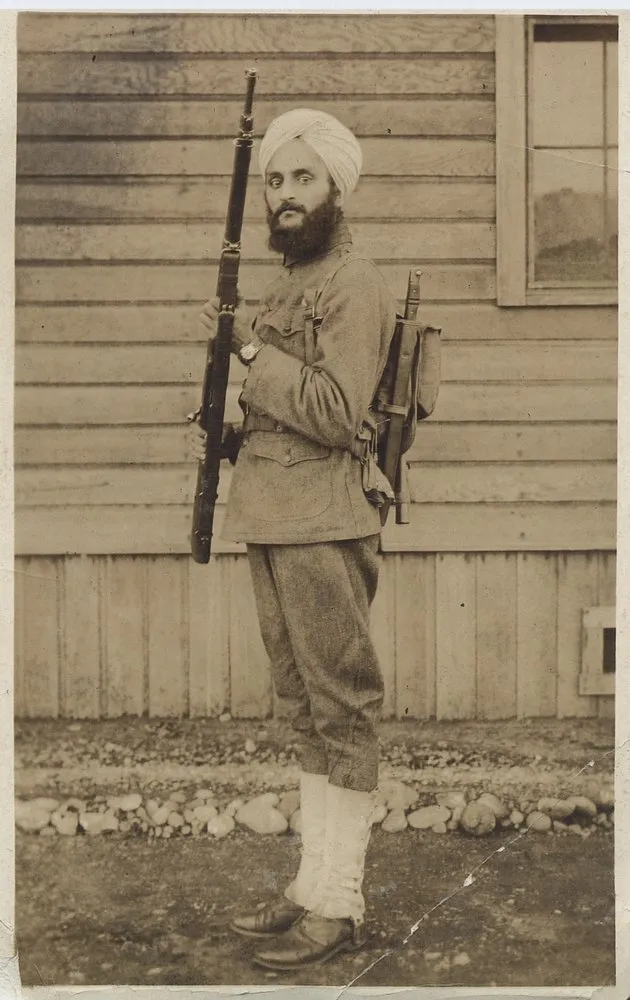
The Bureau of Naturalization then moved to strip Indians of citizenship as “illegally procured”. Estimates of how many lost it run from “dozens” to “about fifty”. Sakharam Ganesh Pandit, Thind’s own lawyer, was among those targeted.31 Vaishno Das Bagai, naturalised in 1921, lost his citizenship after Thind and killed himself in San Jose in March 1928. The San Francisco Examiner printed his letter on 17 March: “I do not choose to live the life of an interned person: yes, I am in a free country and can move about where and when I wish inside the country. Is life worth living in a gilded cage? Obstacles this way, blockades that way, and the bridges burnt behind.”32 Thind got his citizenship back in New York on 2 March 1936, under a 1935 law for veterans of the First World War.29
Mother India and the drain inspector
In 1927 the American writer Katherine Mayo published Mother India with Harcourt, Brace in New York and Jonathan Cape in London.33 Her “main generality” was that British rule had “nothing whatever to do with” India’s conditions: “Inertia, helplessness, lack of initiative and originality, lack of staying power and of sustained loyalties, sterility of enthusiasm, weakness of life-vigor itself … all are traits that truly characterize the Indian not only of today, but of long-past history.” Of the Indian she wrote: “His soul and body are indeed chained in slavery. But he himself wields and hugs his chains and with violence defends them.” And: “Little in the popular Hindu code suggests self-restraint in any direction, least of all in sex relations.”33 That last line is Ward’s charge of 1818, a century on.
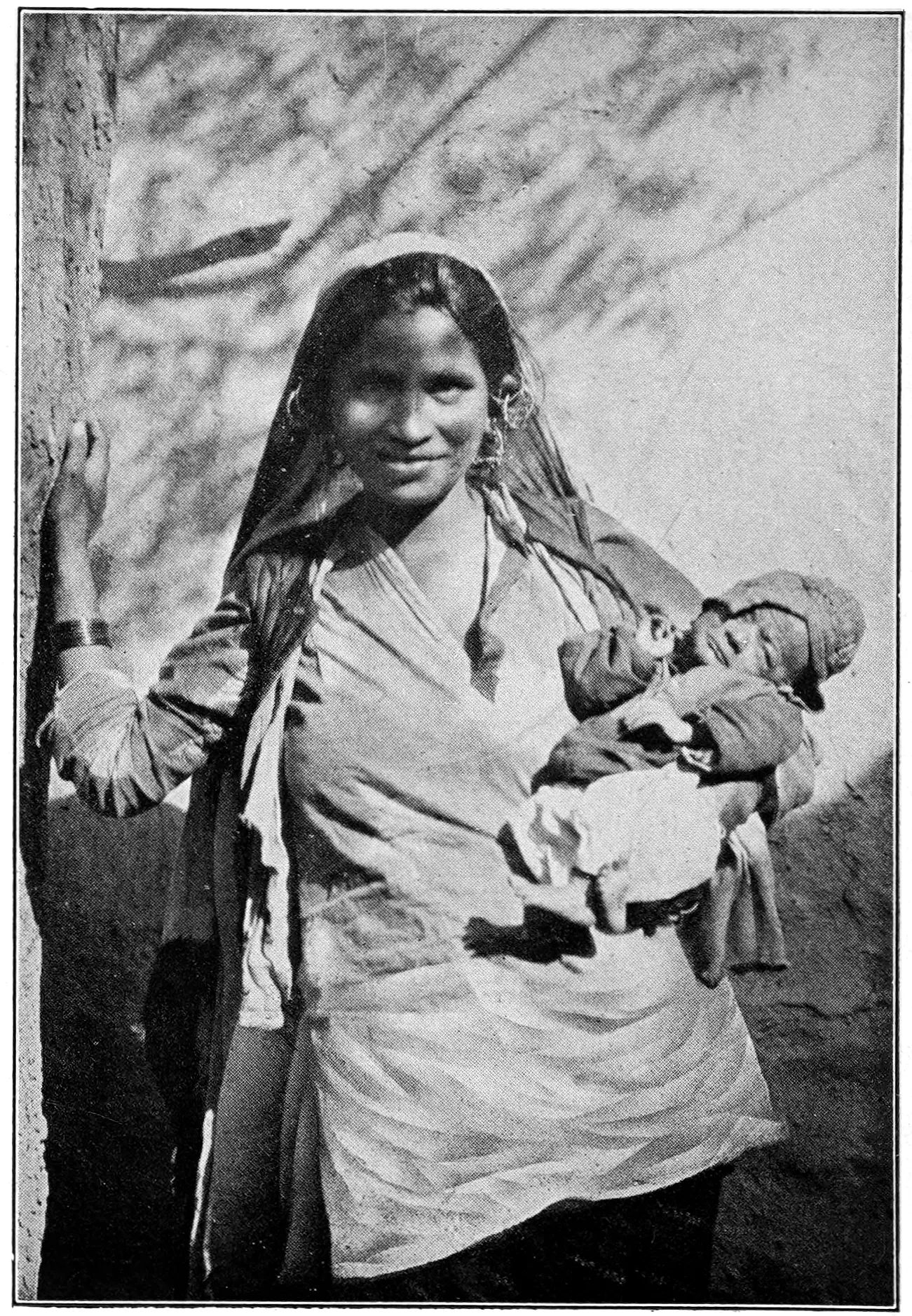
The book sold well in the United States and Britain, went through many printings and was translated into more than a dozen languages. It opposed Indian independence. Mayo’s first lead came from an agent of the British Indian Political Intelligence Office in London.34 The record does not show that the British government paid her.
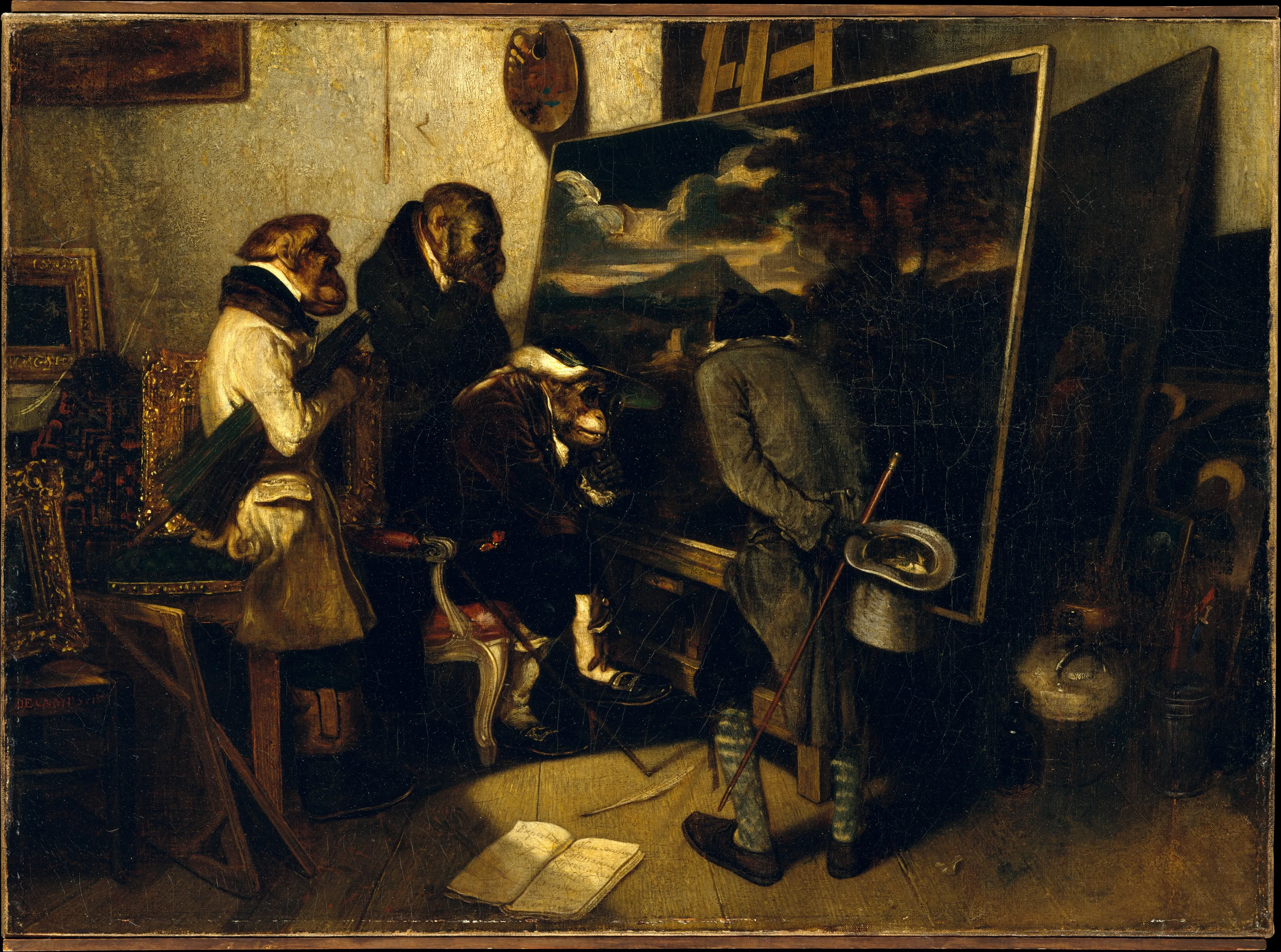
Gandhi reviewed it in Young India on 15 September 1927 under the title “Drain Inspector’s Report”. He called it “the report of a drain inspector sent out with the one purpose of opening and examining the drains of the country to be reported upon, or to give a graphic description of the stench exuded by the open drains.”35 The paper has looked at the other drains: India’s own washing rules, Europe’s chamber pots and the Great Stink, and the West’s toilet paper.
Caste: the census and the charge
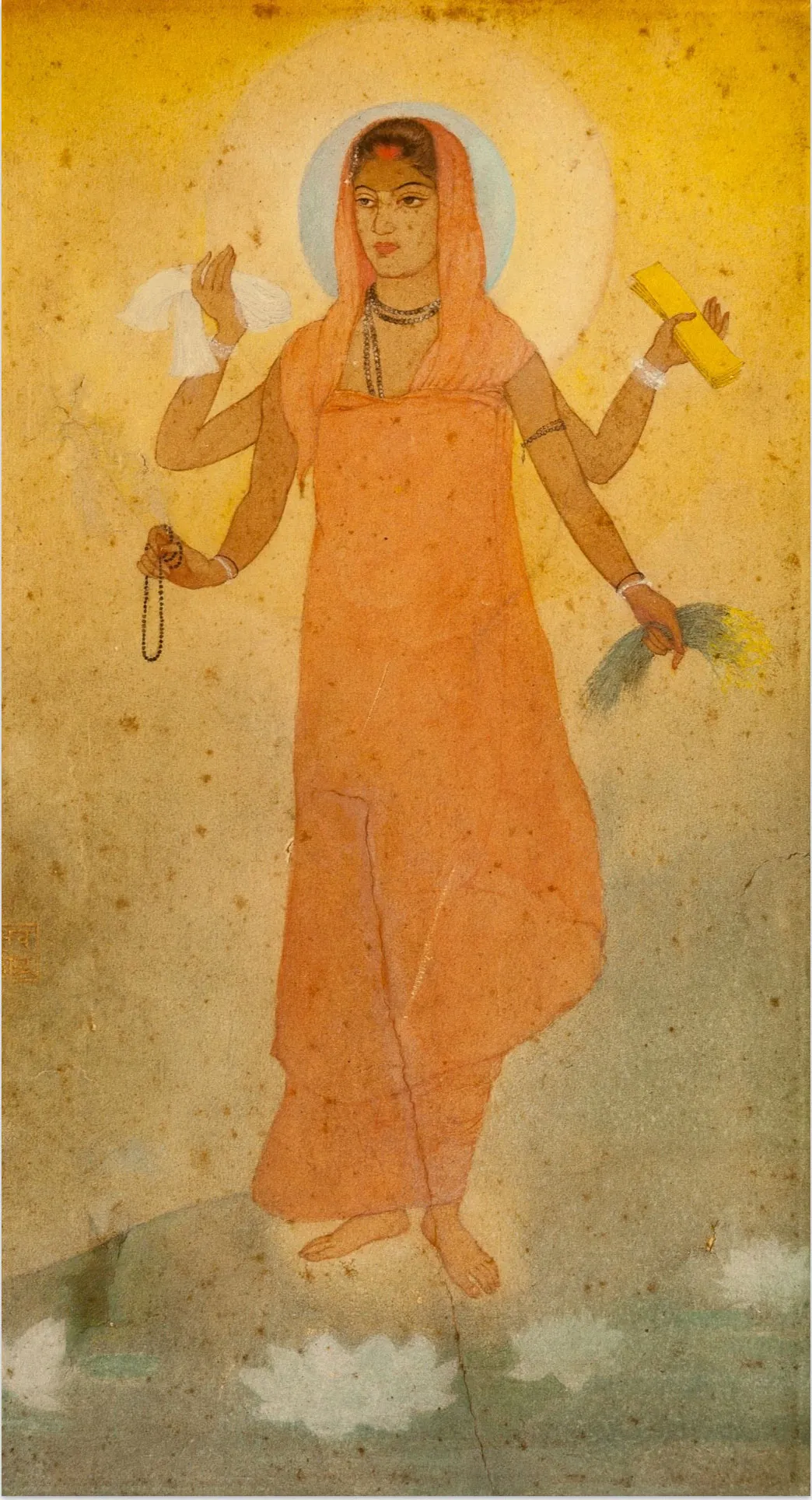
Mayo gave a chapter to the “Untouchables” and used untouchability as proof that Hindus were unfit to rule themselves.33 The charge was a century old by then.
The word is European. English “caste” comes from the Portuguese casta, “breed, race, caste”, from the Latin castus. The Portuguese were the first Europeans to apply it to India’s hereditary groups, in the 16th century, and English used it in that sense from the 1610s. “Caste system” dates from 1840.36
Ancient Indian texts describe four social orders, the varna. People were also born into, and married within, many smaller groups, the jati, which are closer to what Europeans meant by “caste”.37 Historians disagree about how rigid, hereditary and ranked these were before colonial rule. Susan Bayly holds that caste “has been for many centuries a real and active part of Indian life”, but that “until well into the colonial period, much of the subcontinent was still populated by people for whom the formal distinctions of caste were of only limited importance”, and that British rule “significantly expanded and sharpened” its norms, with Indians as much as Britons taking the initiative.38 Nicholas Dirks argues that caste “as we know it today” is “the product of an historical encounter between India and Western colonial rule”, and adds: “By this I do not mean to imply that it was simply invented by the too clever British.”39 Sumit Guha treats caste as a ranked identity that states, Hindu, Muslim and British, kept reshaping over many centuries, and argues that Dirks’s account turns colonial rule into a sharper break than it was.40
The first all-India census to count caste was taken in 1871 and 1872.41 For the census of 1901 its commissioner, H. H. Risley, had the castes of each province ranked by “social precedence as recognized by native public opinion”, and castes sent in petitions to be placed higher. Risley held that caste began in race, and took measurements of the body, the nose above all, as proof. In The People of India (1908) he wrote that “the social status of the members of a particular group varies in inverse ratio to the mean relative width of their noses”.42 The 1931 census recorded 4,147 castes, and it was the last to tabulate them.41
The Criminal Tribes Act of 12 October 1871 let a provincial government declare any “tribe, gang or class of persons” it believed “addicted to the systematic commission of non-bailable offences” a criminal tribe. Members were put on a register, confined to set limits and made to answer roll-calls, and breaking the rules could bring prison, a fine or whipping.43 In the council debate on the bill, such a tribe was described as one “whose ancestors were criminals from time immemorial, who are themselves destined by the usages of caste to commit crime”.44 By 1947 about 13 million people in 127 communities were covered. India repealed the Act in 1949.45 The army sorted Indians by birth as well: after 1857 it recruited from “martial races”, Punjabi Sikhs and Nepalese Gurkhas among them, held to have a biological or cultural gift for war.46
The missionaries had made caste a charge before the census did. Ward wrote in 1818 that “the cast is contrary to every principle of justice and policy; it is repugnant to every feeling of benevolence”. The harm he dwelt on was to conversion: a Hindu lost his family “the same hour that he becomes a christian”, and caste “presents almost insurmountable obstacles to the progress of truth”.47
Europe and America had their own birth ranks. Around 1025 Bishop Adalbero of Laon divided society into those who pray, those who fight and those who work. In western France and northern Spain the Cagots were a hereditary outcast group for centuries, made to use separate church doors and holy-water fonts.48 Russia’s serfs were bound by birth to the land and its owners until Alexander II freed them in 1861. In Britain most members of the House of Lords sat there by inheritance until the House of Lords Act 1999 removed all but 92 hereditary peers.49 In 2020 the American writer Isabel Wilkerson argued that the United States has a caste system of its own: “Like other old houses, America has an unseen skeleton: its caste system”. Race, she wrote, “is the visible agent of the unseen force of caste. Caste is the bones, race the skin.”50
Hollywood’s India
The films took the trade over from the missionaries. The Lives of a Bengal Lancer (Paramount, released 11 January 1935) was directed by Henry Hathaway and produced by Louis D. Lighton, from a screenplay by William Slavens McNutt, Grover Jones, Waldemar Young, John L. Balderston and Achmed Abdullah. Its villain, the rebel prince Mohammed Khan, played by Douglass Dumbrille, gets the line “We have ways to make men talk.” It had seven Oscar nominations. The British diplomat Ivone Kirkpatrick reported that Hitler watched it three times because it “depicted a handful of Britons holding a continent in thrall.”51
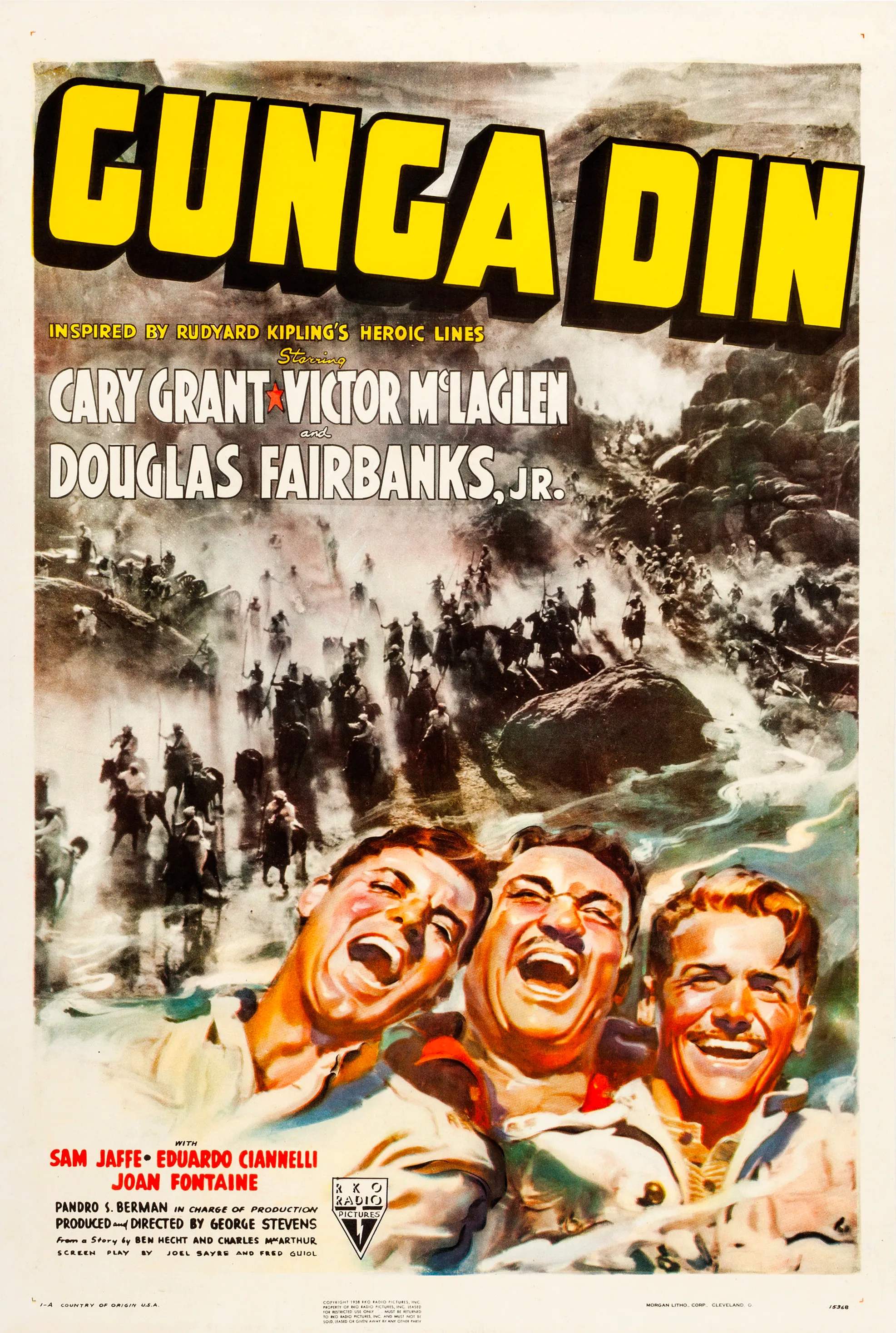
Gunga Din (RKO Radio Pictures, released 17 February 1939) was produced and directed by George Stevens, with Pandro S. Berman in charge of production. Joel Sayre and Fred Guiol wrote the screenplay from a story by Ben Hecht and Charles MacArthur, after Rudyard Kipling’s poem of 1890. The Indian water carrier of the title is played by Sam Jaffe, a white actor; Eduardo Ciannelli plays the Thuggee “Guru”. The film opens with a card: “Those portions of this picture dealing with the worship of the goddess Kali are based on historic fact.”52 Wagner’s reading of the records puts most of that worship down to the officers’ questioning. After criticism in the Bombay Chronicle and Filmindia, the film was banned in Bengal and Bombay, the Indian National Congress called for a boycott, and RKO cancelled engagements.53
Hammer Films in Britain came back to the stranglers in 1959 with The Stranglers of Bombay, directed by Terence Fisher, written by David Zelag Goodman and produced by Anthony Hinds: a Kali-worshipping Thuggee cult in the 1830s, billed as shot in “Strangloscope”. A follow-up, The Black Hole of Calcutta, was planned and dropped.54
The trope ledger
| Slur or trope | First on record | Where it came from | Seen again |
|---|---|---|---|
| “Juggernaut”: worshippers throw themselves under the god’s car | 1321, Odoric of Pordenone (as reported) | European travel and missionary writing on the Puri car festival | Buchanan, 1806 diary, printed 1811: “the Moloch of the present age” |
| “Heathen”, “abominable” worship, “filthy images” | Missionary print, 1811 to 1818 | Buchanan; Ward at Serampore | American preachers in the 1890s (reported, one source) |
| Hindu women unchaste, Hindu sex depraved | Ward, 1818 | Missionary writing | Mayo, 1927 |
| “Thug” and the Kali strangling cult | “Thug” in English by 1810 | Hindustani thag, a cheat; the all-India Kali cult largely Sleeman’s construction, per Wagner | Gunga Din, 1939; The Stranglers of Bombay, 1959 |
| The Indian rope trick and the fakir | Chicago Tribune, 8 August 1890 | A hoax by John Elbert Wilkie, retracted by the paper | Retold worldwide after 1890 |
| Snake charmers and exotica | A “Hindoo” village with camels at the Chicago fair of 1893 (as reported) | Exhibitions and travel shows | Hollywood’s India films of the 1930s |
| “Hindoo” for any Indian | Pacific coast press, 1900s | American usage lumping Sikhs, Muslims and Hindus | Bellingham Reveille, 1907; the Supreme Court, 1923 |
| “Hindu invasion”, “Hindoo invasion” | San Francisco Sunday Call, November 1906; Lockley, May 1907 | Exclusion League and labour rhetoric (as reported) | Sant N. Singh on “visions of a ‘Hindoo invasion of America’”, 1908 |
| “Tide of turbans” | The Forum, June 1910 | Herman Scheffauer’s essay title | Reused in the press as a label (as reported) |
| “Least desirable” race | Dillingham Commission, 1911, quoting an employer | An employer’s ranking, printed by the government | The harsher “least desirable race of immigrants” version is not found in the reports |
| Not white; the blood shows | Supreme Court, 19 February 1923 | Justice Sutherland’s opinion for a unanimous court | Dozens, about fifty, denaturalised |
| “Raghead” | 1910 (Etymonline); 1917 (OED) | American slur on the turban | Later aimed at Middle Easterners |
| “Wog” | Britain, early 20th century | Origin unknown; “Worthy Oriental Gentleman” is a false story | British slur for Indians and other colonised peoples |
| India as drain: filth, vice, inertia | Mayo, 1927 | An American author, first steered by a British intelligence office agent | Gandhi’s “Drain Inspector’s Report”, the same year |
| Loyal servant, native traitor, sneering prince | Kipling’s poem, 1890 | Kipling, then Hollywood | Bengal Lancer, 1935; Gunga Din, 1939 |
| Caste as uniquely Indian and fixed | Portuguese casta, 16th century; English, 1610s; Ward, 1818, as a charge | The word European; social orders described in Indian texts, their pre-colonial rigidity disputed by historians; ranked by the British census and written into the Criminal Tribes Act, 1871 | Risley, 1908; Mayo, 1927 |
Two slurs of the period have no single author. “Raghead”, for a person in a turban, is recorded from 1910 by one dictionary and from 1917 by the Oxford English Dictionary.55 “Wog” was British. The OED calls its origin “uncertain”, and says none of the suggested acronyms “is satisfactorily supported by the evidence”; the “Worthy Oriental Gentleman” story is one of them.55
A quota of 100
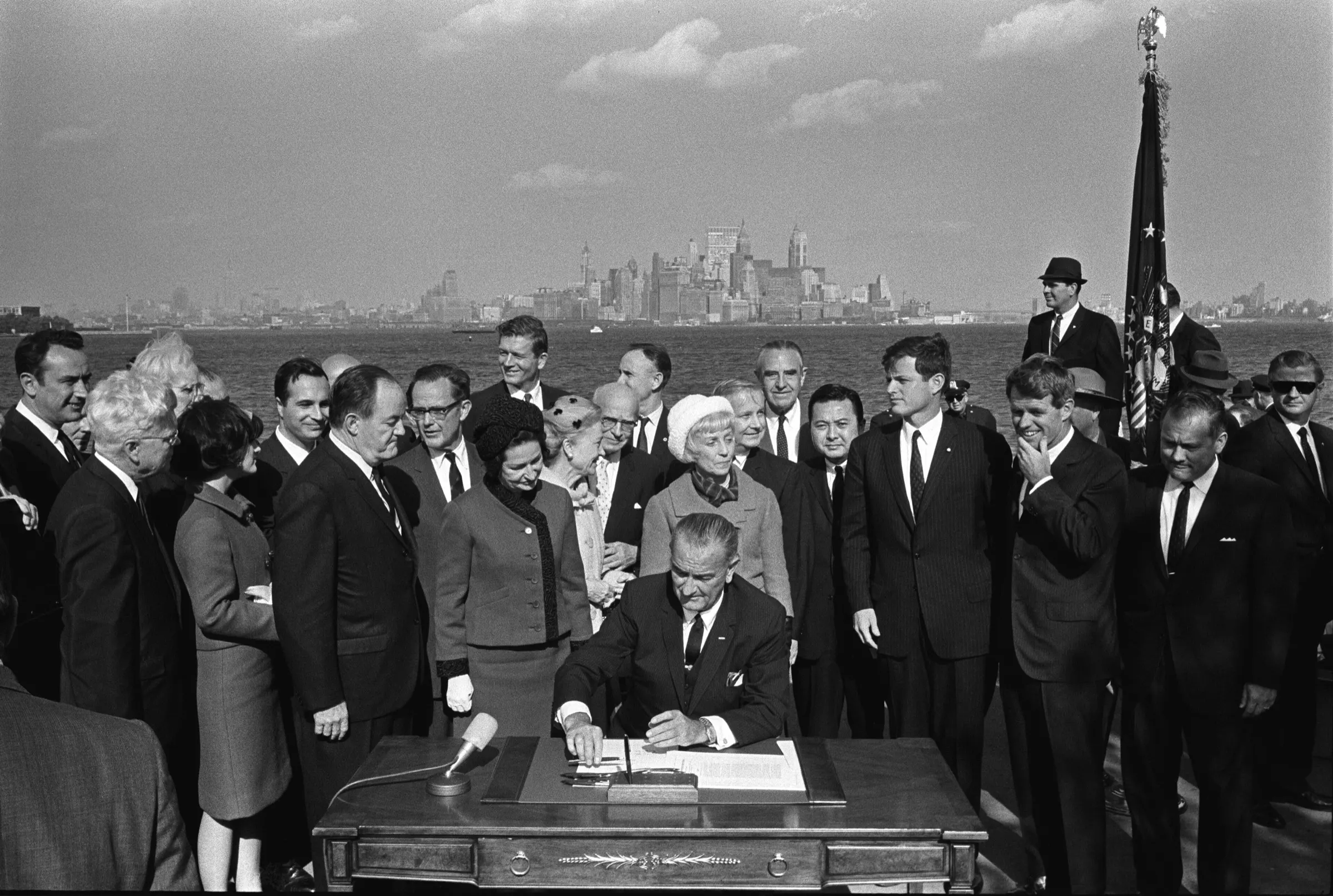
The door opened a crack after the Second World War. Representatives Clare Boothe Luce, a Republican, and Emanuel Celler, a Democrat, sponsored a bill to let Indians naturalise, with J. J. Singh of the India League of America lobbying for it.56 National-origins quotas lasted until the Immigration and Nationality Act of 1965, where Part 2 begins.57 President Harry S. Truman signed the Luce-Celler Act on 2 July 1946. It set the quota for immigrants from India at 100 a year.56
Sources and notes57
Footnotes
-
HistoryLink.org, essay 8039, “White workingmen attack Bellingham’s East Indian millworkers on September 4, 1907”, quoting the Bellingham Reveille, 5 September 1907. https://www.historylink.org/File/8039. The Indian population is given as about 250 by HistoryLink and as 200 to 300 elsewhere. The Reveille was not read in the original. Confidence: reported. ↩
-
HistoryLink.org, essays 8039 and 21247. Essay 21247 says of the Everett men that “most were likely Sikh as inferred by their wearing of traditional turbans”. Confidence: reported. ↩
-
HistoryLink.org, essay 21247, “White mob gathers to expel Asian Indian laborers from Everett on November 2, 1907”, quoting the Everett Daily Herald. https://www.historylink.org/File/21247. The mayor was Newton Jones and the police chief Scott M. Marshall. Confidence: reported (HistoryLink’s transcription of the Herald). ↩
-
Wikipedia, “Juggernaut”, and The Saturday Evening Post, “In a Word: Friar Odoric’s Juggernaut”, 2026. https://en.wikipedia.org/wiki/Juggernaut. Wikipedia also calls it a “thirteenth-century account”; the travels were 1316 to 1318 and the account 1321. Confidence: reported. ↩
-
Claudius Buchanan, Christian Researches in Asia, 5th ed. (London, 1812), chapter “The Hindoos”, pp. about 20 to 28; contents, p. 39. https://archive.org/details/christianresearc00buchrich. He stayed with “James Hunter, Esq. the Company’s collector of the tax on pilgrims”. First published 1811; the quotes are from the 1812 edition. Confidence: verified. ↩ ↩2
-
Boston edition, Samuel T. Armstrong, 1811, catalogued at archive.org (christianresearc00buch). Confidence: verified (catalogue). That Buchanan was the first to popularise “the Juggernaut” in Britain and America is reported. ↩
-
William Ward, A View of the History, Literature, and Mythology of the Hindoos, vol. 2 (Serampore: Mission Press, 1818). https://archive.org/details/viewofhistorylit02ward_0. Confidence: verified. ↩
-
Oxford English Dictionary, “thug, n.” (via search summary); W. H. Sleeman, Ramaseeana (Calcutta, 1836), not read by the desk. Confidence: reported. ↩ ↩2
-
Kim A. Wagner, Thuggee: Banditry and the British in Early Nineteenth-Century India (Palgrave, 2007), as summarised by Wikipedia and Savage Minds, 22 December 2007. https://savageminds.org/2007/12/22/thuggee/. Confidence: reported. ↩
-
Wikipedia, “Indian rope trick” and “John Elbert Wilkie”, citing Peter Lamont, The Rise of the Indian Rope Trick (2004). https://en.wikipedia.org/wiki/John_Elbert_Wilkie. Wilkie’s apology was in a letter to The People’s Friend. Confidence: reported. ↩
-
San Francisco Sunday Call, 18 November 1906, South Asian American Digital Archive item 20170129-4946, via Wikimedia Commons. https://commons.wikimedia.org/wiki/File:Our_First_Invasion_by_Hindus_and_Mohammedans.jpg. Confidence: verified (catalogue record). ↩
-
Fred Lockley, “The Hindu Invasion: A New Immigration Problem”, The Pacific Monthly vol. 17 no. 5 (May 1907), from p. 584. https://archive.org/details/pacificmonthly17woodrich; SAADA item 20110719-241. Quoted from the archive.org text. The want ad’s opening word “WANTED”, joined to the text by a dash, is trimmed; the adjective before “hordes” is left out because the scan and the transcription read it differently (“ever-hungry”, “over-hungry”). Confidence: verified. ↩ ↩2
-
UC Berkeley Library, “Echoes of Freedom: South Asian Pioneers in California, 1899-1965”, section 4, “The Great White Wall”. https://guides.lib.berkeley.edu/echoes-of-freedom/white-wall. Confidence: reported. ↩
-
HistoryLink.org, essay 8039, citing Gerald N. Hallberg, Journal of the West 12 (January 1973). Confidence: reported. ↩
-
UC Berkeley Library, “Echoes of Freedom”, section 4. Confidence: reported. ↩
-
Los Angeles Herald, 6 September 1907, p. 1, “Mob Drives Out Hindus”, as cited by Manish Chalana, “Whither the ‘Hindoo Invasion’?”, International Journal of Regional and Local History 16:1 (2021), n. 41. Confidence: reported. ↩
-
Wikipedia, “1907 Vancouver anti-Asian riots”, read 4 October 2026. https://en.wikipedia.org/wiki/1907_Vancouver_anti-Asian_riots. A royal commission under William Lyon Mackenzie King later paid Chinese-Canadians $26,000 and Japanese-Canadians $9,000. Confidence: reported. ↩
-
Manish Chalana, “Whither the ‘Hindoo Invasion’? South Asians in the Pacific Northwest of the United States, 1907-1930”, International Journal of Regional and Local History 16:1 (2021). https://jsis.washington.edu/wordpress/wp-content/uploads/sites/12/2021/10/Manish-Chalana_SouthAsians_PNW.pdf. The Boring death rests on this source alone. Confidence: reported. ↩
-
Yuba-Sutter LocalWiki; Chalana (2021). One account dates it 25 January 1908. A robbery sum often repeated with the story was not found. Confidence: reported. ↩
-
Chalana (2021), citing “Hindus Beaten by Enraged Laborers”, Salt Lake Herald-Republican, 23 March 1910, p. 1. Confidence: reported. ↩
-
Sant N. Singh, The Pacific Monthly 20 (1908), as quoted by Chalana (2021), nn. 38 and 39. Confidence: reported. ↩
-
Herman George Scheffauer, “The Tide of Turbans”, The Forum vol. 43 (June 1910), pp. 616-618, per Wikipedia and Quartz. https://en.wikipedia.org/wiki/Herman_George_Scheffauer. The essay’s text was not read. Confidence: reported. ↩
-
Chalana (2021). Confidence: reported. ↩
-
US Immigration Commission, Reports, vol. 23, p. 349, and vol. 25, pp. 331-332 (1911), as cited by Chalana (2021). Confidence: reported. ↩
-
US House Committee on Immigration and Naturalization, Hindu Immigration: Hearings, February to April 1914, as described by SAADA. https://saada.org/item/20120113-581. The hearing text was not read and Caminetti’s own words are not quoted here. Confidence: reported. ↩
-
Immigration Act of 1917, H.R. 10384, Public No. 301, 39 Stat. 874, approved 5 February 1917. https://www.govinfo.gov/content/pkg/STATUTE-39/pdf/STATUTE-39-Pg874.pdf. Confidence: verified (header page). The veto, the zone’s boundaries and the population estimate are from SAADA, “Part II: The ‘Asiatic Barred Zone’ of 1917”. https://www.saada.org/explore/exhibits/theproblem/part-ii. Confidence: reported. ↩
-
Prime Minister of Canada, news release, 18 May 2016, for 376 passengers and the arrival on 23 May 1914 (confidence: verified). https://www.pm.gc.ca/en/news/news-releases/2016/05/18/prime-minister-delivers-formal-komagata-maru-apology-house-commons. The regulation, the number admitted, the departure date and the Budge Budge deaths are from Wikipedia, “Komagata Maru incident”, and Parks Canada (confidence: reported). Wikipedia now gives 22 admitted and 20 killed, from government records; earlier summaries gave about 24 and 19. ↩ ↩2
-
Prime Minister of Canada, news release, 18 May 2016. Confidence: verified. ↩
-
Wikipedia, “Bhagat Singh Thind”, read 4 October 2026; the 1935 law is the Nye-Lea Act. https://en.wikipedia.org/wiki/Bhagat_Singh_Thind. Confidence: reported. ↩ ↩2
-
United States v. Bhagat Singh Thind, 261 U.S. 204 (argued 11-12 January, decided 19 February 1923). https://www.law.cornell.edu/supremecourt/text/261/204. Confidence: verified. ↩
-
Smithsonian, “Stripping Naturalized Immigrants of Their Citizenship Isn’t New”, 2018; Wikipedia, “Sakharam Ganesh Pandit”. https://www.smithsonianmag.com/history/stripping-naturalized-immigrants-their-citizenship-isnt-new-180969733/. Some popular sources say “hundreds”; the text uses the lower figures. Confidence: reported. ↩
-
“Here’s Letter To The World From Suicide”, San Francisco Examiner, 17 March 1928, SAADA item 20130513-2748. https://www.saada.org/explore/archive/items/20130513-2748. Quoted from SAADA’s text; the desk could not open the scan. Confidence: reported. ↩
-
Katherine Mayo, Mother India (New York: Harcourt, Brace & Co., 1927), p. 16 and passim. https://archive.org/details/motherindia00mayo. A dash in Mayo’s original is replaced with an ellipsis. Confidence: verified. ↩ ↩2 ↩3
-
Wikipedia, “Mother India (book)” and “Katherine Mayo”, read 4 October 2026. https://en.wikipedia.org/wiki/Mother_India_(book). Confidence: reported. ↩
-
M. K. Gandhi, “Drain Inspector’s Report”, Young India, 15 September 1927. Collected Works volume and pages differ between editions. Confidence: reported (quoted via a secondary copy). ↩
-
Online Etymology Dictionary, “caste”. https://www.etymonline.com/word/caste; Wikipedia, “Caste”, for the Portuguese use in India. Confidence: reported. ↩
-
Wikipedia, “Caste” and “Varna (Hinduism)”, read 4 October 2026; Bayly (1999), pp. 3-4. The four varna appear in the late Rigveda (10.90) and in the law books. Confidence: reported. ↩
-
Susan Bayly, Caste, Society and Politics in India from the Eighteenth Century to the Modern Age, New Cambridge History of India IV.3 (Cambridge University Press, 1999), pp. 3-4. https://archive.org/details/iB_in. Confidence: verified. ↩
-
Nicholas B. Dirks, Castes of Mind: Colonialism and the Making of Modern India (Princeton University Press, 2001), sample text at the Library of Congress. https://catdir.loc.gov/catdir/samples/prin031/2001021236.html. Confidence: verified. ↩
-
Sumit Guha, Beyond Caste: Identity and Power in South Asia, Past and Present (Leiden: Brill, 2013; open access), pp. 15 and 39-40. Guha: “An adequate understanding of South Asian society requires us not only to bring the state back in; it must bring non-Hindus back in, too.” Confidence: verified. ↩
-
Wikipedia, “Census in British India”, read 4 October 2026. https://en.wikipedia.org/wiki/Census_in_British_India. Caste tabulation was dropped in 1941. Confidence: reported. ↩ ↩2
-
H. H. Risley, The People of India (Calcutta: Thacker, Spink, 1908), p. 29 (noses) and pp. 109-110 (precedence and the petitions). https://archive.org/details/peopleindia00rislgoog. Risley was Census Commissioner for the 1901 census. Confidence: verified. ↩
-
The Criminal Tribes Act, 1871 (Act XXVII of 1871), 12 October 1871, ss. 2, 7, 18 and 19. https://indiankanoon.org/doc/17412906/. Confidence: verified. ↩
-
Quoted by Justice P. S. Narasimha, “Justice for the Marginalized in a Constitutional Democracy”, CASTE: A Global Journal on Social Exclusion 5:2 (April 2024), pp. 302-313, citing Anand A. Yang, ed., Crime and Criminality in British India (1985). https://journals.library.brandeis.edu/index.php/caste/article/view/2290. Narasimha attributes the words to James Fitzjames Stephen; Wikipedia, “Criminal Tribes Act”, attributes them to T. V. Stephens. The text names neither. Confidence: reported. ↩
-
Wikipedia, “Criminal Tribes Act”, read 4 October 2026. The communities were “denotified” in 1952, and the Habitual Offenders Acts that followed kept much of the stigma. Confidence: reported. ↩
-
Heather Streets, Martial Races: The Military, Race and Masculinity in British Imperial Culture, 1857-1914 (Manchester University Press, 2004), as described by the publisher and in its reviews; Scottish Highlanders were the third group in her study. Confidence: reported. ↩
-
William Ward, A View of the History, Literature, and Religion of the Hindoos (Serampore, 1818; Madras: J. Higginbotham, reprint 1863), the section “The Cast”, pp. 108 and 113. https://archive.org/details/aviewhistorylit00wardgoog. Ward spells caste “cast”. Confidence: verified. ↩
-
Wikipedia, “Adalberon (bishop of Laon)” and “Cagot”, read 4 October 2026. Adalbero’s poem is the Carmen ad Rotbertum regem, about 1024-25. Confidence: reported. ↩
-
Wikipedia, “Emancipation reform of 1861” and “House of Lords Act 1999”, read 4 October 2026. Confidence: reported. ↩
-
Isabel Wilkerson, “America’s Enduring Caste System”, New York Times Magazine, 1 July 2020, adapted from her Caste: The Origins of Our Discontents (Random House, 2020). https://www.nytimes.com/2020/07/01/magazine/isabel-wilkerson-caste.html. Confidence: verified. ↩
-
Wikipedia, “The Lives of a Bengal Lancer (film)”, read 4 October 2026. https://en.wikipedia.org/wiki/The_Lives_of_a_Bengal_Lancer_(film). Laurence Stallings also worked on the script, uncredited. No record of Indian protests against the film was found. Confidence: reported. ↩
-
AFI Catalog, Gunga Din (1939). https://catalog.afi.com/Catalog/moviedetails/5125. Poster: US one-sheet, Wikimedia Commons, “Gunga Din (1938 poster).jpg”, from Heritage Auctions, tagged PD-US-not renewed. Confidence: verified (catalogue and poster). ↩
-
Wikipedia, “Gunga Din (film)”, read 4 October 2026; EBSCO. https://en.wikipedia.org/wiki/Gunga_Din_(film). The ban was in Bengal and Bombay, not all of India. Confidence: reported. ↩
-
Letterboxd; Powerhouse Films; horrorcultfilms.co.uk, 2015. https://letterboxd.com/film/the-stranglers-of-bombay/. Confidence: reported. ↩
-
Online Etymology Dictionary, “raghead”; OED via search summary (earliest evidence 1917, H. M. Rideout); Wikipedia, “Wog”, quoting the OED. https://www.etymonline.com/word/raghead. Confidence: reported. ↩ ↩2
-
Wikipedia, “Luce-Celler Act of 1946” and “Jagjit Singh (activist)”; Immigration History (University of Texas at Austin), “Luce-Celler Act of 1946”, for the 2 July 1946 date. https://en.wikipedia.org/wiki/Luce%E2%80%93Celler_Act_of_1946. Confidence: reported. ↩ ↩2
-
The Immigration and Nationality Act of 1965 (Hart-Celler) ended the national-origins quotas. Confidence: reported. ↩
Letters
No letters on this report yet.
Letter received
Thank you. It is with the editors now and will appear here if we publish it.