Science & Tech · The bill · 2019–2026
The satellite factory
What would it cost India or China to build 1,000, 5,000 or 10,000 satellites of the Starlink V3 class? We costed it with local wages and power prices. Pay and electricity come to under 1 per cent of the bill. Launch is most of the rest, and neither country has rockets that do it cheaply.
A Philosopher Lecturing on the Orrery, Joseph Wright of Derby, c. 1766. A lamp stands in for the sun in a model of the solar system. Used here for mood.Derby Museum and Art Gallery. Public domain, via Wikimedia Commons
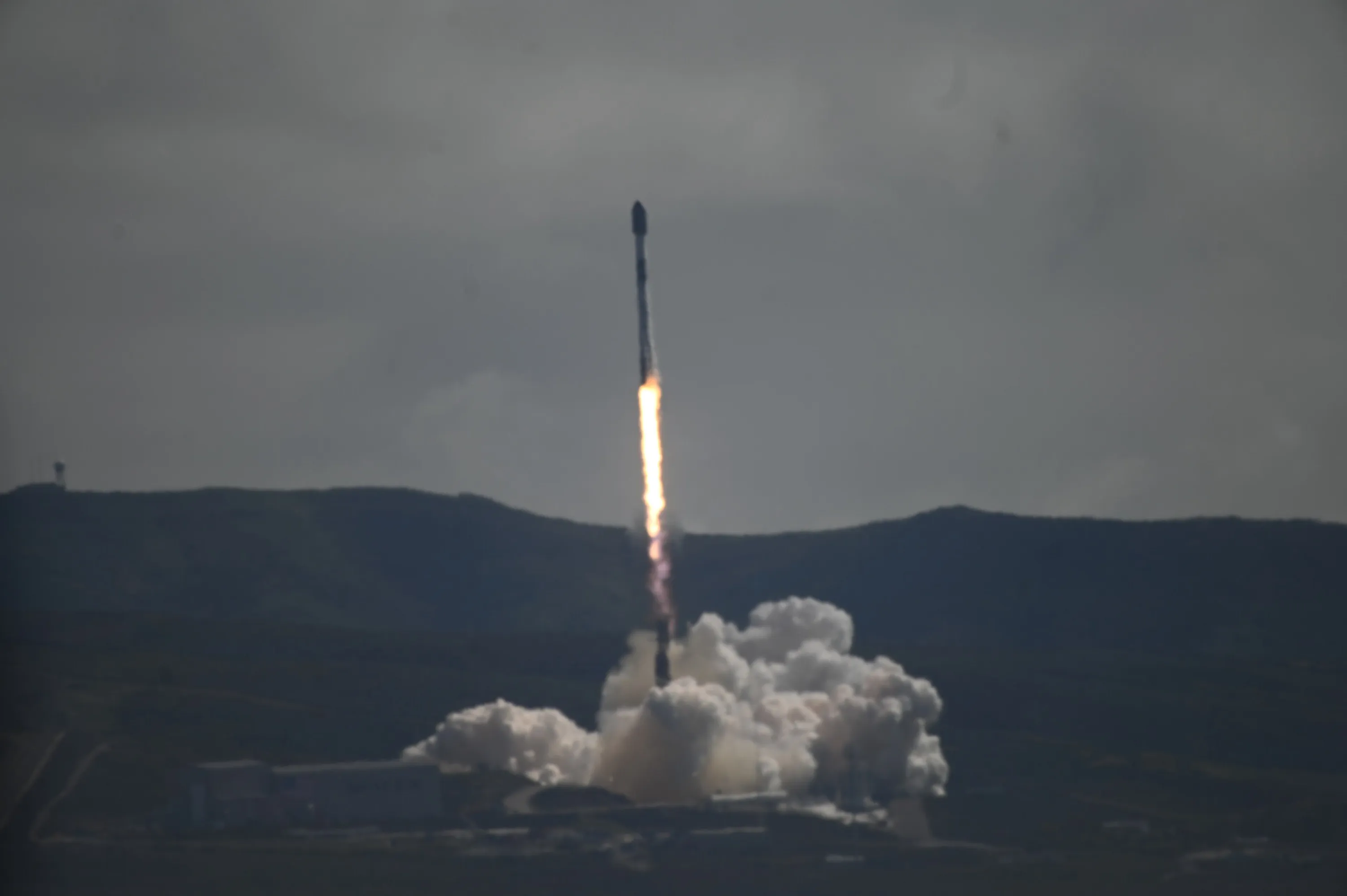
On 28 September 2026 Starship reached orbit for the first time and released 26 Starlink V3 satellites. Elon Musk posted that all 26 were “deployed and operating nominally”.1 SpaceX says each V3 is designed to carry one terabit per second of downlink, and that Starship should eventually carry “up to 60” of them a launch.2
SpaceX’s factory in Redmond, Washington, made about 70 Starlink satellites a week between December 2025 and April 2026, or about 3,640 a year at that rate.2 Starlink had 10.3 million subscribers at the end of March 2026, and SpaceX’s connectivity business earned $4.4bn from operations in 2025.3
This report asks what it would cost India or China to build 1,000, 5,000 or 10,000 satellites of the V3 class today. The editor’s brief set the inputs: technicians at $700 a month, engineers at $1,500 a month, electricity at 7 US cents a kilowatt-hour, and a pool of more than 50 million able engineers in India. We checked each input against the record, then built the bill.
What a V3 is
SpaceX has not published a V3’s mass. Press reports put it at about two tonnes.4 The previous model, the V2 Mini, weighed about 800 kg at launch in 2023 and flies on Falcon 9.5 The V3 is too big for Falcon 9 and launches only on Starship.2 Reported specifications include 2,048 downlink beams against the V2’s 192, and six laser links of 400 gigabits a second each to pass traffic between satellites.6
What one costs
SpaceX does not publish what a satellite costs to build. Its May 2026 listing document, the S-1, gives no per-satellite figure.2 The best-known estimates come from the analysts at Quilty Space, who put a Starlink V1 at about $200,000, a V2 at “nearer $800,000” and a V3 at “around $1.2 million” in 2024.7
The S-1 allows a rough check. The value of SpaceX’s satellites on its books rose by $4,358m in 2025, a year in which it deployed “over 3,000” of them. That is at most about $1.45m a satellite, and the figure includes the cost of launching it.8 SpaceX writes its satellites off over three to five years.2 In 2020 Musk said it was already “less costly” to build a Starlink satellite than to launch one.9
Other makers pay more. Telesat’s contract with MDA for its Lightspeed constellation works out at about $7.8m a satellite, including the design work.10 China’s Shanghai Gesi factory, which builds for the Qianfan constellation, expected 700m to 800m yuan of output in 2024 from 50 to 70 satellites. That is 10m to 16m yuan, roughly $1.5m to $2.3m, of revenue per satellite, which is not the same as the cost of making one.11 Amazon says it has spent more than $10bn on its Leo constellation. It has built more than 1,000 satellites and had 396 in orbit by October 2026.12
Checking the brief: pay
The brief’s wages are generous for India. An ISRO Technician ‘B’ starts on a basic of ₹21,700, which comes to about ₹41,200 a month, or $430, once dearness allowance and city housing allowance are added.13 The average urban salaried worker earned ₹24,434 a month in the April to June 2024 survey quarter, about $255.14 Engineering graduates in formal jobs had a median wage of ₹25,000 a month in their first year and ₹42,000 after three years, $261 and $439, according to an analysis of the 2025 labour survey.15 An entry-level ISRO engineer grosses about ₹1,06,600, about $1,110. The brief’s $1,500 is about ₹1.44 lakh a month, closer to senior pay.13
For China the brief is low. The National Bureau of Statistics put the 2025 average for production and manufacturing workers at 80,739 yuan a year, or 6,728 yuan a month, about $990. Professional and technical staff averaged 155,491 yuan, about $1,900 a month.16 A Chinese engineer costs more than an Indian one by every measure the desk found.
Checking the brief: power
Seven cents is about right for the energy charge an Indian factory pays on a high-tension connection: ₹6.60 a unit in Karnataka, ₹7.50 in Tamil Nadu and ₹7.65 in Telangana, or 6.9 to 8.0 cents. Demand charges come on top, at ₹608 per kVA a month in Tamil Nadu and ₹500 in Telangana.17 China’s average industrial rate was about 8.8 cents in 2024, and provincial rates in May 2025 ran from 0.446 yuan (6.5 cents) in Xinjiang to 0.869 yuan (12.7 cents) in Hainan.18
Checking the brief: 50 million engineers
No official count of India’s engineers exists, and the record does not support 50 million. India produced 784,517 engineering and technology graduates in 2022-23, by the government’s higher-education survey.19 At between 800,000 and 1.2 million graduates a year for 25 years, India has produced roughly 20 million to 30 million engineering graduates in total, before deaths, retirement, emigration and those who never worked as engineers.20 The 2025 labour survey implies about 2.85 million employed engineering graduates aged 21 to 34, and 51.6 per cent of them write software.21 The India Skills Report 2026 rated 70.15 per cent of BE and BTech graduates employable on its test.22
Building them: the factory bill
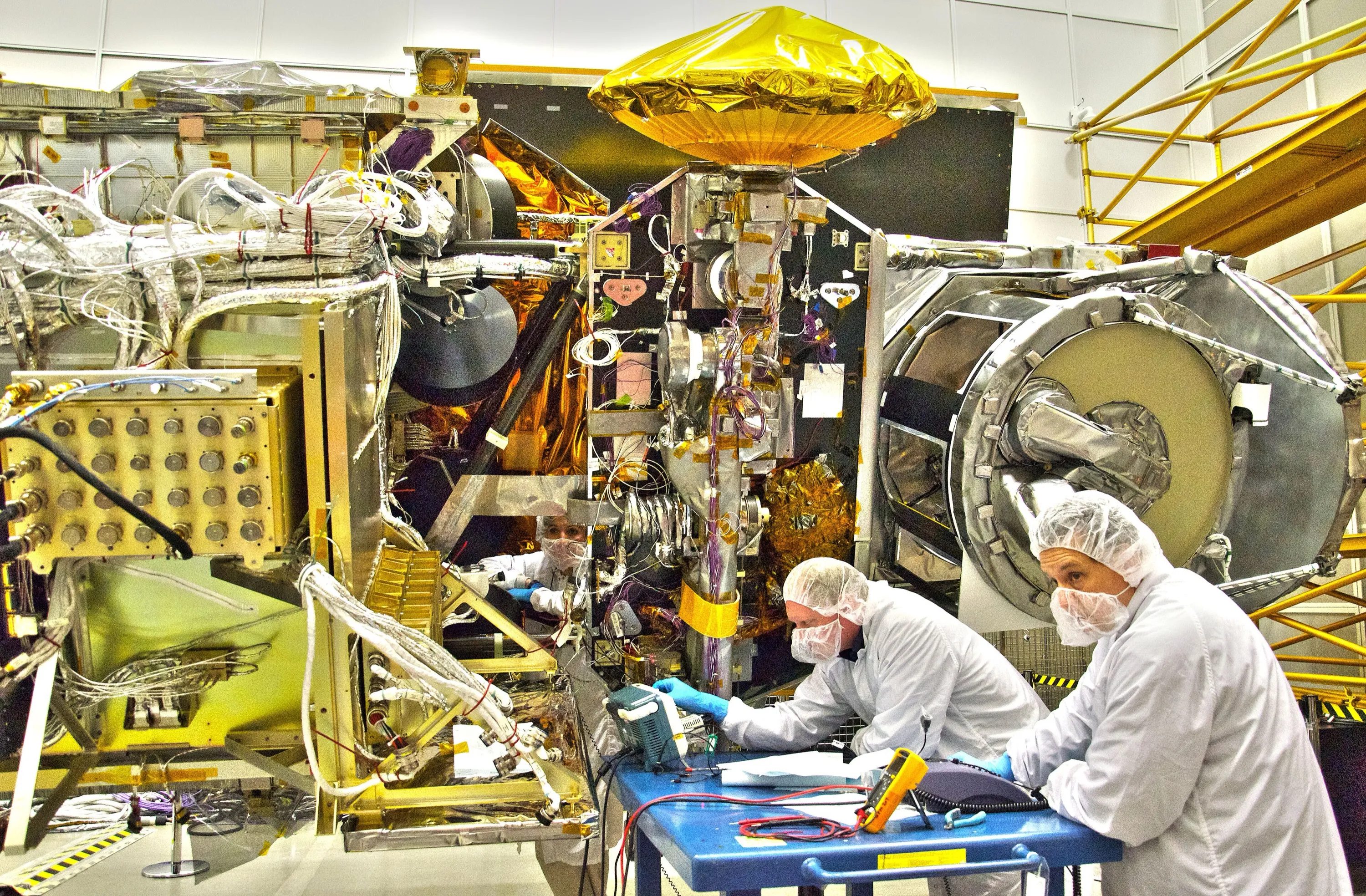
No maker publishes how many hours of work go into a satellite, or how its cost splits between parts and labour.23 So the model rests on four assumptions, each stated.
The parts and materials for one satellite cost between $600,000 and $1m. That is half to most of Quilty’s $1.2m estimate for a SpaceX-built V3, on the reasoning that a new maker would not buy chips, lasers and solar cells cheaper than SpaceX does at its volumes.
Each satellite takes two person-years of work. Airbus’s OneWeb plant in Florida was planned around 250 jobs to build two satellites a day, about 0.34 person-years for a satellite of roughly 150 kg.24 A two-tonne V3 is far bigger, so the desk used about six times that figure. The workforce is 70 per cent technicians and 30 per cent engineers, paid the brief’s $700 and $1,500, a blend of $940 a month. That puts labour at $22,560 a satellite.
The factory draws 20 megawatts all year. No satellite factory publishes its power use, so this figure is a guess. Spread over a Redmond-sized output of 3,640 satellites a year, it comes to 48,000 kWh a satellite, or $3,360 at 7 cents.25
| Fleet | Parts | Labour | Power | Factory bill |
|---|---|---|---|---|
| 1,000 | $0.6bn to $1bn | $23m | $3m | $0.63bn to $1.03bn |
| 5,000 | $3bn to $5bn | $113m | $17m | $3.1bn to $5.1bn |
| 10,000 | $6bn to $10bn | $226m | $34m | $6.3bn to $10.3bn |
Labour is between 2 and 4 per cent of the factory bill. Power is 0.3 to 0.5 per cent. With the wages the desk found on the record instead of the brief’s, India’s labour falls to about $15,200 a satellite and China’s rises to about $30,300. On 10,000 satellites that moves the bill by less than $80m either way.25
The workforce is small too. Ten thousand satellites over five years, at two person-years each, need about 4,000 people: roughly 2,800 technicians and 1,200 engineers. The 1,200 engineers are about one in 650 of the engineering graduates India produced in a single year.

Launching them: where the money goes
India’s heaviest rocket is the LVM3. ISRO’s chairman, V. Narayanan, said in December 2025 that it could lift 9,200 kg to low orbit, enough for four two-tonne satellites.26 The government sanctioned 10 of them in 2018 for ₹4,338.20 crore, about ₹434 crore or $45m each.27 That makes launch about $11.3m a satellite. A fleet of 1,000 would need 250 LVM3 flights. ISRO flew five rockets of all kinds in 2025, two of them LVM3s, and a PSLV failed in May.28 At two LVM3s a year, 250 flights would take 125 years.
The Next Generation Launch Vehicle, approved in September 2024 for ₹8,240 crore, is meant to carry three times the LVM3’s payload at one and a half times the cost, which would halve the cost per kilogram. Its first three flights are due within eight years of approval.29
China launches far more often. It flew 92 orbital launches in 2025, by the statistics bureau’s count, 50 of them commercial.30 ABI Research puts Long March pricing at about $3,000 a kilogram to low orbit, about $6m for a two-tonne satellite.31 A Long March 12, rated at 10 to 12 tonnes, would carry about five, so 1,000 satellites would take 200 launches, more than twice China’s entire 2025 total.31 Its two broadband constellations are moving slowly. Qianfan had about 258 satellites up by mid-September 2026, at 18 or 20 a launch on most flights, after a gap of about six months between October 2025 and April 2026.32 Guowang had roughly 180 to 190 by mid-2026.33 In August 2026 a Zhuque-3 first stage landed on land, China’s first recovery of an orbital booster that way.34
SpaceX would need 17 Starship flights for 1,000 satellites, 84 for 5,000 and 167 for 10,000, if each carries 60. Only one has carried V3s to orbit, and it carried 26.1 Nobody outside SpaceX knows what a Starship flight costs. Musk has claimed a marginal cost of under $1m; analysts suggest about $10m is more realistic.35 At $10m a flight, launch comes to about $167,000 a satellite.
The bill
Add the factory bill to launch and the totals look like this.
| Fleet | India, on LVM3 | China, on Long March | Same satellites on Starship at $10m a flight |
|---|---|---|---|
| 1,000 | $11.9bn to $12.3bn | $6.6bn to $7.0bn | $0.8bn to $1.2bn |
| 5,000 | $59bn to $61bn | $33bn to $35bn | $4bn to $6bn |
| 10,000 | $119bn to $123bn | $66bn to $70bn | $8bn to $12bn |
Launch is between 85 and 95 per cent of the Indian and Chinese totals. Pay and power together are 2.5 to 4 per cent of the factory bill and less than half of 1 per cent of the whole.25 For comparison, Quilty’s $1.2m a satellite would put SpaceX’s own factory bill at $1.2bn for 1,000 and $12bn for 10,000.7
India’s suppliers are a second limit. Bharat Electronics was licensed in 2018 to make space solar cells using technology ISRO bought from the United States.37 The Tata-PSMC chip plant at Dholera is expected to start mainly at 90 nanometres, with trial production targeted for December 2026, and Micron’s Sanand plant, opened in February 2026, packages memory chips.38 India can buy most Western space parts under export licences. China cannot: American rules forbid the export of “virtually any satellite hardware or technology” to it, so China builds its constellation satellites at home.39

The clock
Satellites need radio spectrum, and the International Telecommunication Union sets deadlines. Under rules agreed in 2019, a constellation must have 10 per cent of its satellites up within two years of the end of the period for bringing it into use, half within five years and all of them within seven.40 Chinese bodies filed for about 200,000 satellites in December 2025.41 The desk found no Indian filing for a broadband constellation. Starlink holds an Indian licence and is waiting for the Cabinet to approve spectrum pricing and for a second security clearance.42

The parts for 10,000 satellites would cost India $6bn to $10bn, and the workers to assemble them would cost about $226m. Launching them on LVM3s would take 2,500 flights. ISRO has flown two rockets so far in 2026, and the first of them failed.28
Sources and notes42
Footnotes
-
Starship Flight 14, 28 September 2026; Musk on X as quoted by TelecomTV, 29 September 2026, and Interesting Engineering. Confidence: reported. ↩ ↩2
-
Space Exploration Technologies Corp., Form S-1, filed with the SEC May 2026: V3 “designed to offer one Tbps of downlink capacity per satellite”; “up to 60 V3 satellites per launch”; Redmond “approximately 70 satellites per week (approximately 3,640 per year at full rate) from December 2025 to April 2026”; satellite useful life “3 - 5 years”. No per-satellite cost is disclosed. Confidence: verified. ↩ ↩2 ↩3 ↩4 ↩5 ↩6
-
SpaceX S-1: subscribers 10.3 million at 31 March 2026; Connectivity segment income from operations $4,423m in 2025. Confidence: verified. ↩
-
Futura-Sciences, Cord Cutters News, Antyweb, October 2025: “about 2,000 kg” or “up to 2,000 kg”, one outlet about 1,900 kg. SpaceX’s 100 tonnes for Starship V3 divided by 60 satellites gives about 1,670 kg, before any dispenser. Confidence: reported. ↩
-
Spaceflight Now, 26 February 2023. A later “V2 Mini Optimized” is reported at about 575 kg. Confidence: reported. ↩
-
Converge Digest, 16 July 2026; TelecomTV, 29 September 2026. No SpaceX document for these figures was found. Confidence: reported. ↩
-
Quilty Space, as quoted by Advanced Television, 14 May 2024. Quilty’s note was not read; single source. Confidence: reported. ↩ ↩2
-
SpaceX S-1: gross “Satellites” property $7,591m at 31 December 2024 and $11,949m at 31 December 2025; “over 3,000 satellites deployed in 2025”; launch costs are capitalised. Division by the desk; retirements and unlaunched satellites would move it either way. Confidence: estimated. ↩
-
Defense Daily, 2020 (date inferred), reporting Musk at the Air Force Association symposium. Confidence: reported. ↩
-
MDA, August 2023: C$2.1bn (about US$1.55bn) for 198 satellites. Division by the desk. Confidence: estimated. ↩
-
Jiemian, 2024: first satellite off the line 27 December 2023; 2024 delivery target 50 to 70; expected output value 700m to 800m yuan. Division and conversion by the desk. Confidence: estimated. ↩
-
Via Satellite, 8 October 2026; GeekWire, 2026. Confidence: reported. ↩ ↩2
-
ISRO pay levels as summarised from ICRB notices by recruitment sites (Technician ‘B’ Level 3, basic ₹21,700; Scientist/Engineer ‘SC’ Level 10, basic ₹56,100); dearness allowance 60 per cent from 1 January 2026 (SCC Online, April 2026); 30 per cent house rent allowance assumed for a metro posting. Gross figures by the desk, before transport allowance. Confidence: estimated. ↩ ↩2
-
MoSPI, Periodic Labour Force Survey, April to June 2024 quarter, regular wage and salaried employees, urban, as seen in summary. Confidence: reported. ↩
-
Avanti Fellows, “What an Indian degree pays”, August 2026, from PLFS calendar-year 2025 microdata. Confidence: reported. ↩
-
National Bureau of Statistics of China, “Average Annual Wages of Employees in Urban Units in 2025”, 18 May 2026, enterprises above designated size by occupation. Monthly and dollar figures by the desk. Confidence: verified (yuan), estimated (dollars). ↩
-
Karnataka HT-2(a), KERC order of 27 March 2025 (Mercom; later true-up charges may raise it); Tamil Nadu from 1 July 2025 (Mercom); Telangana HT-I(A) 11 kV, FY2025-26 tariff schedule (seen in summary). Confidence: reported. ↩
-
China Briefing, 19 May 2025, citing Statista for the 2024 average. Confidence: reported. ↩
-
All India Survey on Higher Education 2022-23, as cited by Avanti Fellows. Confidence: reported. ↩
-
The desk’s arithmetic on AICTE and AISHE figures. No official stock figure exists, and the Census 2011 count was not retrieved. Confidence: estimated. ↩
-
Avanti Fellows, PLFS calendar-year 2025: 1.47 million employed engineering graduates aged 21 to 34 do software work, 51.6 per cent of the group. The total is the desk’s division and is a lower bound, since survey weights are anchored to the 2011 census. Confidence: estimated. ↩
-
India Skills Report 2026, as reported by Careers360 and AffairsCloud. A test score, not a count of people in work. A 2016 Aspiring Minds study called 80 per cent of graduates unemployable by a different method. Confidence: reported. ↩
-
No labour-hours or cost split was found for SpaceX, Amazon, OneWeb or the Chinese makers. Confidence: unknown. ↩
-
Via Satellite and Space.com, 22 to 23 July 2019: two production lines, two satellites a day, about 250 jobs at peak, $85m factory. The person-years ratio is the desk’s. Confidence: reported (inputs), estimated (ratio). ↩ ↩2
-
The desk’s cost model. Assumptions: parts $600,000 to $1m a satellite; two person-years a satellite, 70 per cent technicians and 30 per cent engineers; 20 MW for 8,760 hours over 3,640 satellites. Recorded-wage runs use ISRO rates for India ($430 and $1,110) and NBS averages for China ($990 and $1,900). Confidence: estimated. ↩ ↩2 ↩3
-
WION, December 2025, quoting V. Narayanan. ISRO’s own page gives 8,000 kg to about 600 km. Confidence: reported. ↩
-
Union Cabinet approval, 6 June 2018 (PM India release); Lok Sabha answer, April 2022, as reported: 10 GSLV Mk III (LVM3) for ₹4,338.20 crore. Division and conversion by the desk. Confidence: reported (sanction), estimated (per launch). ↩
-
ISRO launch missions list, read 10 October 2026: five launches in 2024, five in 2025 (PSLV-C61 “Not accomplished”; LVM3-M5 and M6), two in 2026 (PSLV-C62 on 12 January, GSLV-F17 on 4 September). PSLV-C62 failure: Business Today, 12 January 2026. Confidence: verified (list), reported (failure). ↩ ↩2
-
Union Cabinet approval, 18 September 2024, as reported: ₹8,240 crore, three development flights within 96 months, “3 times the present payload capability with 1.5 times the cost compared to LVM3”. Confidence: reported. ↩
-
NBS 2025 statistical communique as reported by CislunarSpace; China Daily; SCMP. Other counts give 89 and 93. Confidence: reported. ↩
-
ABI Research, about $3,000 a kilogram; Long March 12 capacity per Wikipedia. Five satellites a launch is the desk’s estimate with no dispenser allowance. Confidence: reported (inputs), estimated (arithmetic). ↩ ↩2
-
Wikipedia, Qianfan launch table to 15 September 2026, read 10 October 2026. Confidence: reported. ↩
-
Behind the Black, SatNews, Space.com and CircleID, December 2024 to June 2026; counts differ between trackers. Confidence: reported. ↩
-
AP, August 2026. Confidence: reported. ↩
-
Musk’s claims as collected by Wccftech; The Space Review (Sam Dinkin). No audited figure exists. Confidence: unknown. ↩
-
₹95.74, rupee close on 24 September 2026 (PTI); 6.8166 yuan, PBOC central parity on 26 June 2026 (InvestingLive). Confidence: reported. ↩
-
The Better India, 2018. Confidence: reported. ↩
-
Bloomberg via aiweekly; eeNews Europe; single sources. Confidence: reported. ↩
-
Wiley Rein client alert on the 2014 9x515 export-control reform. That India can buy most such parts under licence is the desk’s reading of the same rules. Confidence: reported (rule), estimated (India). ↩
-
ITU, “ITU members agree to new milestones for non-geostationary satellite deployment”, January 2020 (Resolution 35, WRC-19). Confidence: verified. ↩
-
IEEE ComSoc Technology Blog, 13 January 2026. Confidence: reported. ↩
-
PTI via ETV Bharat, 8 September 2026: the Digital Communications Commission approved most of TRAI’s satcom spectrum recommendations; Cabinet approval of pricing and a second-stage security clearance are still needed. Confidence: reported. ↩
Letters
No letters on this report yet.
Letter received
Thank you. It is with the editors now and will appear here if we publish it.