Dating the Vedas · 1859–2019
Tilak checked the sky
The textbook date for the Rigveda, about 1200 BCE, began as a guess by Max Müller, which he later disowned. Bal Gangadhar Tilak read the star calendar in the Vedas and got a date thousands of years older. A line of Indian scholars has followed him.
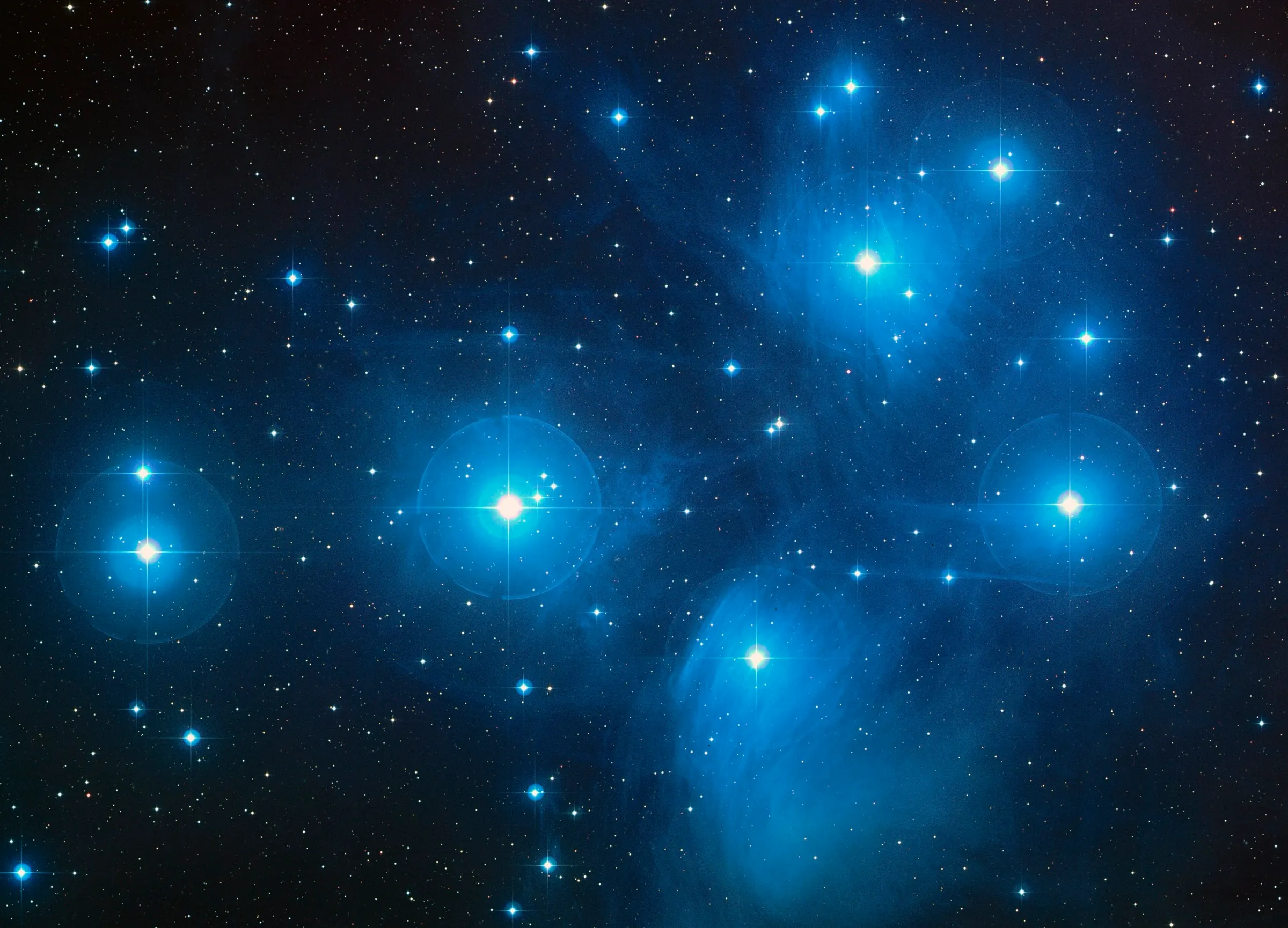
The Pleiades, the Krittikas of the Vedic star calendar. Photograph: NASA, ESA, AURA/Caltech, Palomar Observatory.
एकाचेतत्सरस्वती नदीनां शुचिर्यती गिरिभ्य आ समुद्रात् ।
ekācetat sarasvatī nadīnāṃ śucir yatī giribhya ā samudrāt |
“Pure in her course from mountains to the ocean, alone of streams Sarasvati hath listened.”1
In 1859 Max Müller, the German scholar at Oxford who did more than anyone to bring the Vedas to Europe, needed a date for them. He began with the Sutras, the latest layer of Vedic literature, and fixed them, “as an experiment, therefore, though as no more than an experiment”, at 600 to 200 BCE. Then he gave each older layer about 200 years: the Brahmanas 800 to 600 BCE, the hymns of the Mantra period 1000 to 800, and the oldest hymns 1200 to 1000. Of the Brahmanas he wrote, “Of course this is merely conjectural.”2
The conjecture became the textbook date. It survived because it suited another theory, that the Vedic people had entered India around 1500 BCE: a Rigveda of about 1200 BCE left, as the historian Edwin Bryant puts it, “an interval of three hundred years for the Aryans to settle down in the Panjab”. Bryant’s verdict is that the date rests on the migration model, not on any measurement.3 Scholars said so at the time. Theodor Goldstücker and H.H. Wilson attacked Müller’s 200-year blocks in 1860, and in 1907 Moriz Winternitz put the start of Vedic literature at “about 2000 or 2500 B.C.”3
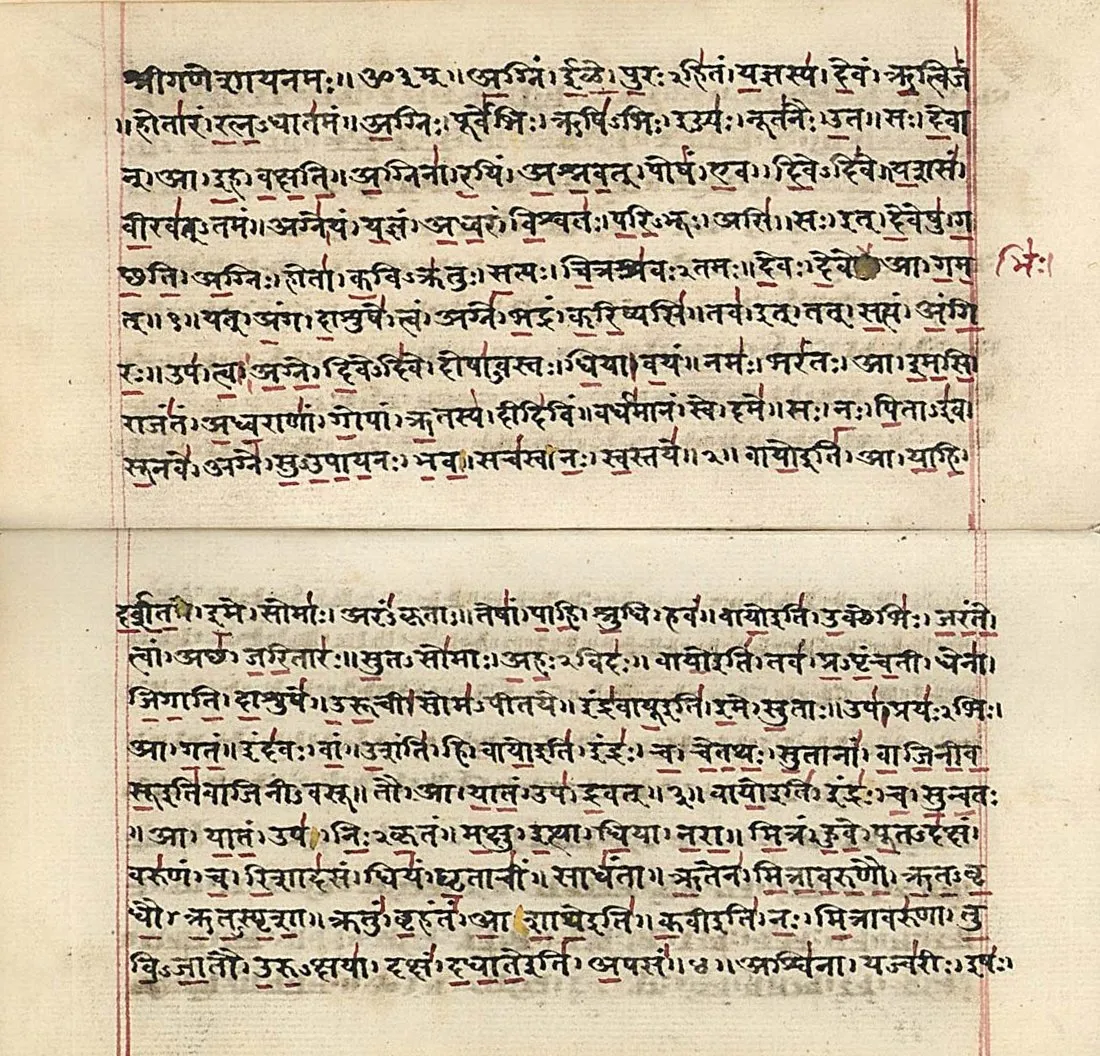
The almanac-maker reads the stars
Bal Gangadhar Tilak is remembered as a leader of the independence movement. He also made almanacs for a living, and in 1893 he published The Orion, or Researches into the Antiquity of the Vedas.4
His method used the slow wobble of the earth’s axis, which carries the spring equinox backwards through the 27 nakshatras of the Vedic star calendar at roughly one nakshatra every thousand years. The Vedic sacrificial texts, Tilak argued, remember a time when the year began with the spring equinox in Mrigashiras, the constellation of Orion, before the later rule, found in the Taittiriya Samhita and the Brahmanas, that put it in the Krittikas, the Pleiades. Each remembered position can be dated by the astronomy. His scheme ran: “The Pre-Orion Period, 6000-4000 B.C. - The Orion Period, 4000-2500 B.C. - The Krittika Period, 2500-1400 B.C. - Pre-Buddhistic Period, 1400-500 B.C.” The Orion period, he wrote, “was pre-eminently the period of the hymns.”5
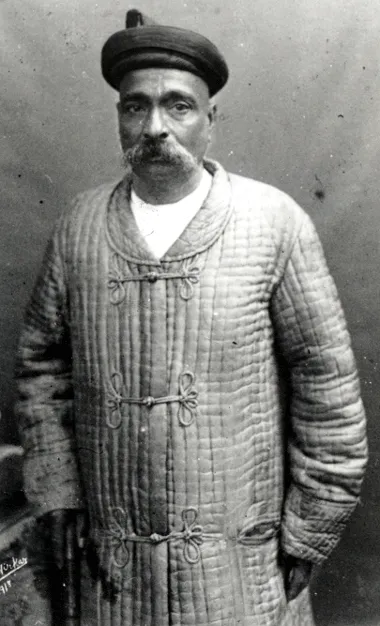
Ten years later, in The Arctic Home in the Vedas, he pushed further. Passages in the Vedas and the Avesta about long dawns and a six-month day and night, he argued, were memories of an older home in the far north, lost to the last Ice Age around 10,000 or 8,000 BCE. He revised his own periods to fit: migration from 8000 to 5000 BCE, and the Orion period 5000 to 3000 BCE, when “many Vedic hymns can be traced”. “These periods differ slightly from those mentioned by me in Orion,” he wrote, “but the change is needed in consequence of the theory of the Arctic home.”6
Tilak did not claim India as the original homeland of the Aryans; at this point he accepted that they had come from outside. His quarrel was with the age of the texts.7
A German in Bonn got the same answer
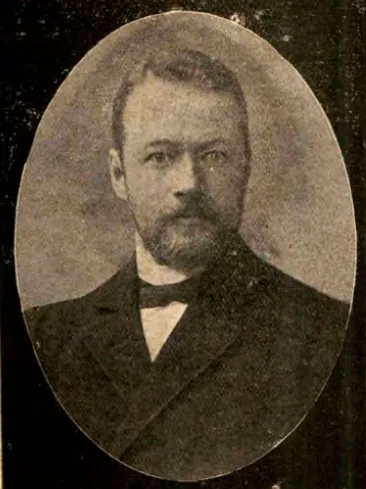
In the same year, 1893, Hermann Jacobi, an Indologist at Bonn, reached the same conclusion by a different route. Bryant writes that the two men worked “completely independently of each other and initially oblivious of each other’s research”, and sent their results to the Sanskritist Georg Bühler within six weeks of each other.8
Jacobi took a year that began with the rains, at the summer solstice, with the sun in Phalguni, and dated it to between 4500 and 2500 BCE. He added a second clue. In the household wedding rite, the groom shows his bride Dhruva, the fixed star, as a sign of constancy. In the past 7,000 years only two stars have sat close enough to the pole to look fixed: Polaris today, and Thuban in the Dragon, which was “exactly on the pole in about 2780 B.C.”9 In 2011 R.N. Iyengar of Jain University, Bangalore, went back to the Taittiriya Aranyaka’s list of 14 stars in the Shishumara figure and concluded “that in India for the Yajurvedic people Thuban (α-Draconis) was Dhruva the Pole Star c 2800 BC.”10
The Pleiades rise due east
In 1895 Shankar Balakrishna Dikshit, the historian of Indian astronomy, added a passage from the Shatapatha Brahmana. In his translation: “[One] should, therefore, consecrate [the sacred fires] on Krittikah. These, certainly, do not deviate from the Eastern direction. All other naksatras deviate from the Eastern direction.” The Pleiades rising due east means they sat on the celestial equator, and Dikshit calculated that the brightest of them was there around 2990 BCE.11 Tilak wrote that the discovery removed “all lingering doubts regarding the age of the Brahmanas”.6 The French Indologist Jean Filliozat backed the reading in 1969.11
The Vedanga Jyotisha, the oldest Indian manual of calendar astronomy, puts the winter solstice at the start of Shravishtha, a position astronomers date to between 1391 and 1181 BCE. Some Western scholars argued that Indian astronomy was borrowed from Mesopotamia. Indian scholars answered. Subhash Kak argued that the text’s ratio of longest to shortest day fits a latitude of 34 degrees once refraction is allowed for, which is north-west India. B.N. Narahari Achar pointed out that early Mesopotamia used a different ratio. The Japanese historian of science Yukio Ohashi tied the text to observation in the Kashmir region. Bryant reports that “all of the astronomers I interviewed in India” favoured an independent origin.12
The river that went dry
The hymn at the head of this article calls the Sarasvati “pure in her course from mountains to the ocean”. In the Mahabharata the same river disappears into the sand. Most scholars identify it with the dry bed of the Ghaggar-Hakra, which runs from the Himalayan foothills through Haryana and Rajasthan into Pakistan.13
That gives a date by subtraction. “The Sarasvati dried up around 2000 BC,” the archaeologist B.B. Lal wrote in 1997. “This clearly establishes that the Rigveda, which speaks of the Sarasvati as a mighty flowing river, has to be assigned to a period prior to 2000 BC.” V.N. Misra of Deccan College called the Ghaggar-Hakra “nothing but a remnant of the RgVedic Sarasvati which was the lifeline of the Indus Civilization”.14 In Pakistan’s Cholistan desert M.R. Mughal mapped 414 sites along the Hakra, about 80 per cent of them from the fourth or third millennium BCE.14
Indian scientists traced the river from space. In 1980 Yash Pal and colleagues at ISRO’s Space Applications Centre in Ahmedabad followed the old channel on Landsat images and argued that the Sutlej and the Yamuna had once fed it, and that “the Ghaggar continued to be a living river during the pre-Harappan … and the Harappan times”.15 In 2019 a team from the Physical Research Laboratory and IIT Bombay dated the river’s sediments and found that “during 80-20 ka and 9-4.5 ka the river was perennial and was receiving sediments from the Higher and Lesser Himalayas”, fed by “distributaries of the Sutlej”. They identified it with the Sarasvati and wrote that it “likely facilitated development of the early Harappan settlements”.16
The case since
Others have built on Tilak. S.B. Roy of the Institute of Chronology in New Delhi reconstructed a Vedic lunar astronomy reaching back to 6100 BCE, and wrote that “after 3100 B.C. concrete facts are more abundant and the Rig Veda supplies accurate trustworthy narrations”.17 K.D. Sethna of the Sri Aurobindo Ashram noted that the Rigveda never mentions cotton, which is found from Harappan times on, and argued that the hymns must be older than the Harappan cities.18 Subhash Kak has put the Rigveda at about 4000 to 2000 BCE.19
Shrikant Talageri ordered the ten books of the Rigveda by the families of the poets and kings named in them. The oldest books, he found, know only the land east of the Sarasvati, and the later ones reach the Punjab and Afghanistan: “the evidence of the Rigveda is so clear that it brooks no other conclusion except that the Vedic Aryans expanded from the interior of India to the west and northwest”. His dates, which he calls “a conservative estimate”, put the oldest books, 6, 3 and 7, at 3400 to 2600 BCE.20
The epics have been dated the same way. B.N. Narahari Achar, a physicist at the University of Memphis, tested the Mahabharata’s sky references against every year from 3500 to 1000 BCE with planetarium software, and found that 3067 BCE fitted best.21 Nilesh Oak, following the Pune physician P.V. Vartak, put the war on 16 October 5561 BCE and the Ramayana in 12,209 BCE.22
In 1890, giving the Gifford Lectures in Glasgow, Max Müller looked back on the dates he had fixed 31 years earlier. “Whether the Vedic hymns were composed 1000, or 1500, or 2000, or 3000 years B.C.,” he said, “no power on earth will ever determine.”24
Sources and notes24
Footnotes
-
Rigveda 7.95.2. Sanskrit from the GRETIL edition (after Aufrecht); translation by R.T.H. Griffith, The Hymns of the Rigveda, 2nd ed., vol. II (1897), Book VII, hymn XCV. https://archive.org/details/hymnsrigveda00unkngoog. Griffith thought the Sindhu might be meant. Confidence: verified. ↩
-
Max Müller, A History of Ancient Sanskrit Literature (1859), as quoted in Edwin Bryant, The Quest for the Origins of Vedic Culture (Oxford University Press, 2001), pp. 243-244. Confidence: verified (via Bryant). ↩
-
Bryant, Quest for the Origins of Vedic Culture, pp. 244-245 and 249. Confidence: verified. ↩ ↩2
-
B.G. Tilak, The Orion, or Researches into the Antiquity of the Vedas (Poona, 1893). https://archive.org/details/orionorresearche00loka. Tilak’s work as an almanac-maker: Bryant, p. 259 n. 19. Confidence: verified. ↩
-
Tilak, The Orion, summary and conclusion. Confidence: verified. ↩
-
B.G. Tilak, The Arctic Home in the Vedas (Poona, 1903), preface and chronology. https://archive.org/details/in.ernet.dli.2015.99522. In this preface Tilak summarised The Orion as dating the hymns to “about 4500 B.C.” Confidence: verified. ↩ ↩2
-
Bryant, Quest for the Origins of Vedic Culture, p. 252. Confidence: verified. ↩
-
Bryant, p. 254; Tilak, The Arctic Home, preface. Jacobi’s paper: “Über das Alter des Rig-Veda”, Festgruss an Rudolf von Roth (1893), in English in Indian Antiquary 23 (1894). Confidence: verified (via Bryant). ↩
-
Bryant, pp. 254-258, summarising Jacobi. Confidence: verified (via Bryant). ↩
-
R.N. Iyengar, “Dhruva the ancient Indian pole star: fixity, rotation and movement”, Indian Journal of History of Science 46:1 (2011), pp. 23-39. https://insa.nic.in/writereaddata/UpLoadedFiles/IJHS/Vol46_1_2_RNIyenger.pdf. Confidence: verified. ↩
-
S.B. Dikshit, Indian Antiquary (1895) and Bharatiya Jyotish Shastra (1896), quoting Shatapatha Brahmana 2.1.2.2-3, as given in Bryant, pp. 256-257 and 260 (also for Filliozat). Confidence: verified (via Bryant). ↩ ↩2
-
Bryant, pp. 259-261. Confidence: verified (via Bryant). ↩
-
Gregory Possehl, The Indus Civilization (2002), and other sources summarised in Bryant, pp. 166-168. Confidence: reported. ↩
-
B.B. Lal (1997), V.N. Misra (1994) and M.R. Mughal (1993), as quoted in Bryant, pp. 166-168. Confidence: verified (via Bryant). ↩ ↩2
-
Yash Pal, B. Sahai, R.K. Sood and D.P. Agrawal, “Remote sensing of the ‘lost’ Sarasvati river” (1980; reprinted in Frontiers of the Indus Civilization, 1984), as quoted in Bryant. Confidence: reported. ↩
-
Anirban Chatterjee, Jyotiranjan S. Ray, Anil D. Shukla and Kanchan Pande, “On the existence of a perennial river in the Harappan heartland”, Scientific Reports 9 (2019). https://pmc.ncbi.nlm.nih.gov/articles/PMC6868222/. Confidence: verified (abstract). ↩
-
S.B. Roy, Prehistoric Lunar Astronomy, 19000-3100 B.C. (Institute of Chronology, New Delhi, 1976). https://archive.org/details/in.gov.ignca.65037. For the Mahabharata war Roy himself adopted 1424 BCE. Confidence: verified (front matter). ↩
-
K.D. Sethna, Karpasa in Prehistoric India (1981) and The Problem of Aryan Origins (2nd ed., 1992), as summarised by Bryant, pp. 65 and 248. Bryant calls the cotton argument one from silence. Confidence: reported. ↩
-
Subhash Kak, The Astronomical Code of the Rgveda (Aditya Prakashan, 1994), and with G. Feuerstein and D. Frawley, In Search of the Cradle of Civilization (1995), as summarised in secondary sources. Confidence: reported. ↩
-
Shrikant Talageri, The Rigveda: A Historical Analysis (Aditya Prakashan, 2000), as quoted in Bryant, pp. 65-66; dates from The Rigveda and the Avesta: The Final Evidence (2009). Confidence: verified. ↩
-
B.N. Narahari Achar, papers in the Indian Journal of History of Science and conference volumes, about 1998-2005, as summarised in secondary sources. Confidence: reported. ↩
-
Nilesh N. Oak, When Did the Mahabharata War Happen? The Mystery of Arundhati (2011) and The Historic Rama (2014), as summarised by Dieter Koch (2017) and others. Confidence: reported. ↩
-
Bryant, pp. 168-169, 252 and 255-259; L. Giosan et al., PNAS 109 (2012); A. Singh et al., Nature Communications 8 (2017); D. Koch, “Arundhatī, Vasiṣṭha, and Nilesh Oak’s Dating of the Mahābhārata War” (2017), https://www.gilgamesh.ch/Koch_Vasishtha_Arundhati.pdf; V.M. Narasimhan et al., Science 365 (2019); Plofker’s view as reported in secondary sources. Confidence: verified, except Plofker (reported). ↩
-
F. Max Müller, Physical Religion, Gifford Lectures delivered in 1890 (Longmans, 1891), p. 91. https://archive.org/details/physicalreligion00mulluoft. Confidence: verified. ↩
Letters
No letters on this report yet.
Letter received
Thank you. It is with the editors now and will appear here if we publish it.